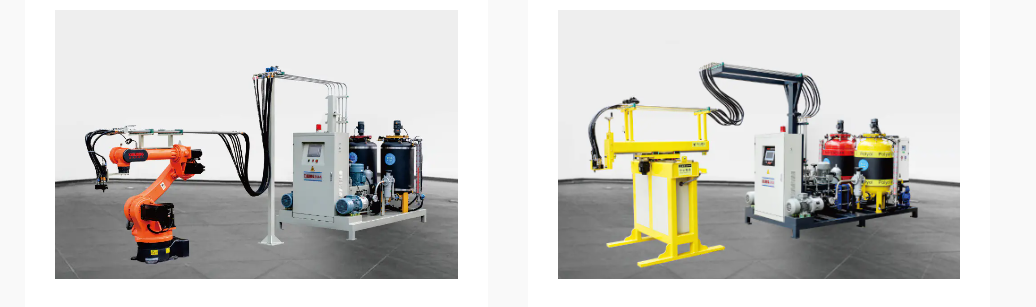
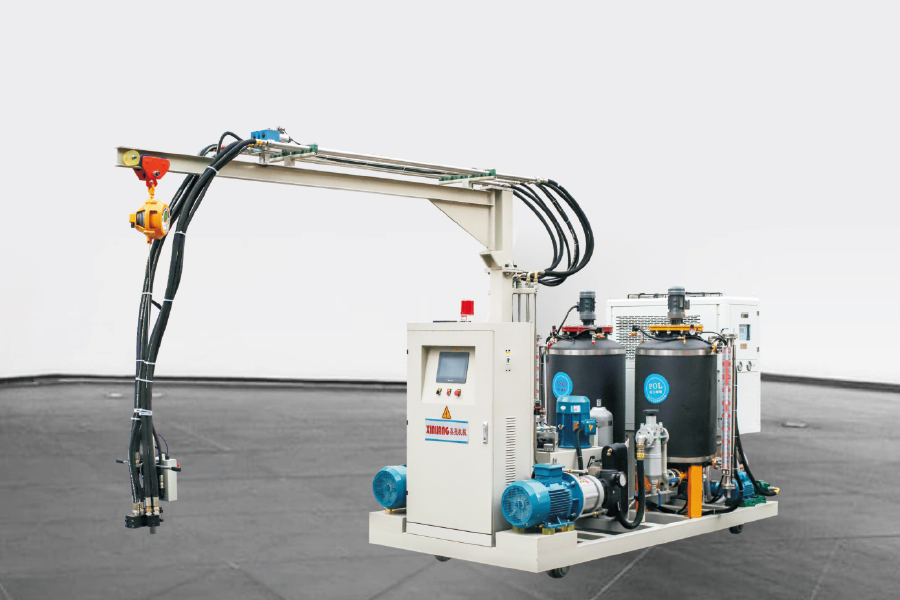
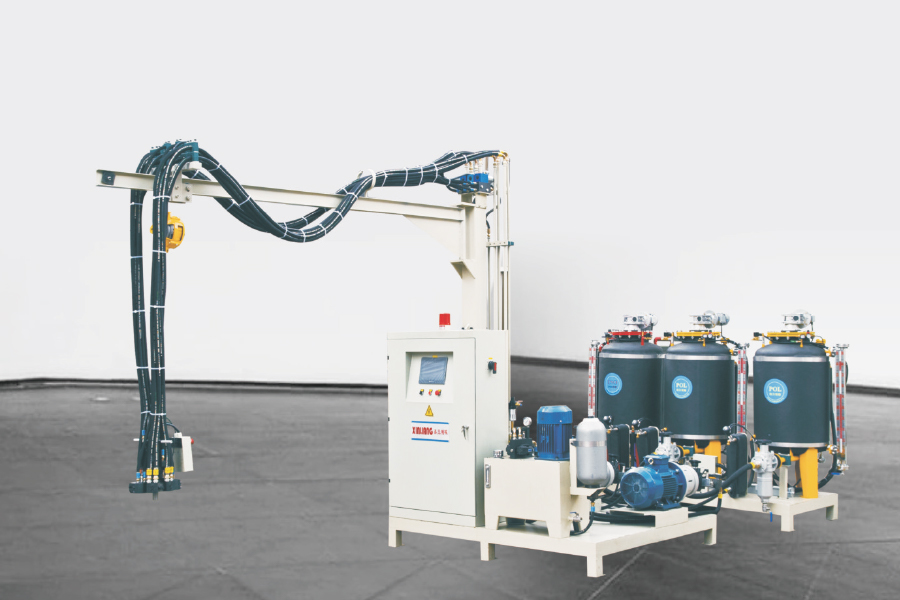
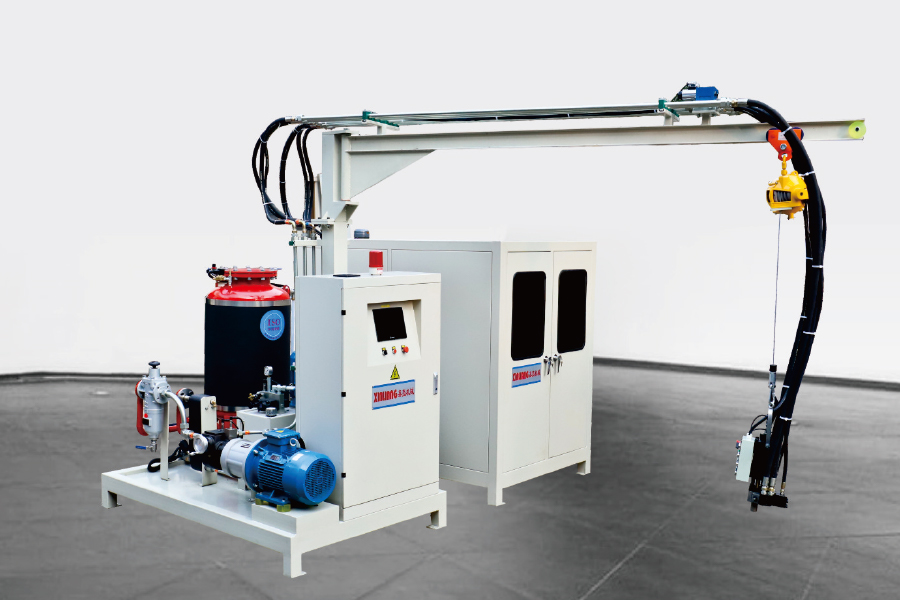
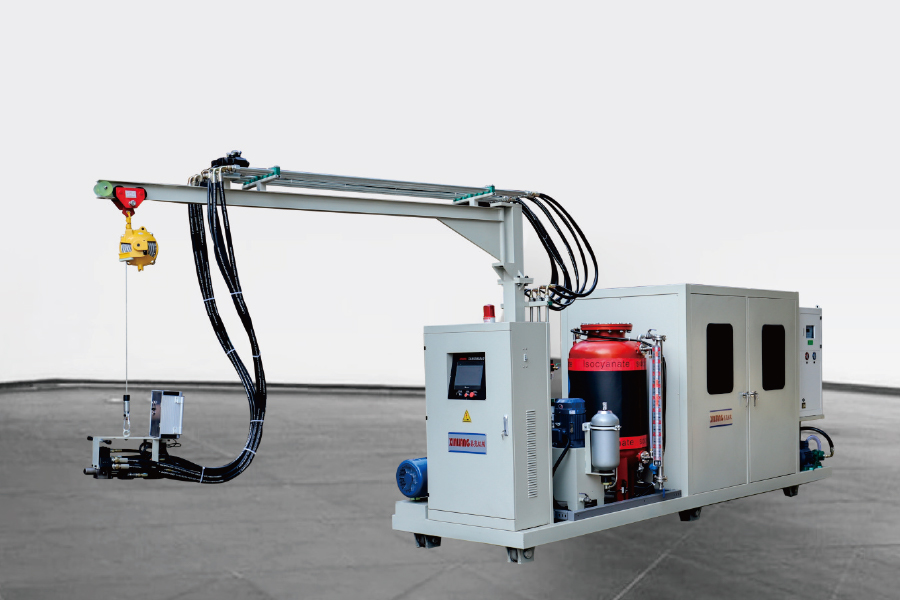
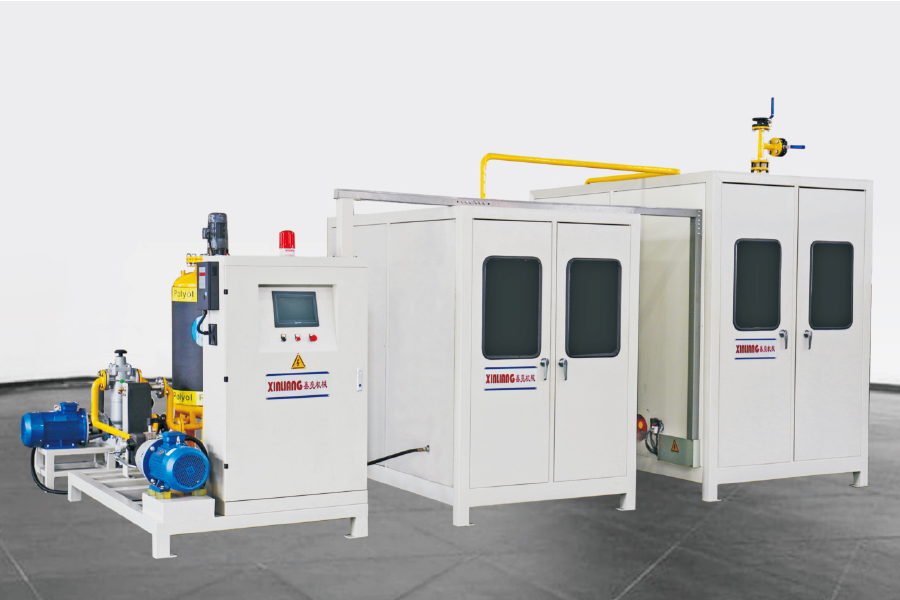
A Polyurethane High Pressure Foaming Injection Machine is chosen because it delivers precise, high pressure mixing of the A and B components at the mix head itself, which produces more uniform foam density, reduces material waste, and lowers cleaning requirements compared with low pressure mixing methods. Because mixing happens under high pressure directly at the point of injection, the process avoids the extended pre-mixing chamber cleaning cycles associated with some low pressure systems, which supports both faster changeovers and more consistent output across long production runs.
The sections below explain how a high pressure PU foaming injection machine works, how it compares with low pressure alternatives, what governs foam density consistency, and where this equipment is typically applied across polyurethane product manufacturing.
How a High Pressure PU Foaming Machine Works
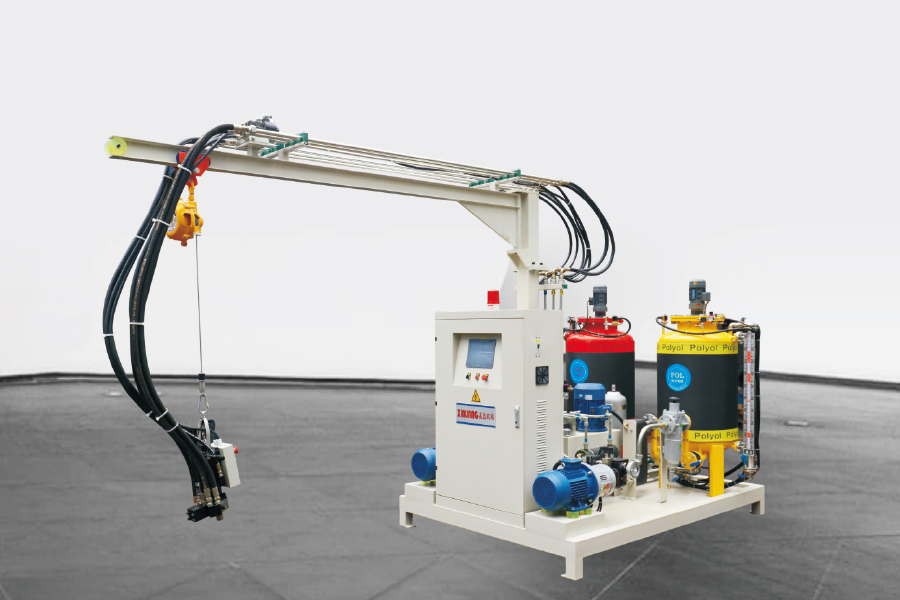
A high pressure PU foaming injection machine draws isocyanate and combined polyether components from separate storage tanks, pressurizes each component individually, and then brings them together at a self-cleaning mix head where impingement mixing occurs under high pressure. This impingement mixing method achieves thorough blending of the two components in a very short residence time, which is one of the main reasons high pressure systems can move directly from one shot to the next without a separate flushing step in typical operation.
What Are A and B Components in PU Foam
In a two component system, the A component is typically the isocyanate, while the B component is the combined polyether polyol blend along with any additives such as catalysts, blowing agents, or colorants. Both components are stored, temperature controlled, and metered separately before being brought together at the mix head, where the correct mixing ratio directly affects the physical properties of the finished foam.
High Pressure vs Low Pressure PU Foaming Machine
Comparing a high pressure polyurethane foaming machine versus low pressure alternatives comes down to how the two components are mixed and how much cleaning and maintenance the process requires between shots. Low pressure systems typically rely on mechanical stirring within a mixing chamber, which generally requires solvent flushing between uses to prevent material buildup. High pressure systems mix through impingement at the mix head itself, which is largely self-cleaning by design.
Practical Trade-offs to Consider
Low pressure systems can offer greater flexibility for very small or highly variable shot sizes, while high pressure systems are generally favored for repeatable, higher volume production where consistent mixing and reduced cleaning downtime have a meaningful impact on daily output. This is why many manufacturers producing standardized parts such as automotive interior components or mattress cores lean toward high pressure equipment.
Controlling Foam Density and Consistency
Foam density depends on several interacting factors, including the mixing ratio between the A and B components, the shot volume delivered into the mold, the mold temperature, and the type of blowing method used, whether 141B, F11, or water foaming. A high pressure PU foaming injection machine uses precise flow and pressure control to keep these variables consistent from shot to shot, which is a primary reason density variation is reduced compared with less controlled mixing methods.
Why Is PU Foam Density Uneven
Uneven foam density is most often traced back to inconsistent mixing ratios, temperature fluctuations in the raw materials, air entrapment during mixing, or shot volume variation between cycles. Addressing these factors through precise flow and pressure control, along with stable component temperature management, is the most direct way to reduce density variation across a production run.
Automation Options: Robot and Manipulator Integration
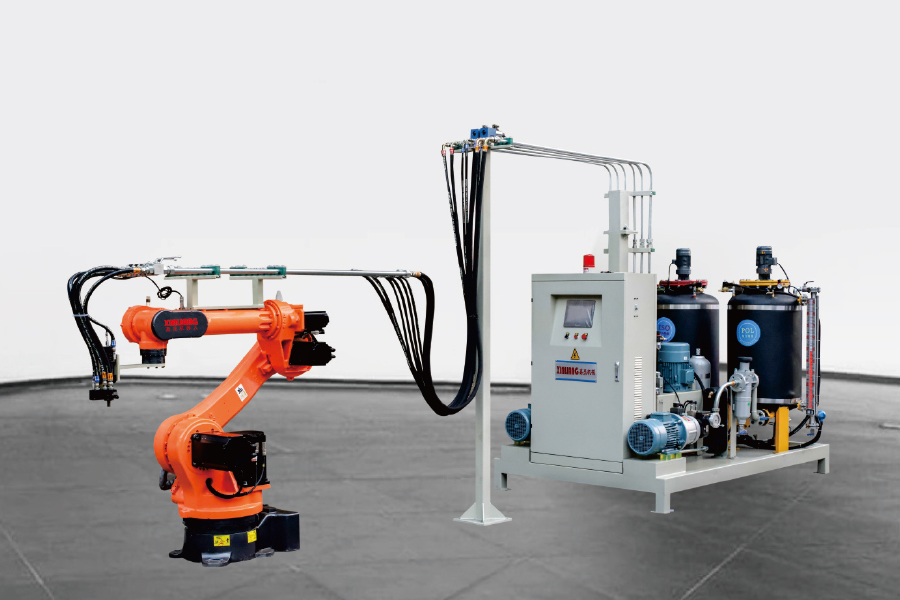
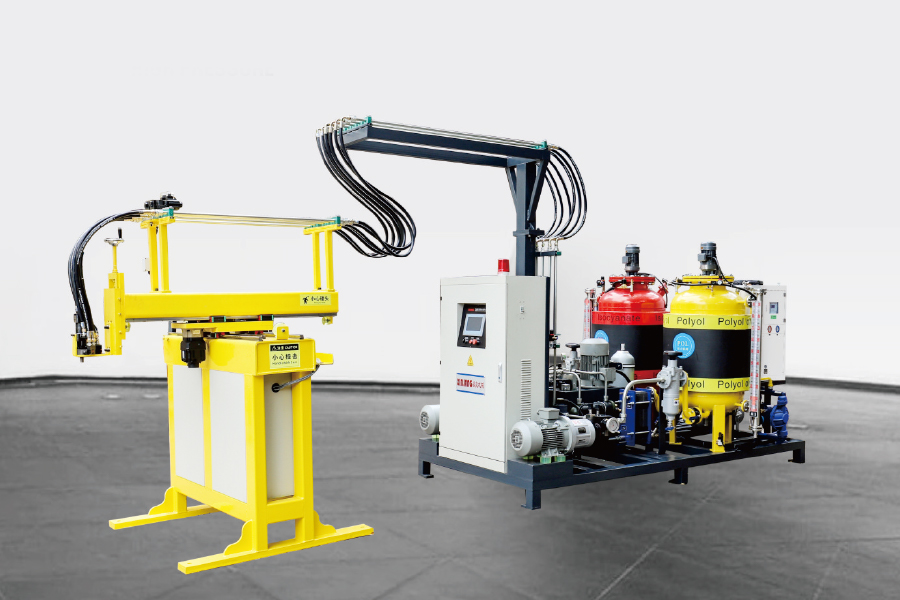
Many production lines pair a high pressure foaming machine with automated positioning equipment to improve shot placement accuracy and reduce operator handling. A PU foaming machine with robot configuration typically uses a six-axis robotic arm to move the mix head along a programmed path across complex mold geometries, while a PU foaming machine with manipulator setup often relies on a simpler XY axis manipulator suited to flatter or more uniform mold shapes.
Common Applications and Product Types
Because raw materials for polyurethane foaming are usually composed of conventional isocyanates and combined polyethers, a Polyurethane High Pressure Foaming Injection Machine is compatible with a wide range of finished PU products. Common examples include children's wheels, fitness equipment padding, automotive interior components, car seats, car steering wheels, decorative strips, headrests, and mattresses.
Common polyurethane product categories produced with high pressure foaming machines
Product Category
Typical Foam Characteristic Needed
Car Seats and Headrests
Consistent density and comfort feel
Steering Wheels and Decorative Strips
Precise mold fill and surface finish
Children's Wheels and Fitness Equipment
Durable, uniform load-bearing foam
Mattresses
Consistent density across large mold volumes
Related High Pressure Foaming Machine Configurations
Beyond a standard two-component setup, several configuration options address different production needs. Reviewing these options can help manufacturers match equipment to their mold complexity, product mix, and facility layout.
About Ningbo Xinliang Machinery: PU Foaming Equipment Manufacturer
Ningbo Xinliang Machinery Co., Ltd. is an enterprise combining industry and trade, dedicated to producing polyurethane foaming equipment, polyurethane foaming production lines, and cyclopentane polyurethane foaming complete equipment. The company operates as a professional high-tech enterprise specializing in polyurethane foaming equipment research and development, manufacturing, and technical services, with more than ten years of professional design experience among its research and development personnel.
As a Custom Polyurethane High Pressure Foaming Injection Machine Supplier and OEM Polyurethane High Pressure Foaming Injection Machine partner, the company draws on Zhejiang's industrial foundation and location advantages, following a development path centered on scientific and technological innovation and specialization, with a focus on customized solutions for users across the polyurethane industry.
The company's high pressure foaming injection machines adopt advanced high pressure mixing and injection technology, supporting uniform foaming and mixing along with precise flow and pressure control. This is achieved through control programs developed internally and refined over ten years of continuous optimization, resulting in equipment that is straightforward to operate while supporting improved production efficiency for foaming operators.
Frequently Asked Questions
Q1. How does a high pressure PU foaming machine work?
It pressurizes the A and B components separately, then brings them together at a self-cleaning mix head where impingement mixing produces a uniform blend for injection into the mold.
Q2. What is a polyurethane foaming machine?
It is equipment used to meter, mix, and inject polyurethane raw materials into a mold to produce foam parts with a target density and shape.
Q3. What is a high pressure PU injection machine?
It is a foaming machine that uses high pressure impingement mixing at the mix head, rather than mechanical stirring in a chamber, to combine the two foam components.
Q4. What is a 2 component PU foaming machine?
A 2 component machine meters and mixes two separate streams, typically an isocyanate A component and a polyol blend B component, to produce the finished polyurethane foam.
Q5. What materials are used in polyurethane foaming?
Common materials include conventional isocyanates and combined polyethers, along with additives such as catalysts, blowing agents, and colorants depending on the foam formulation.
Q6. What are A and B components in PU foam?
The A component is generally the isocyanate, while the B component is the polyol blend along with any required additives, which are combined during the mixing process.
Q7. What is the mixing ratio of polyurethane foam?
The mixing ratio depends on the specific formulation and desired foam properties, and is set and controlled through the machine's metering and pressure control system.
Q8. How do you mix polyurethane components?
Components are pressurized individually, then combined through impingement mixing at the mix head in high pressure systems, or through mechanical stirring in a chamber in low pressure systems.
Q9. How do you control PU foam density?
Density is controlled through precise mixing ratio, shot volume, mold temperature, and consistent component temperature management throughout the production run.
Q10. Why is PU foam density uneven?
Uneven density typically results from inconsistent mixing ratios, temperature fluctuations, air entrapment, or shot volume variation, all of which precise flow and pressure control can help address.


 English
 русский
 عربى
عربى