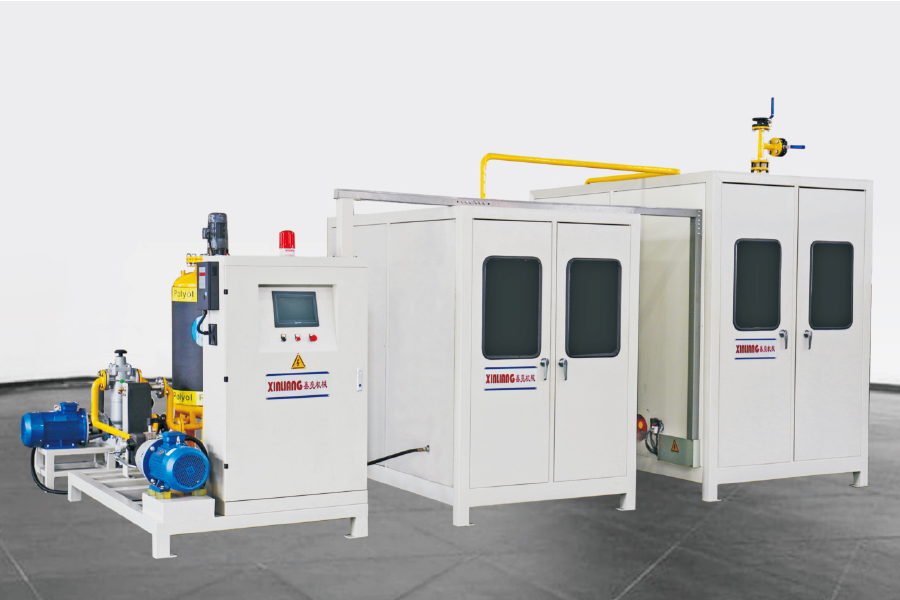
High Pressure vs Low Pressure Polyurethane Foaming: The Direct Answer
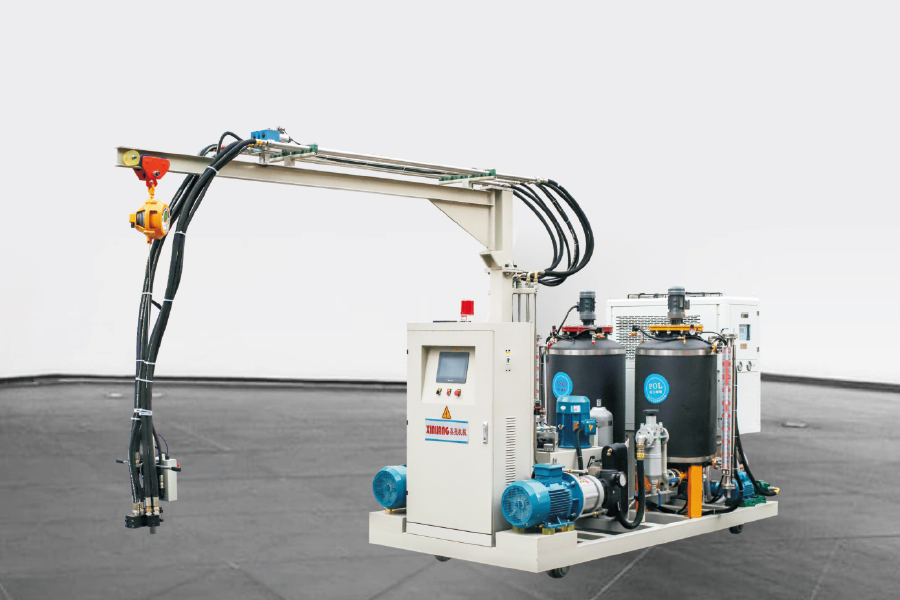
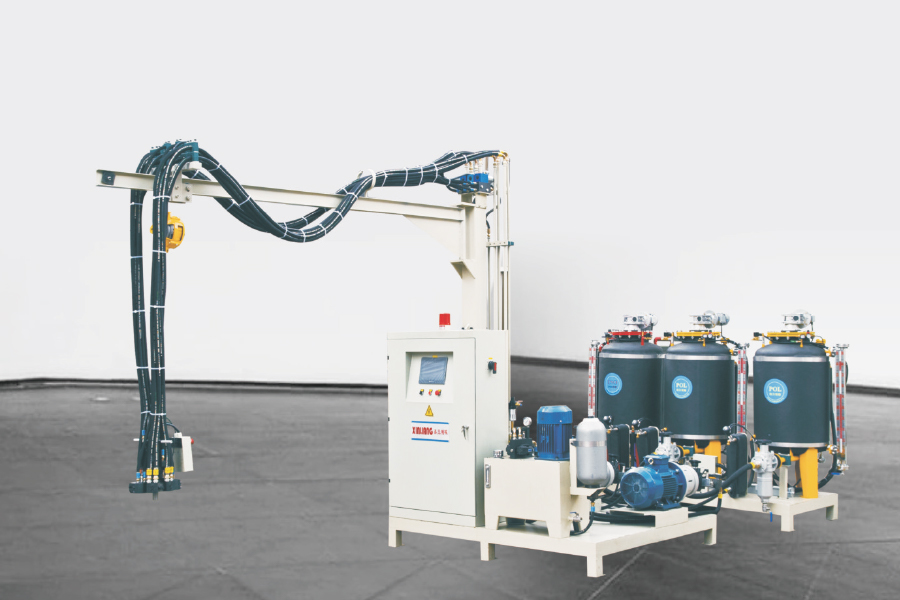
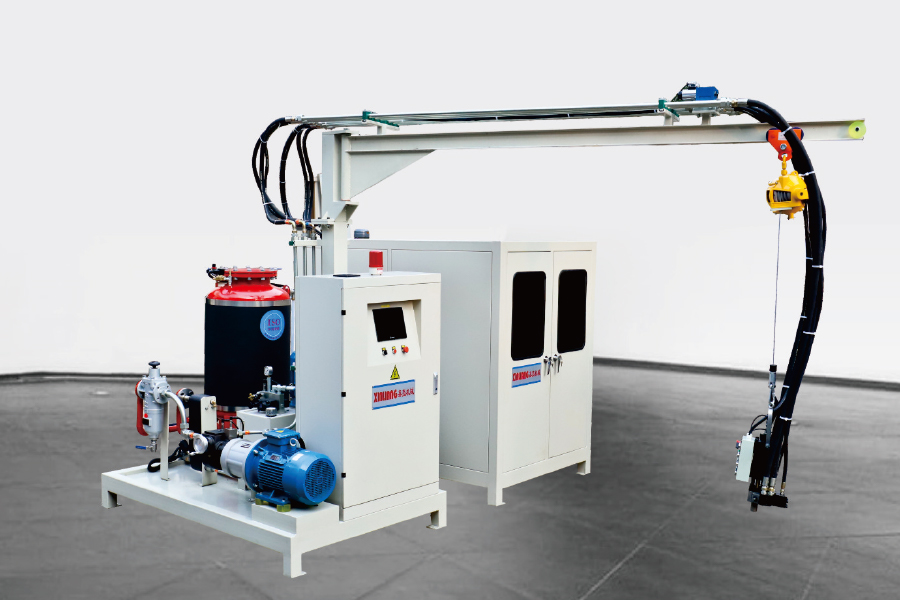
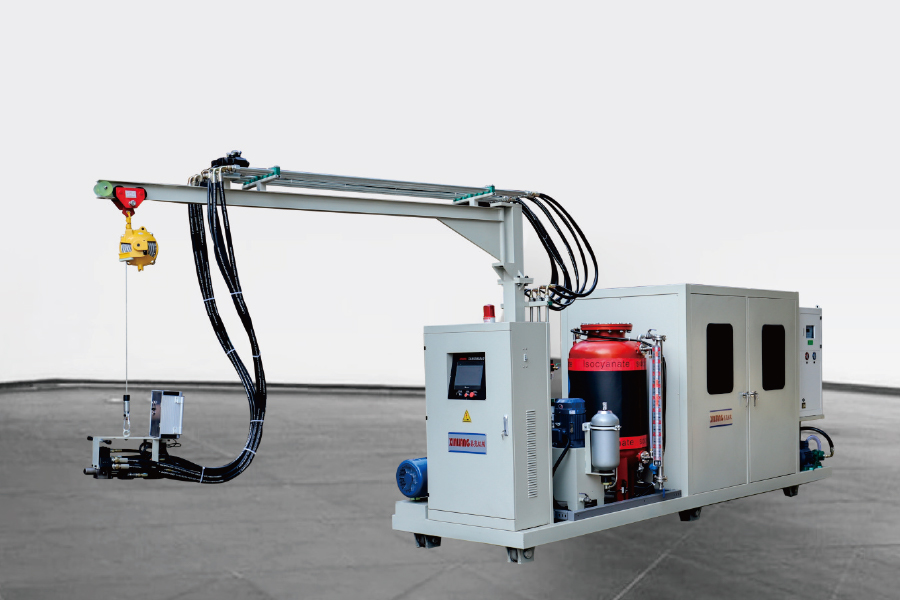
The core difference comes down to how the two liquid components are mixed before injection. A Polyurethane High Pressure Foaming Injection Machine uses impingement mixing at high pressure, where the isocyanate and polyol streams collide directly inside the mixing head at speed, giving precise, repeatable mixing without the need for solvent flushing between shots. A low pressure machine instead relies on a mechanically stirred mixing chamber, which is simpler and generally less capital intensive but typically needs solvent based cleaning to keep the chamber from hardening between cycles.
Neither approach is universally better, since the right choice depends on production volume, part precision requirements, and how much upfront investment a facility is prepared to commit. High pressure systems tend to suit higher volume, precision driven production such as automotive interiors and mattress cores, while low pressure systems remain a workable option for smaller runs or simpler foam parts where mixing tolerance is less critical.
How a High Pressure Foaming Injection Machine Works
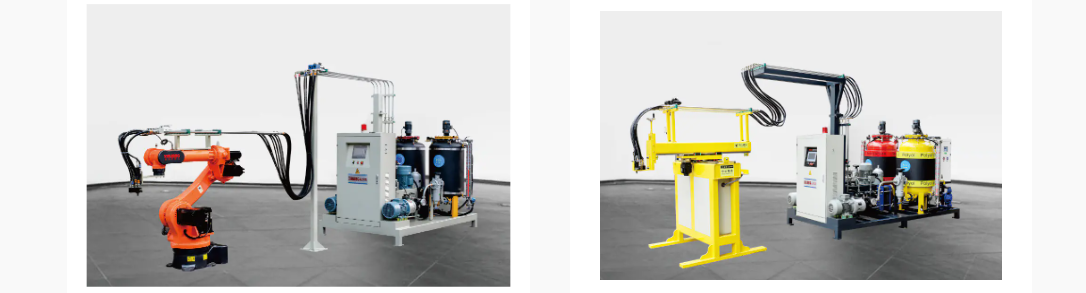
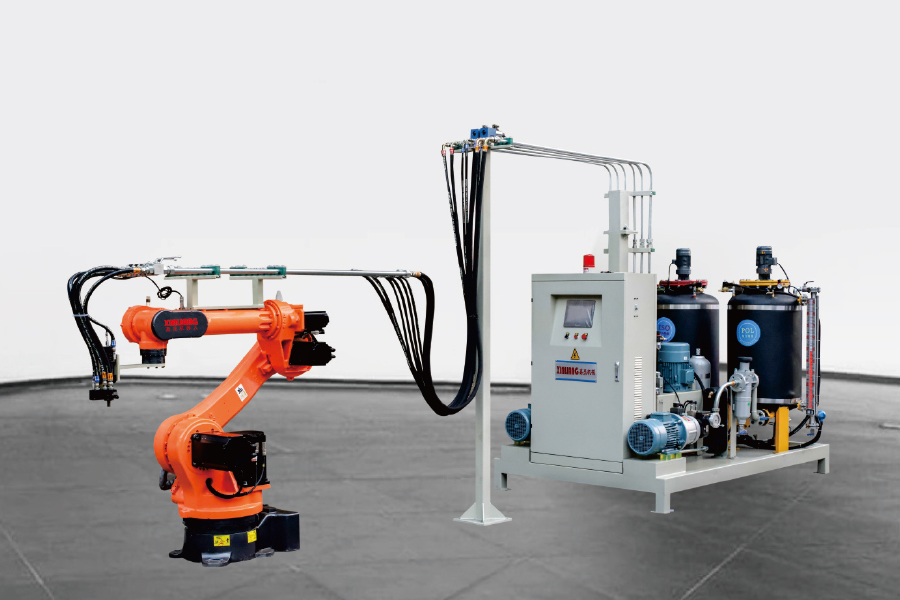
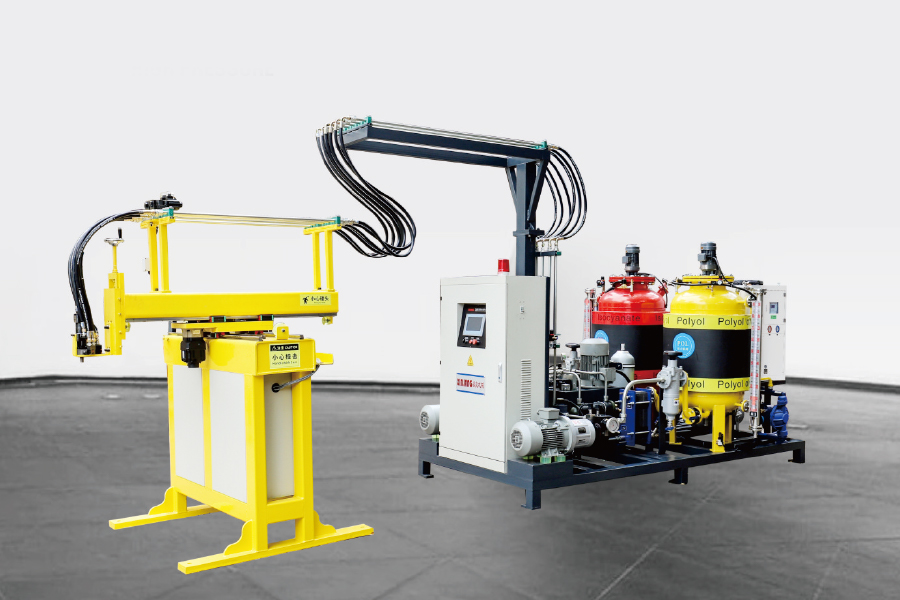
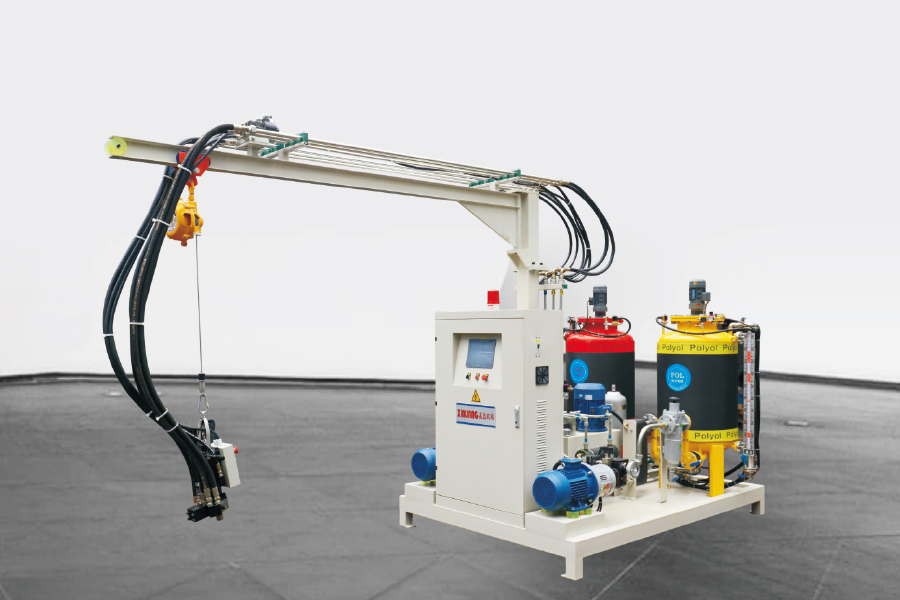
Inside a PU high pressure foaming machine, metering pumps push each raw material component through separate lines at high pressure toward a compact mixing head. Rather than being stirred mechanically, the two streams are forced through small nozzles so they collide directly, creating turbulent, near instant mixing before the combined material is injected into the mold cavity.
Self Cleaning Mixing Head Design
Because mixing happens through direct impingement rather than a mechanical agitator sitting inside the chamber, the mixing head is largely self cleaning between shots. This reduces the amount of solvent handling a production line needs to manage day to day compared with a low pressure setup.
Precise Flow and Pressure Control
High pressure systems typically rely on a control program that governs pump speed, pressure, and shot timing, which keeps the mixing ratio and output volume consistent across a long production run. This is one of the main reasons high pressure equipment has become the standard choice for parts where consistent density and surface finish matter, such as automotive seats and steering wheels.
How Low Pressure Foaming Machines Work
A low pressure foaming machine mixes the same general raw materials, conventional isocyanates and combined polyether polyols, but does so inside a chamber using a rotating mechanical agitator rather than high speed impingement. Pressures at the mixing head typically stay well under 40 bar, compared with the much higher pressures used in high pressure impingement mixing.
Because the mixing chamber has moving mechanical parts and residual material can begin curing inside it, low pressure machines generally require a solvent flush between shots or at scheduled intervals to prevent buildup. This adds a maintenance step that high pressure impingement mixing largely avoids, though the machine itself tends to have a simpler mechanical design and lower upfront complexity.
Mixing Pressure Range Comparison
Pressure at the mixing head is one of the clearest technical markers separating the two approaches. The chart below shows a typical pressure range referenced for each machine type at the low and high end of normal operation.
Typical mixing head pressure ranges referenced for high pressure and low pressure foaming machines
Mix Ratio Consistency Across Production Batches
Consistency matters just as much as raw pressure, since a small ratio deviation can shift foam density, cell structure, and part feel across a long production run. The line chart below illustrates a typical ratio deviation pattern for each machine type across a run of one hundred batches.
Typical mix ratio deviation pattern across a production run, shown for general comparison only, lower values indicate tighter consistency
Production Throughput Comparison
Throughput differences between the two machine types tend to widen as part size and required precision increase. The column chart below compares approximate parts per hour for small, medium, and large foam components.
Approximate parts per hour by part size category, shown for general comparison only
Blowing Agents and Cyclopentane Foaming Considerations
A Polyurethane High Pressure Foaming Injection Machine is generally suitable for 141B, F11, water foaming, and other foaming methods, since the mixing head and metering pumps can be configured to handle different blowing agent chemistries. The choice of blowing agent affects cell structure, density, and how the foam expands inside the mold.
Cyclopentane foaming uses cyclopentane as the blowing agent rather than water or fluorocarbon based options, and it is commonly associated with certain rigid and flexible foam applications where specific thermal or cell structure properties are needed. Machines intended to run cyclopentane formulations typically need additional consideration for ventilation and material handling compared with water blown systems, given the different handling properties of the blowing agent itself.
Mixing Ratio and Foam Density Control
The mixing ratio between isocyanate and combined polyether polyol is central to how a finished foam part behaves, since it directly shapes reaction speed, cell structure, and final density. A high pressure foaming injection machine typically controls this ratio through calibrated metering pumps governed by a control program, which keeps the ratio stable across a long run rather than drifting between shots.
Metering pump calibration sets the base isocyanate to polyol ratio
Shot weight relative to mold volume influences final part density
Raw material reactivity profile affects rise time and cell structure
Mold temperature and venting influence how evenly the foam fills the cavity
Blowing agent type and quantity shape overall foam expansion behavior
Comparing High Pressure and Low Pressure Systems
The radar chart below lines up high pressure and low pressure foaming machines across five practical factors on a simple 0 to 10 scale. Neither system leads across every axis, which is part of why the decision usually comes down to production volume and part precision needs rather than a single universal answer.
General comparison across five practical factors, based on typical characteristics referenced for each machine type
Common Applications for High Pressure Foaming Machines
A high pressure foaming injection machine supports a wide range of finished PU products, since the raw materials, conventional isocyanates combined with polyether polyols, can be adjusted in ratio and reactivity to suit very different part functions. The table below outlines common product categories and what typically matters most for each one.
Common polyurethane foam applications supported by high pressure foaming injection machines
Application Area
Typical PU Product
Foaming Process Note
Automotive Interiors
Car seats, steering wheels, headrests
Precise mix ratio for consistent cushioning feel
Furniture and Mattresses
Molded foam cores, decorative strips
Density control across large mold volumes
Fitness Equipment
Grips and padded components
Durable foam with consistent surface finish
Children's Ride On Toys
Foam wheels, padded components
Smaller shot sizes, frequent mold changes
General Molded Components
Custom foam parts
Flexible formulation to match part function
Choosing a Polyurethane Foaming Machine Manufacturer
Working with an experienced polyurethane foaming machine manufacturer matters as much as the equipment specifications themselves, since ongoing support affects how smoothly a production line runs once the machine is installed. The points below cover what tends to separate a strong PU injection machine supplier relationship from a purely transactional one.
Demonstrated experience across different foaming methods, including water, 141B, F11, and cyclopentane systems
Control program stability built through years of continuous optimization and field feedback
Clear technical support covering installation, operator training, and troubleshooting
Ability to adjust metering and mixing parameters for a specific raw material system
Consistent quality control across production batches of the equipment itself
Custom and OEM Configuration Options
Because product lines and raw material systems vary so widely between customers, many projects benefit from working with an OEM polyurethane injection machine arrangement rather than a fixed standard configuration. This allows metering pump capacity, mixing head design, and control program parameters to be adjusted around the actual formulation and part range a customer is producing.
A custom PU foaming equipment supplier relationship is particularly useful for facilities producing a mixed range of parts, such as automotive components alongside mattress cores or fitness equipment padding, since a single flexible machine configuration can often replace what would otherwise require several separate production lines.
Maintenance Practices for Reliable Long Term Operation
Routine maintenance keeps mixing precision and output consistency steady over the life of a high pressure polyurethane machine. The points below cover areas that typically need the most regular attention.
Regular inspection of metering pump seals and calibration
Mixing head cleaning checks even with a self cleaning impingement design
Raw material line filter checks to prevent contamination
Control program and sensor calibration verification
Mold temperature control system checks for even foam fill
Scheduled review of shot weight accuracy against target density
About Ningbo Xinliang Machinery Co., Ltd.
Ningbo Xinliang Machinery Co., Ltd. is an enterprise combining industry and trade, dedicated to producing polyurethane foaming equipment, polyurethane foaming production lines, and cyclopentane polyurethane foaming complete equipment. The company operates as a professional high-tech enterprise specializing in polyurethane foaming equipment research and development, manufacturing, and technical services, with an R&D team carrying more than ten years of professional design experience and close familiarity with polyurethane foaming technology at home and abroad.
As a professional Custom Polyurethane High Pressure Foaming Injection Machine Supplier and OEM Polyurethane High Pressure Foaming Injection Machine partner, the company relies on Zhejiang's strong industrial foundation and favorable location advantages, following a development path centered on technological innovation and specialization, with a focus on providing customized solutions for users across the polyurethane industry. The high pressure foaming injection machine itself adopts advanced high-pressure mixing and injection technology, with foaming and mixing carried out uniformly and precise flow and pressure control managed through a control program refined over ten years of continuous optimization, resulting in equipment that is straightforward for operators to run while supporting steady production efficiency.
Frequently Asked Questions
Q1. What is a polyurethane high pressure foaming machine It is production equipment that mixes isocyanate and polyol components under high pressure through an impingement mixing head, then injects the reacted mixture into a mold to form polyurethane foam parts.
Q2. How does a PU high pressure foaming machine work Metering pumps deliver each raw material component at high pressure into a mixing head, where the streams collide and mix instantly before the reacted material is injected into a mold cavity to cure into shape.
Q3. What is high pressure polyurethane foaming It refers to a foaming process where the chemical components are mixed at high pressure through impingement mixing rather than through a mechanically stirred low pressure mixing chamber.
Q4. What industries use PU foaming machines Automotive interiors, furniture and mattress production, fitness equipment, children's ride on toys, and general molded foam component manufacturing all commonly use polyurethane foaming machines.
Q5. What materials are used in polyurethane foaming Typical materials include conventional isocyanates and combined polyether polyols, along with a blowing agent such as water, 141B, F11, or cyclopentane depending on the foam formulation.
Q6. How much pressure does a PU foaming machine use High pressure foaming machines commonly operate in a range of roughly 150 to 250 bar at the mixing head, while low pressure machines typically run well under 40 bar.
Q7. What is the mixing ratio of polyurethane The mixing ratio between isocyanate and polyol varies by formulation, and the machine's metering pumps are set to match the specific ratio required for the target foam property.
Q8. How do you control foam density Foam density is controlled through the metering ratio, total shot weight relative to mold volume, and the reactivity profile of the chosen raw material system.
Q9. What is cyclopentane foaming It is a foaming process that uses cyclopentane as the blowing agent instead of water or fluorocarbon based agents, and it is commonly associated with certain rigid and flexible foam applications.


 English
 русский
 عربى
عربى