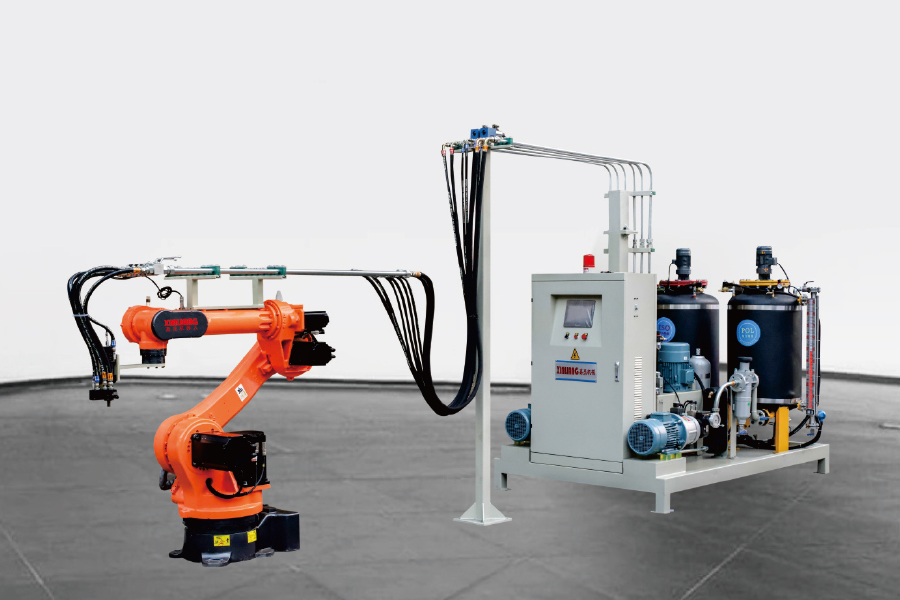
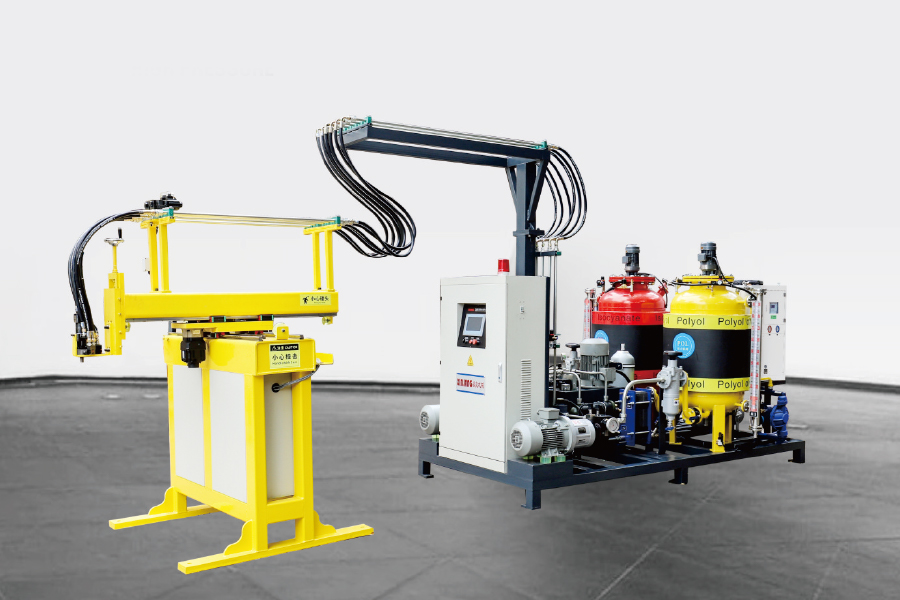
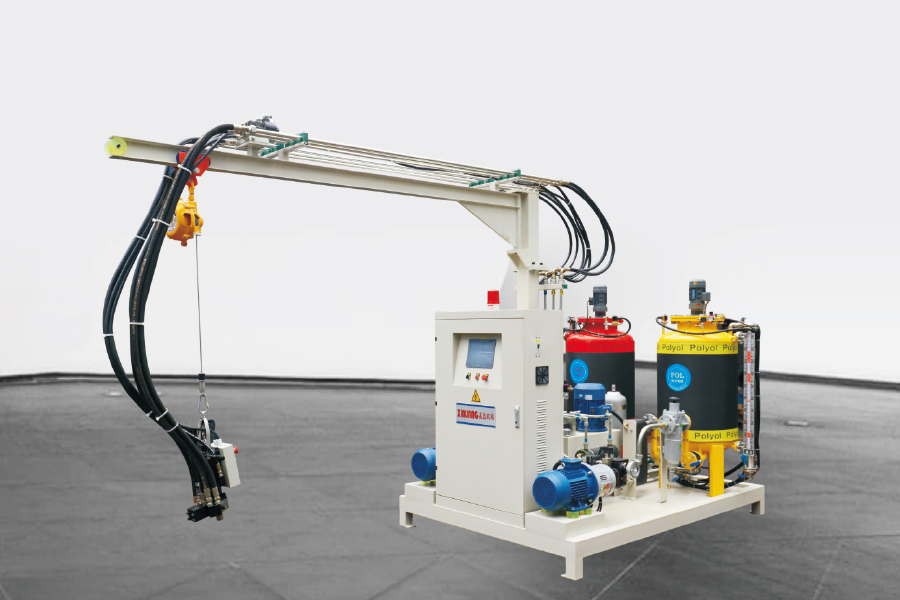
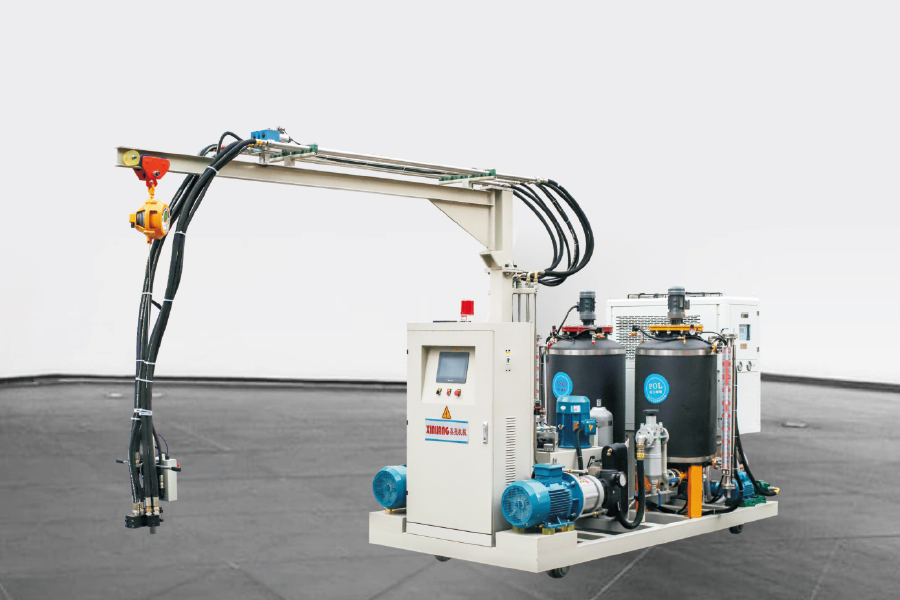
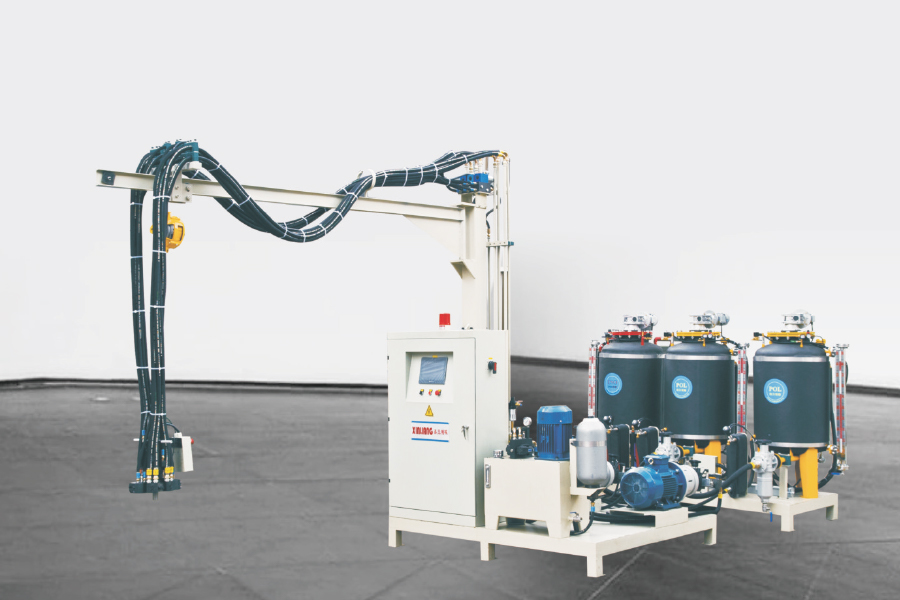
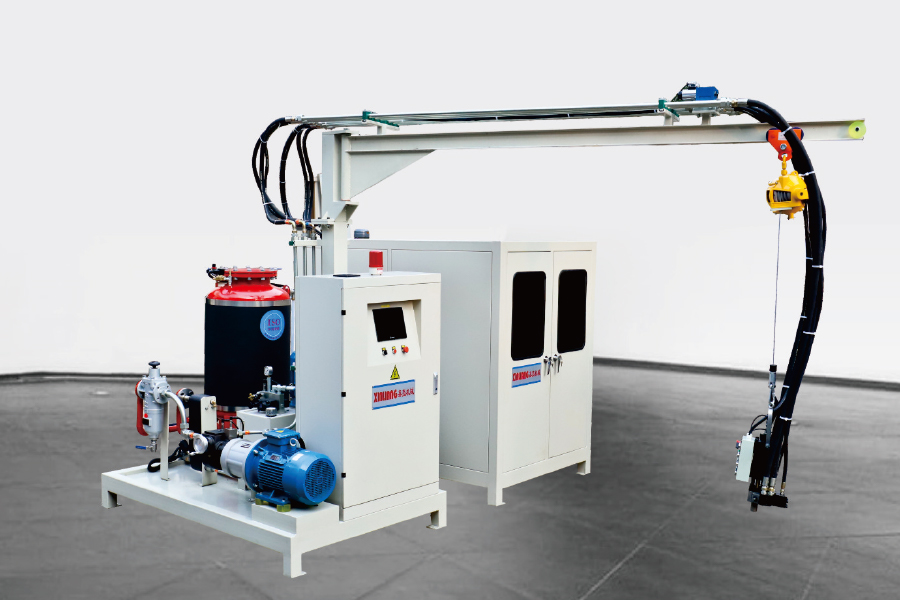
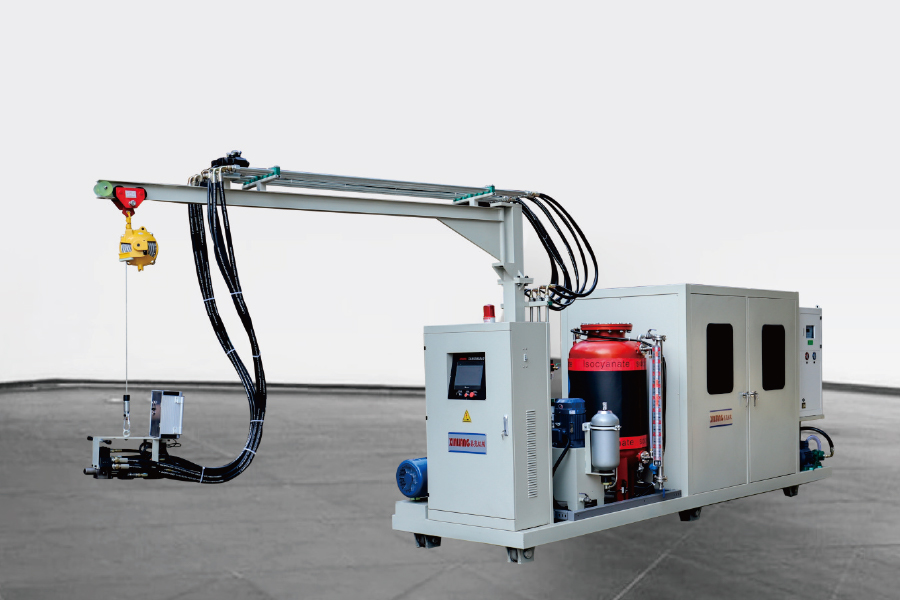
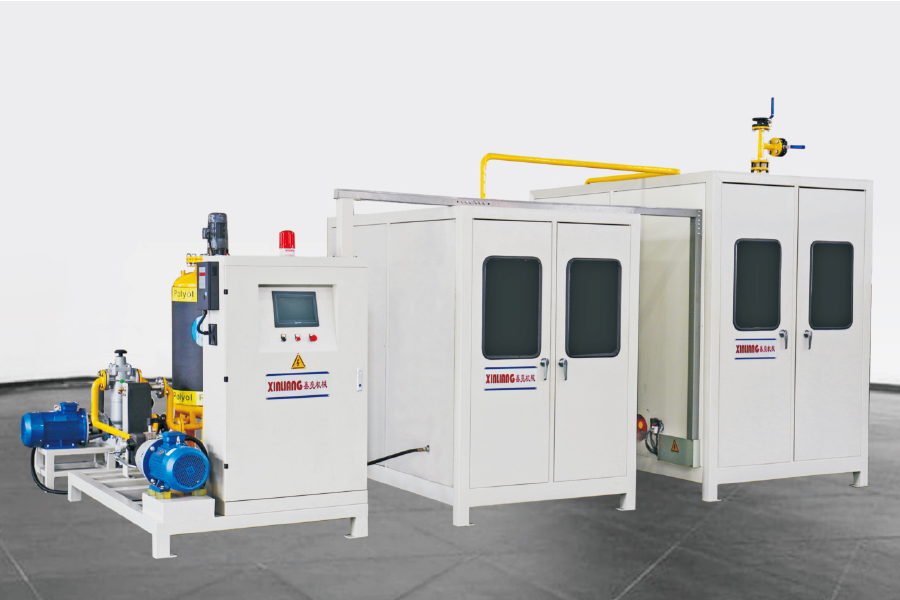
The direct answer: a Polyurethane Foaming Machine — particularly a high-pressure injection type — is an industrial production system designed for continuous, high-volume manufacturing of PU products such as automotive interiors, mattresses, and insulation panels. A spray foam machine is a field-application tool used primarily for on-site insulation and sealing. If your application involves molded parts, product manufacturing, or high-output production, a Polyurethane High Pressure Foaming Injection Machine is the correct choice. If you are sealing gaps or insulating buildings on-site, spray foam equipment is purpose-built for that task. The sections below explore both technologies in depth so you can make the right equipment decision.
What Is a Polyurethane Foaming Machine?
A PU Foaming Injection Machine is an industrial system that meters, mixes, and injects two reactive chemical components — typically isocyanate (Component A) and a combined polyether or polyol blend (Component B) — under precisely controlled conditions to produce polyurethane foam. The reaction between these components generates foam that expands to fill molds, cavities, or substrates, producing a finished PU product.
High-pressure foaming machines operate by impingement mixing: the two components are pumped at pressures typically ranging from 100 bar to 250 bar and collide in a mixing head at high velocity. This mechanical mixing is highly efficient and produces a homogeneous mixture without requiring a static or dynamic mixing element, which eliminates a common source of cross-contamination and cleaning downtime.
Modern Polyurethane Foam Production Equipment supports multiple foaming agents including 141B, F11, water foaming, and cyclopentane systems, making it compatible with a wide range of product formulations and regulatory requirements across different markets.
What Is a Spray Foam Machine?
A spray foam machine is a portable or semi-portable system designed for on-site application of polyurethane foam. It pumps two components through a heated hose to a spray gun, where they mix and are applied directly onto surfaces — walls, roofs, pipes, or structural gaps. The foam expands on contact and cures within seconds to minutes.
Spray foam machines operate at lower pressures than industrial foaming machines — commonly 800 to 2,000 psi (55 to 138 bar) — and are designed for flexibility of movement and ease of transport to job sites. They are not designed for mold injection or high-volume, repeatable part production.
The fundamental limitation of spray foam equipment in a manufacturing context is consistency: because mixing occurs at a spray gun with variable operator technique, achieving the uniform cell structure and density control required for precision PU products is not feasible with this equipment type.
Side-by-Side Comparison: Foaming Machine vs Spray Foam Machine
The table below summarizes the key technical and operational differences between industrial PU foaming machines and spray foam equipment.
| Parameter |
Polyurethane High Pressure Foaming Injection Machine |
Spray Foam Machine |
| Operating Pressure |
100–250 bar |
55–138 bar |
| Mixing Method |
High-pressure impingement |
Spray gun static/dynamic mix |
| Output Consistency |
High, repeatable shot-to-shot |
Operator-dependent |
| Production Volume |
High (continuous industrial) |
Low to medium (on-site) |
| Foaming Agent Compatibility |
141B, F11, water, cyclopentane |
Water-blown primarily |
| Mold Injection Capability |
Yes |
No |
| Flow/Ratio Control |
Programmable, PLC-controlled |
Manual adjustment |
| Typical Applications |
Automotive, furniture, insulation panels, wheels |
Building insulation, sealing, roofing |
| Portability |
Stationary / production line |
Portable, job-site mobile |
Table 1: Polyurethane High Pressure Foaming Injection Machine vs. Spray Foam Machine — Technical Comparison
How High-Pressure Impingement Mixing Works — and Why It Matters
The mixing technology at the core of a High Pressure Polyurethane Machine is what separates it from all lower-pressure alternatives. In impingement mixing, Component A (isocyanate) and Component B (polyether/polyol blend) are each pumped by precision metering pumps to the mixing head at high pressure. The two streams collide at opposing jets inside the mixing chamber at velocities that create turbulent, thorough mixing within milliseconds.
This approach produces a mixture with uniform cell structure and consistent density — critical for products where mechanical performance, dimensional stability, and surface quality are non-negotiable. After injection, the mixing head self-cleans by returning to a recirculation position, eliminating the need for solvent flushing between shots.
By contrast, spray foam guns mix at the nozzle under lower pressure. Incomplete mixing, ratio drift, and nozzle clogging are common challenges that make this approach unsuitable for precision molded components.
Products Manufactured with a PU Foaming Injection Machine
The range of products that PU Foaming Injection Machines can produce is broad, reflecting polyurethane's versatility as a material. Key application categories include:
- Automotive components — car seats, headrests, steering wheel covers, interior trim panels, and decorative strips, where precise density and surface texture control are required
- Children's and fitness equipment — wheels for children's toys, bicycles, and fitness machines where impact resistance and elasticity are critical
- Furniture and bedding — mattresses, sofa cushions, and seating components produced in molds for consistent firmness ratings
- Refrigeration and insulation panels — continuous pour systems for refrigerator cabinets and insulated building panels, where uniform foam density ensures consistent thermal performance
- Footwear soles — PU sole injection with controlled hardness and wear resistance
- Electronic encapsulation — potting and sealing of electronic components using flexible or rigid PU foam
This versatility is made possible by the strong compatibility and flexibility of polyurethane chemistry — formulations can be adjusted to produce foam with densities ranging from 20 kg/m³ to over 600 kg/m³, hardness from soft flexible foam to rigid structural foam, and open or closed cell structures depending on the foaming agent and formulation used.
Flow Control, Ratio Accuracy, and Process Consistency
In any PU foaming system, the ratio of isocyanate to polyol directly determines the chemical and physical properties of the final product. Deviations of even 2–3% from the target ratio can result in under-cured foam, excess brittleness, or compromised cell structure — leading to product rejection and material waste.
Industrial Polyurethane Foam Production Equipment addresses this with closed-loop flow control systems that continuously monitor and adjust pump output to maintain the target A:B ratio within ±1% or better throughout each injection cycle. PLC-based control systems log process data for quality traceability and allow recipe storage for rapid product changeover.
Ratio Accuracy Comparison: Industrial PU Machine vs Manual Spray Equipment
High Pressure Foaming Injection Machine (PLC-controlled)±1% or better
Low-pressure foaming machine (manual flow setting)±3–5%
Spray foam gun (operator-controlled)±5–10%+
Lower deviation = better product consistency and lower raw material waste
Over a production run of 1,000 shots per day, a ratio deviation of just 3% in a spray foam system translates to approximately 30 kg of wasted chemical per tonne of material processed, compounding significantly over weeks and months of production.
Foaming Agent Options and Their Impact on Product Properties
The foaming agent used in a High Pressure Polyurethane Machine system determines foam cell structure, thermal conductivity, and environmental compliance. The main options available in modern industrial systems are:
- 141B (HCFC-141b) — produces fine, uniform cell structures and excellent thermal insulation; being phased out in many markets due to ozone depletion potential
- F11 (CFC-11) — historically used for rigid foam; also subject to phase-out regulations in most regions under the Montreal Protocol
- Water foaming — the most environmentally compliant option; CO2 generated by the water-isocyanate reaction acts as the blowing agent; produces slightly more open-cell foam suitable for flexible applications including mattresses and seating
- Cyclopentane — increasingly adopted for rigid insulation foam in refrigeration and construction panel applications; low global warming potential and excellent thermal performance with lambda values around 0.020–0.022 W/(m·K)
A well-designed PU Foaming Injection Machine accommodates all of these foaming agents through appropriate material-compatible seals, temperature-controlled tanks, and explosion-proof components where required for flammable agents such as cyclopentane.
Production Efficiency: Output Rate Comparison by Application
Production efficiency is one of the strongest arguments for investing in industrial-grade Polyurethane Foam Production Equipment. The chart below illustrates typical daily output capacity differences between an industrial high-pressure foaming line and manual spray foam application across three representative applications.
Daily Output Capacity: Industrial PU Foaming Machine vs Manual Spray Method
800–1,200
seats/day
Car Seats
(Industrial PU Line)
60–120
seats/day
Car Seats
(Manual/Spray)
500–800
units/day
Mattresses
(Industrial PU Line)
40–80
units/day
Mattresses
(Manual/Spray)
Representative estimates; actual output depends on mold complexity, cycle time, and system configuration
Key Specifications to Evaluate When Selecting a PU Foaming Machine
When evaluating a Polyurethane High Pressure Foaming Injection Machine for your production requirements, the following specifications have the most direct impact on output quality and operational efficiency:
- Output range (g/s or kg/min) — should match your product volume and cycle time requirements; typical industrial systems offer output rates from 20 g/s to over 2,000 g/s
- Mixing head pressure rating — minimum 100 bar for effective impingement mixing; higher pressure capability supports a wider range of formulations
- Ratio range (A:B adjustability) — ability to adjust the isocyanate-to-polyol ratio, commonly from 1:1 to 1:4, enables broader product range from a single machine
- Temperature control range and stability — tank and line temperature control to ±1°C is important for consistent viscosity and reactivity
- Control system and programmability — PLC with touchscreen interface, recipe storage, and production data logging reduce setup time and support quality traceability
- Foaming agent compatibility — confirm the machine is rated for your intended blowing agent, with appropriate seals and safety features for flammable agents
- Self-cleaning mixing head — eliminates solvent cleaning between shots, reduces chemical waste, and protects operator health
About Ningbo Xinliang Machinery Co., Ltd.
Ningbo Xinliang Machinery Co., Ltd. is an enterprise combining industry and trade, dedicated to producing polyurethane foaming equipment, polyurethane foaming production lines, and cyclopentane polyurethane foaming complete equipment. As a professional high-tech enterprise specializing in polyurethane foaming equipment research and development, manufacturing, and technical services, the company has accumulated more than ten years of professional design experience and maintains deep familiarity with advanced polyurethane foaming technology in both domestic and international markets.
As a professional Custom Polyurethane High Pressure Foaming Injection Machine supplier and OEM manufacturer, Xinliang Machinery is built on Zhejiang's strong industrial foundation and advantageous location, pursuing a development path of scientific and technological innovation and specialization — focusing on providing customized solutions for users across the polyurethane industry.
The company's foaming machines are suitable for 141B, F11, water foaming, and cyclopentane foaming methods, using conventional isocyanates and combined polyethers as raw materials. Capable of serving a wide range of PU applications — from children's wheels and fitness equipment to automotive interiors, car seats, steering wheels, decorative strips, headrests, and mattresses — the machines adopt advanced high-pressure mixing and injection technology developed and continuously optimized over more than 10 years. The result is a system that is simple to operate, produces uniform foam, and delivers precise flow and pressure control for maximum production efficiency.
Xinliang Machinery is committed to providing customers with comprehensive technical support and solutions, helping customers' products reach market and creating a better future together.
Frequently Asked Questions
Q1: What is the minimum production volume that justifies investing in a high-pressure PU foaming machine versus manual methods?
A1: As a general guideline, once production requirements exceed 50–100 shots per day consistently, the gains in material efficiency, product quality, and labor productivity from an industrial PU Foaming Injection Machine begin to deliver meaningful returns. For operations running multiple shifts or producing components with tight dimensional tolerances, the threshold is lower due to the quality control benefits alone.
Q2: Can one Polyurethane High Pressure Foaming Injection Machine handle multiple product types?
A2: Yes. Modern PLC-controlled machines store multiple production recipes, each with its own output volume, flow ratio, temperature settings, and injection speed. Switching between products — for example, from a soft flexible foam for a car seat to a firmer foam for a steering wheel — is accomplished by loading the corresponding preset, adjusting molds, and running a brief purge cycle. Multi-component machines also allow different formulations to be processed on the same unit.
Q3: What safety requirements apply to cyclopentane-based foaming systems?
A3: Cyclopentane is a flammable hydrocarbon with a flash point of approximately -37°C and an explosive concentration range of 1.4–8.7% in air. Equipment and facilities processing cyclopentane must comply with ATEX (or equivalent) explosion-proof standards, including explosion-proof electrical components, gas detection systems, ventilated storage, and grounding requirements throughout the system. Machine suppliers with cyclopentane-rated equipment will provide documentation of compliance and installation guidelines.
Q4: How is the mixing head cleaned between production runs?
A4: In high-pressure systems, the mixing head uses a self-cleaning piston that pushes any residual material out of the mixing chamber immediately after each shot, returning both component streams to recirculation. This eliminates the need for solvent cleaning between shots. At the end of a production shift, the system is flushed with the respective components or a compatible cleaning agent per the manufacturer's procedure. This self-cleaning design significantly reduces chemical waste and maintains mixing chamber integrity over time.
Q5: What ongoing maintenance does a High Pressure Polyurethane Machine require?
A5: Key maintenance tasks include daily inspection of seals, hose connections, and mixing head components; weekly verification of flow meter calibration and pump output ratio; monthly lubrication of pump drive components and inspection of tank heating elements; and periodic replacement of mixing head wear parts such as impingement nozzles and piston seals according to the manufacturer's service schedule. Machines from manufacturers with established after-sales support and local spare parts availability minimize downtime when maintenance is due.


 English
 русский
 عربى
عربى