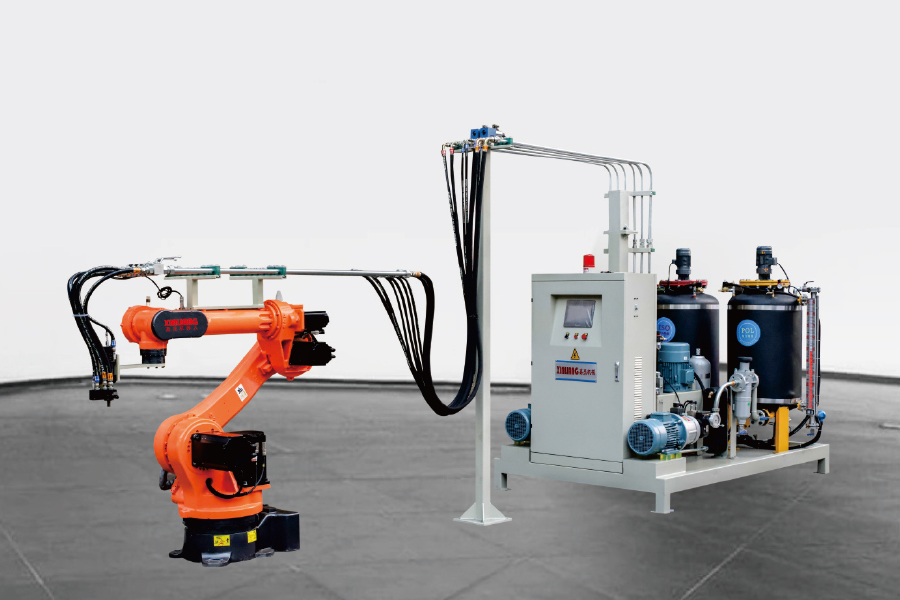
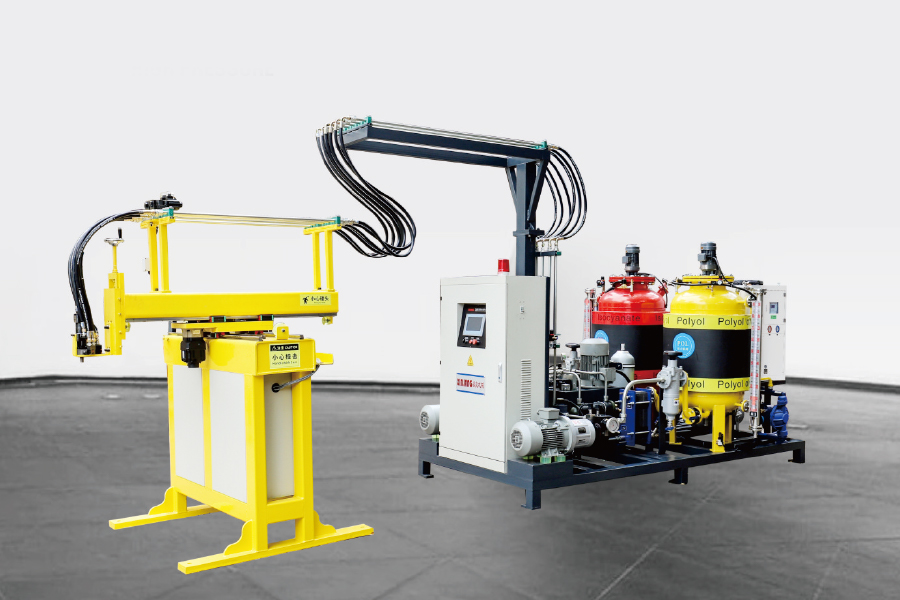
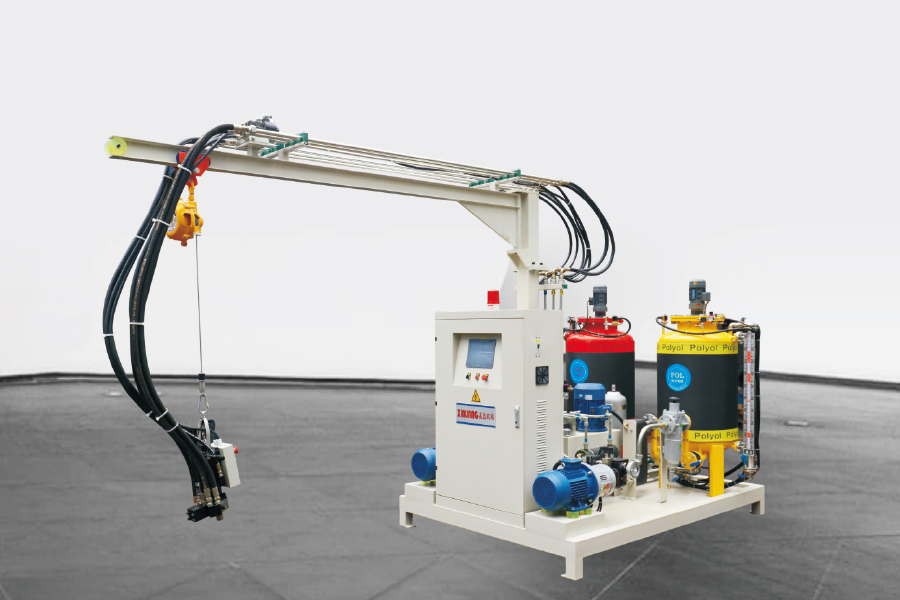
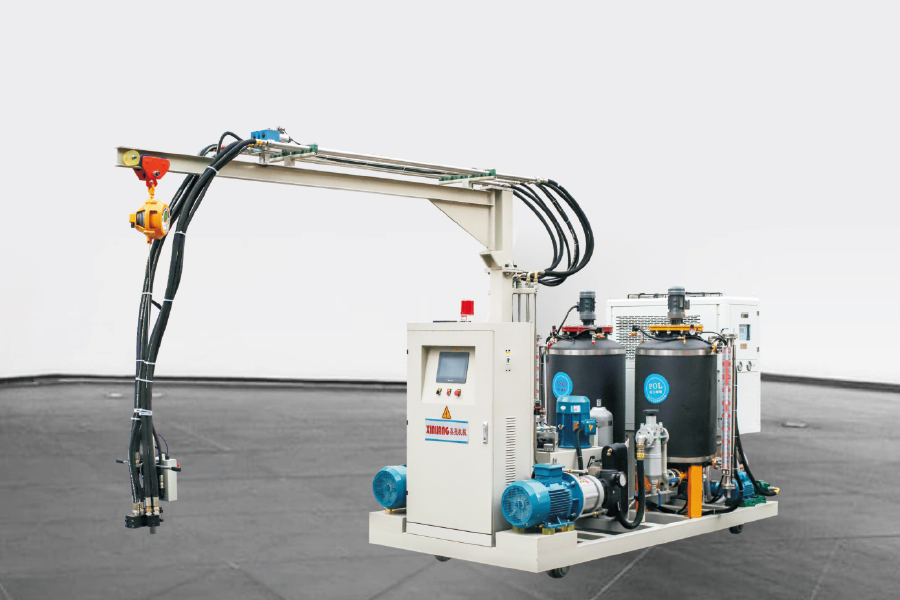
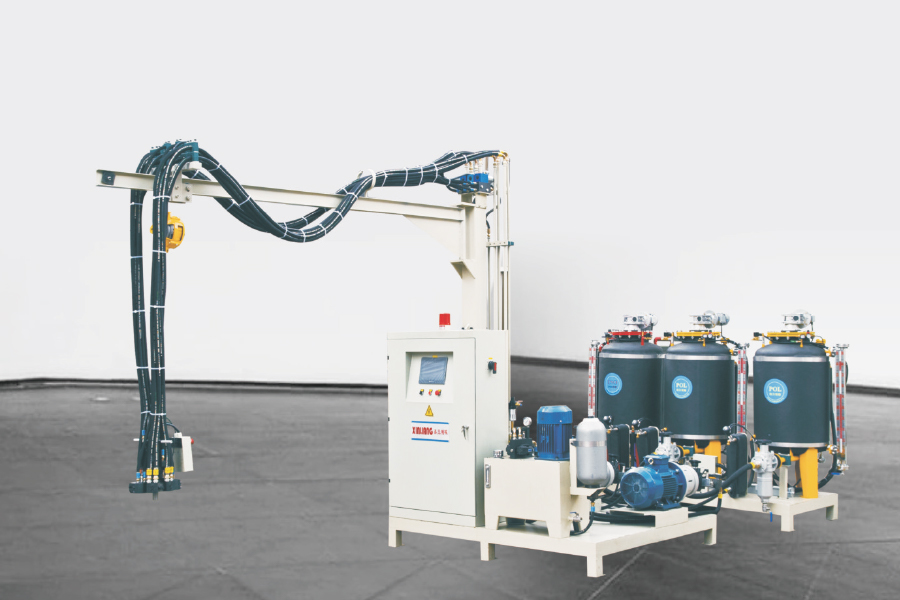
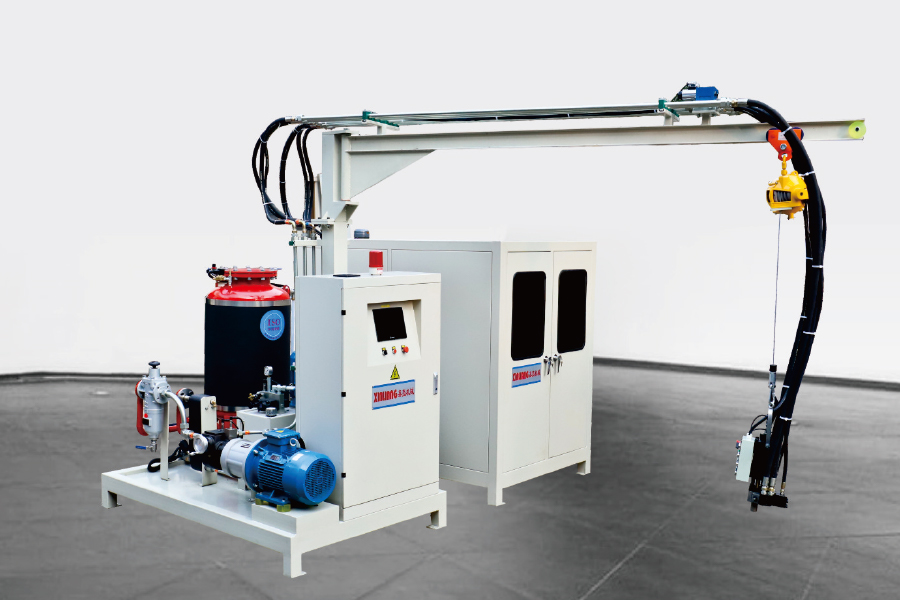
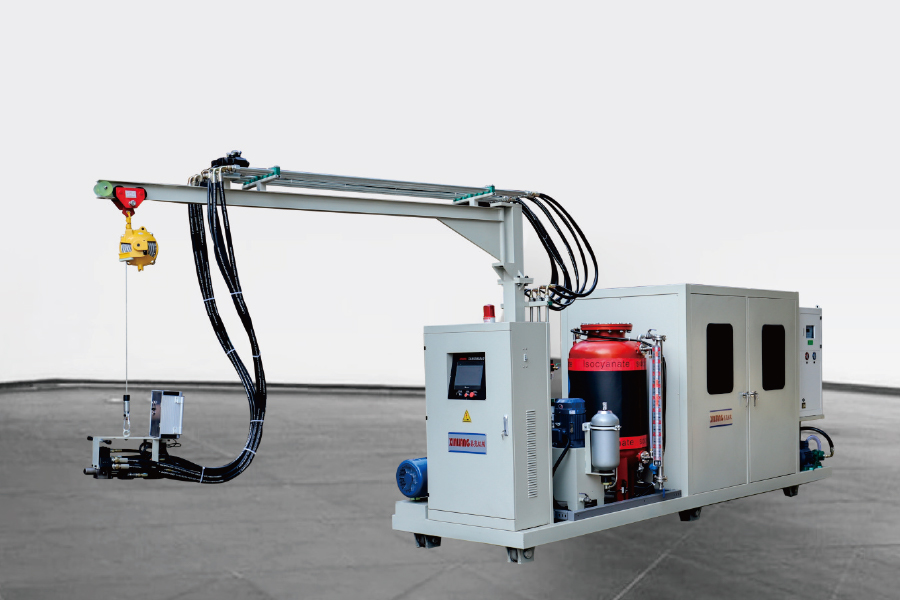
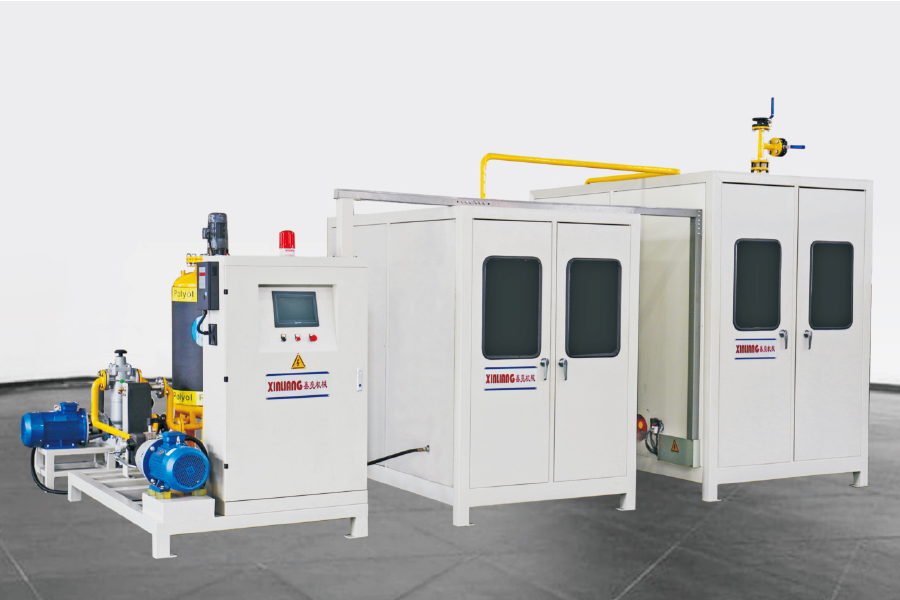
The key benefits of polyurethane high pressure foaming injection machines in 2026 are precise mixing ratios, faster cycle times, consistent cell structure, lower material waste, and compatibility with a broader range of polyurethane formulations — including cyclopentane-blown systems demanded by energy efficiency regulations. These advantages directly translate to higher product quality, lower production cost per unit, and the ability to meet increasingly strict insulation performance standards across refrigeration, construction, and automotive applications.
This article details each benefit with specific performance data, explains how high pressure foam injection technology works, and provides practical guidance for selecting the right polyurethane injection system for your production environment.
Understanding the fundamental difference between high and low pressure foaming is essential before evaluating the benefits. In a polyurethane high pressure foaming injection machine, the two reactive components — polyol and isocyanate — are metered under pressures of 100–200 bar and mixed by impingement directly inside the mixhead. There is no mechanical mixing element; the energy of the high-velocity streams creates a homogeneous mixture.
In contrast, low pressure systems mix components at 2–10 bar using mechanical stirrers, which introduces several limitations:
Mechanical mixers require frequent cleaning with solvent between shots, increasing downtime and chemical waste.
Lower mixing energy produces less homogeneous blends, leading to variable cell structure and inconsistent foam density.
Throughput is limited by mixer shaft speed and volume, making high-volume production lines impractical.
High pressure foaming machines eliminate these constraints through impingement mixing — producing a cleaner, more repeatable result with zero solvent consumption and self-cleaning mixhead operation.
Benefit 1: Precision Mixing Ratios That Directly Improve Foam Quality
The polyol-to-isocyanate ratio (index) is the single most critical variable in polyurethane foam production. A deviation of just 2–3% from the target index changes the foam's compressive strength, thermal conductivity, and dimensional stability in measurable ways. Modern polyurethane injection systems achieve ratio accuracy of better than ±1% at flow rates from 100 g/min to 30 kg/min — a consistency that is physically impossible with manual mixing or basic low-pressure equipment.
This precision is achieved through:
High-accuracy gear pumps or piston metering pumps with flow rate feedback loops that correct for viscosity changes caused by temperature variation.
Temperature-controlled component tanks maintaining polyol and isocyanate within ±0.5°C of target — critical because viscosity, and therefore flow rate, is strongly temperature-dependent.
PLC-based control systems that continuously monitor and log actual versus target ratios, flagging deviations before they produce out-of-specification product.
Benefit 2: Faster Cycle Times and Higher Production Throughput
High pressure foaming machines are designed for continuous, high-volume production. The self-cleaning impingement mixhead opens and closes in under 0.1 seconds, with no solvent flush required between shots. This compares to 30–90 seconds of cleaning time per shot for mechanical mixer low-pressure systems — a difference that compounds significantly across a production shift.
Parameter
High Pressure Foaming Machine
Low Pressure System
Operating pressure
100–200 bar
2–10 bar
Mixing method
Impingement (solvent-free)
Mechanical mixer
Inter-shot cleaning time
0 seconds (self-cleaning)
30–90 seconds
Ratio accuracy
±1%
±3–5%
Max output rate
Up to 30+ kg/min
Up to 8 kg/min
Solvent consumption
Zero
High (per shot)
Table 1: Performance comparison between high pressure foaming machines and low pressure systems
For a production line running 300 shots per day, eliminating 60 seconds of cleaning per shot recovers 5 hours of productive machine time daily — equivalent to adding more than half a production shift without any capital investment in additional equipment.
Benefit 3: Consistent Cell Structure for Superior Thermal and Mechanical Performance
The quality of a polyurethane foam part is determined by the uniformity of its cellular structure. Uniform, fine cells produce lower thermal conductivity, higher compressive strength per unit weight, and better dimensional stability than coarse or irregular cell structures — even at identical foam density.
High pressure impingement mixing produces consistently fine, uniform cells because:
The high-velocity impingement creates intensive molecular-level mixing that distributes the blowing agent (water, cyclopentane, or HFO) evenly throughout the reactive mixture before foam expansion begins.
The reaction initiates simultaneously throughout the mixed volume, producing nucleation sites at a consistent density and resulting in cell diameters of 150–300 micrometers compared to 400–600 micrometers typical of low-pressure mixed foam.
PLC-controlled injection timing ensures that each shot enters the mold at the same stage of reaction — preventing the density gradients that occur when partially reacted foam is injected inconsistently.
Thermal Conductivity (mW/m·K) — High Pressure vs. Low Pressure Foaming
Refrigerator Panel Foam (38 kg/m³)
High Pressure
18.5 mW/m·K
Low Pressure
22.0 mW/m·K
Construction Insulation Panel (35 kg/m³)
High Pressure
20.0 mW/m·K
Low Pressure
24.5 mW/m·K
Automotive Seating Foam (50 kg/m³)
High Pressure
Cell CV: 8%
Low Pressure
Cell CV: 22%
Figure 1: High pressure foaming machines consistently produce lower thermal conductivity and more uniform cell structure (lower CV) across foam applications
Benefit 4: Cyclopentane Compatibility and Environmental Compliance
Regulatory pressure on HFC blowing agents has made cyclopentane the standard blowing agent for rigid polyurethane foam in refrigeration and cold chain applications across the European Union, China, and increasingly in North America. Cyclopentane presents unique handling challenges — it is highly flammable and requires purpose-engineered foam injection technology to handle safely and effectively.
Polyurethane high pressure foaming injection machines designed for cyclopentane incorporate:
ATEX-rated electrical components throughout the machine envelope, including motors, sensors, and control panels certified for use in Zone 1 flammable atmosphere environments.
Closed-loop cyclopentane mixing and dosing systems that prevent atmospheric release of cyclopentane vapor during normal operation — reducing both explosion risk and VOC emissions below regulatory thresholds.
Integrated leak detection with automatic shutdown capability when ambient cyclopentane concentration exceeds 20% of the lower explosive limit (LEL).
Precise cyclopentane injection ratios, typically 6–12% by weight of the polyol component, maintained with the same ±1% accuracy as the polyol-isocyanate ratio — essential for achieving target foam thermal performance.
Manufacturers using cyclopentane-capable polyurethane injection systems can achieve foam lambda values below 20 mW/m·K — meeting the most demanding EU energy efficiency standards for refrigeration appliances (ErP Regulation 2019/2016).
Benefit 5: Material Efficiency and Reduced Waste Per Production Cycle
Polyurethane raw materials represent a significant fraction of total production cost in foam manufacturing. Reducing material waste by even 3–5% per shot has a substantial cumulative impact on operating economics. High pressure foaming machines contribute to material efficiency in three distinct ways:
Elimination of Purge Waste
Because impingement mixheads are self-cleaning, there is no reactive material left in the mix chamber between shots. Low-pressure mechanical mixers must be purged after each shot, wasting 20–80 grams of mixed material per purge — equivalent to 6–24 kg of wasted material per 300-shot production day.
Shot Weight Precision
PLC-controlled injection timing in modern high pressure foaming machines achieves shot-to-shot weight repeatability of better than ±0.5%. This precision allows manufacturers to reduce the overfill safety margin typically added to ensure mold fill — recovering 2–4% of raw material per production run without any risk of underfilled parts.
Reduced Off-Specification Production
The ratio accuracy and consistency of high pressure foam injection technology reduces the rate of off-specification parts — those rejected for density variation, cell structure irregularity, or dimensional deviation — to below 0.5% in well-maintained systems, compared to 2–5% typical for low-pressure lines. Every percentage point reduction in reject rate directly recovers material, energy, and labor cost.
Material Waste Reduction (%) After Transition to High Pressure Foaming System
Figure 2: Material waste rate declining over six months following transition from low-pressure to high pressure foaming injection system
Key Selection Criteria for a Polyurethane High Pressure Foaming Injection Machine
Selecting the right high pressure foaming machine for your production line requires evaluating several interdependent technical parameters. Address these in order to avoid undersizing or over-specifying your investment:
Required output rate (kg/min): Calculate peak daily production volume divided by available injection time. Specify a machine with rated output at least 20% above this calculated peak to accommodate formulation changes and future capacity growth.
Mixing ratio range: Identify the polyol-to-isocyanate ratio range required by all formulations you plan to run. Machines with adjustable ratio capability from 1:1 to 4:1 by volume cover the vast majority of rigid and flexible foam applications.
Blowing agent compatibility: If you are running or planning to run cyclopentane or HFO-blown systems, confirm that the machine carries ATEX certification and is equipped with closed-loop blowing agent handling. Do not retrofit standard machines for flammable blowing agents.
Number of component streams: Standard two-component systems require one polyol and one isocyanate stream. Complex formulations — for example, those requiring a separate pigment, fire retardant, or blowing agent stream — may require three or four independent metering circuits.
Control system and data logging: Specify PLC-based control with per-shot data logging of actual ratio, output rate, component temperatures, and injection pressure. This data enables traceability, process optimization, and rapid diagnosis of quality deviations.
About Ningbo Xinliang Machinery Co., Ltd.
Ningbo Xinliang Machinery Co., Ltd. is an enterprise combining industry and trade, dedicated to producing polyurethane foaming equipment, polyurethane foaming production lines, and cyclopentane polyurethane foaming complete equipment. As a professional high-tech enterprise specializing in polyurethane foaming equipment research and development, manufacturing, and technical services, Xinliang Machinery has built more than ten years of specialized experience in R&D — with engineering teams familiar with advanced foam injection technology at home and abroad.
As a professional Custom Polyurethane High Pressure Foaming Injection Machine Supplier and OEM Company, Xinliang Machinery leverages Zhejiang's strong industrial foundation and location advantages to pursue a development path of scientific and technological innovation and specialization. The company focuses on providing customized polyurethane injection system solutions for users across the polyurethane industry — from refrigeration and construction insulation to automotive and furniture foam manufacturing.
Frequently Asked Questions
Q1: What operating pressure is required for a high pressure foaming machine, and why does it matter?
High pressure foaming machines typically operate at 100–200 bar on each component stream. This pressure is necessary to generate the impingement velocity required for solvent-free mixing — the streams collide at velocities sufficient to achieve molecular-level homogeneity in milliseconds. Systems operating below 80 bar cannot achieve consistent impingement mixing quality and should not be used as substitutes for properly rated high pressure equipment.
Q2: Can a polyurethane high pressure foaming injection machine handle both rigid and flexible foam formulations?
Yes, provided the machine is specified with an adequate ratio range and the appropriate mixhead geometry for each foam type. Rigid foam systems typically use polyol-to-isocyanate ratios of 1:1.1 to 1:1.5, while flexible foam systems may require ratios of 1:0.5 to 1:0.8. The component tank capacities, pump sizes, and temperature control ranges also differ between rigid and flexible foam production, so a machine intended to run both should be specified with the wider operating envelope from the outset.
Q3: How frequently does a high pressure foaming machine require maintenance?
Modern polyurethane injection systems are engineered for high uptime with minimal routine maintenance. Daily checks include component temperature verification, pressure system inspection, and mixhead seal condition review. Seals and wear parts in the mixhead typically require replacement every 500,000 to 1,000,000 shots depending on material abrasiveness and operating parameters. Gear pumps and piston metering units generally require overhaul every 2–3 years of continuous operation. Following the manufacturer's preventive maintenance schedule is the single most effective way to maintain mixing quality and machine longevity.
Q4: What is the difference between a polyurethane injection system with piston metering versus gear pump metering?
Piston metering systems deliver a precise, volumetrically defined shot per stroke and are favored for applications requiring very high ratio accuracy and repeatable shot weights — common in refrigerator cabinet foaming. Gear pump systems deliver continuous flow and are better suited for high-throughput applications such as continuous laminate panel production or large-volume pour applications. Both systems are capable of excellent performance when properly maintained and calibrated. The selection depends on whether your process requires discrete shots or continuous output.
Q5: Is foam injection technology suitable for small-batch or custom production runs?
High pressure foaming machines can be configured for small-batch production with shot weights as low as 50 grams, making them practical for custom parts, prototyping, and specialty foam applications. Key considerations for small-batch operation include minimum pump flow rate stability at low output, component temperature stability during extended idle periods between shots, and the ability to precisely trim shot weight at the low end of the machine's operating range. Specifying a machine with a wide dynamic range — capable of both low-volume custom shots and high-volume production runs — provides the flexibility needed for mixed production environments.


 English
 русский
 عربى
عربى