Home / News / Industry news / Is Polyurethane Foam Safe? What the Science Says About Toxicity, Off-Gassing & Safe Use
Is Polyurethane Foam Safe? What the Science Says About Toxicity, Off-Gassing & Safe Use
Industry news-
A furniture factory has just started up a new polyurethane foaming line, and the production manager is asking the same question as the customer who unboxes a memory-foam mattress: is polyurethane foam safe? The answer depends on one critical distinction. Fully cured polyurethane foam is chemically stable and safe for normal use; the hazards are concentrated in the liquid raw materials before they react and, to a much smaller degree, in the gases released by freshly made foam during the first days after production. That distinction is why consumers, foam converters, and plant operators each need different safety rules.
Polyurethane foam is created by mixing two liquid streams: a polyol blend and an isocyanate, usually toluene diisocyanate (TDI) or methylene diphenyl diisocyanate (MDI). A blowing agent, surfactants, and catalysts are added to shape the cellular structure. The components react within seconds to form a thermoset polymer filled with thousands of tiny gas pockets. When the reaction is complete, the chemistry has changed completely: the reactive groups are consumed and locked into a stable three-dimensional network.
Material science references describe cured polyurethane as biochemically inert. It resists water, does not dissolve or degrade under normal conditions, and does not persist in releasing the isocyanates used to make it. In short, the finished foam is not the same substance as the toxic liquid precursors. This single fact resolves a large part of the safety debate before it even begins.
Isometric cutaway of a foam panel: dense polymer skin on the outside, cellular core inside, with gas pockets left behind by the blowing agent.
Is cured polyurethane foam toxic to consumers?
Mattresses, upholstered furniture, car seats, shoe soles, refrigerator insulation, and acoustic panels all contain cured polyurethane foam that sits close to skin and breathing air for years. Regulatory agencies in the European Union, the United States, and China treat finished polyurethane foam as a low-risk product, and millions of people use it daily without reported harm. The realistic consumer concern is not the polymer itself but off-gassing.
Freshly made foam releases small amounts of volatile organic compounds (VOCs) left over from the reaction, and in rare cases trace residues of unreacted isocyanates. Emission levels are usually highest in the first 24 to 72 hours, then fall quickly in a ventilated room. For a healthy adult, this brief exposure is unlikely to cause lasting effects, although sensitive individuals may notice a chemical smell, mild headache, or eye irritation. Certification programs such as CertiPUR-US, OEKO-TEX Standard 100, and GREENGUARD Gold screen foam for restricted substances and VOC emissions, which gives consumers a practical shortcut to safer products.
Typical relative VOC off-gassing curve of flexible polyurethane foam after production. This is an illustrative decay pattern consistent with chamber emission studies, not a specific product measurement.
If a new foam product smells strong, the simplest fix is to let it air out. Keep the room ventilated for two or three days so the foam can finish curing. After that period, measured VOC levels in certified products are usually comparable to other common household materials.
Why raw isocyanates are the real hazard
The US Environmental Protection Agency (EPA) states that exposure to isocyanates can cause skin, eye, and lung irritation, asthma, and sensitization. Sensitization is the most serious outcome: once a person becomes sensitized, even extremely low future exposures may trigger asthma-like attacks. Because of this, occupational exposure limits for TDI and MDI are set at very low concentrations.
TDI and MDI occupational exposure limits from public reference organizations. OSHA and NIOSH values appear in US workplace guidance; ACGIH values are widely used professional reference thresholds.
Substance
OSHA PEL (ceiling)
ACGIH TLV-TWA
NIOSH REL (TWA)
TDI (toluene diisocyanate)
0.02 ppm
0.005 ppm
0.005 ppm
MDI (methylene diphenyl diisocyanate)
0.02 ppm
0.005 ppm
0.005 ppm
These limits are far below what the human nose can detect, which is why protection cannot rely on smell. Producers rely on closed containment, local exhaust ventilation, and personal protective equipment. For foam processors and end-product manufacturers, the most effective strategy is to avoid open handling of liquid isocyanates altogether by using equipment that keeps both components sealed until the moment of injection.
The blowing agent changes the environmental risk profile
Another safety dimension is the blowing agent, the substance that creates the gas pockets inside the foam. Older foams used chlorofluorocarbons (CFCs) that deplete the ozone layer, and later generations used hydrofluorocarbons (HFCs) with high global warming potential (GWP). The modern industrial direction, especially in appliances and insulation, is to switch to hydrocarbons such as cyclopentane, which are ozone-safe and have a near-zero GWP.
Approximate 100-year global warming potential of common blowing agents, based on IPCC assessment values and industry reference data. Cyclopentane and water-blown CO2 are effectively near-zero on this scale.
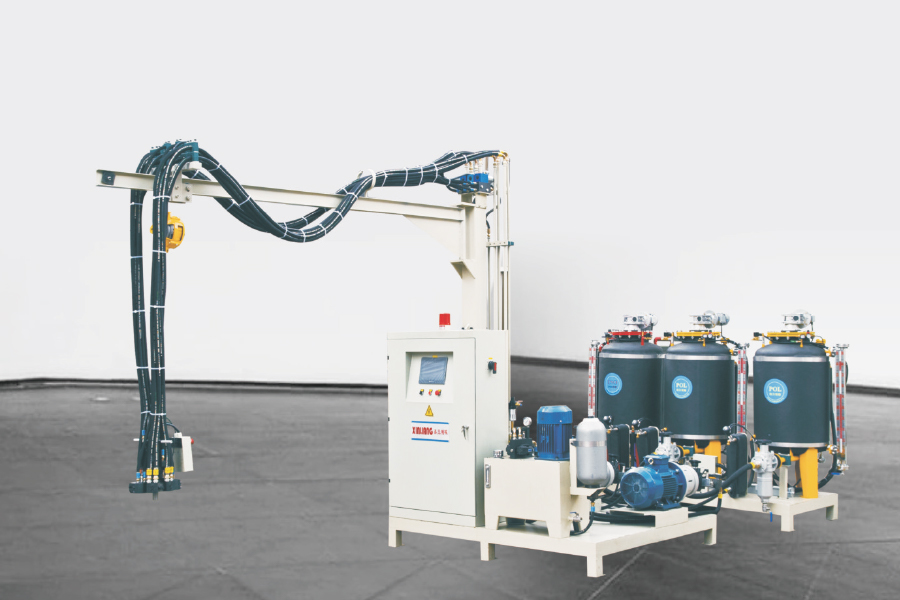
Cyclopentane's drawback is flammability, not toxicity. A foaming line using cyclopentane must be designed as an explosion-protected system with gas monitoring and inerted premixing stages. This engineering choice is what separates a safe plant from a dangerous one. A cyclopentane premix system blends the flammable blowing agent with the polyol in a closed, monitored loop, keeping the hydrocarbon away from ignition sources before it reaches the mixing head.
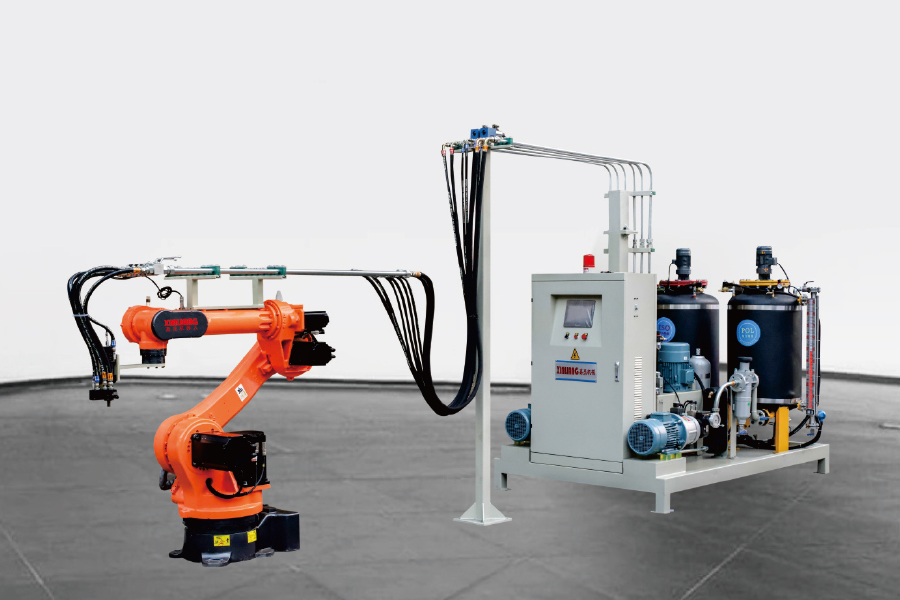
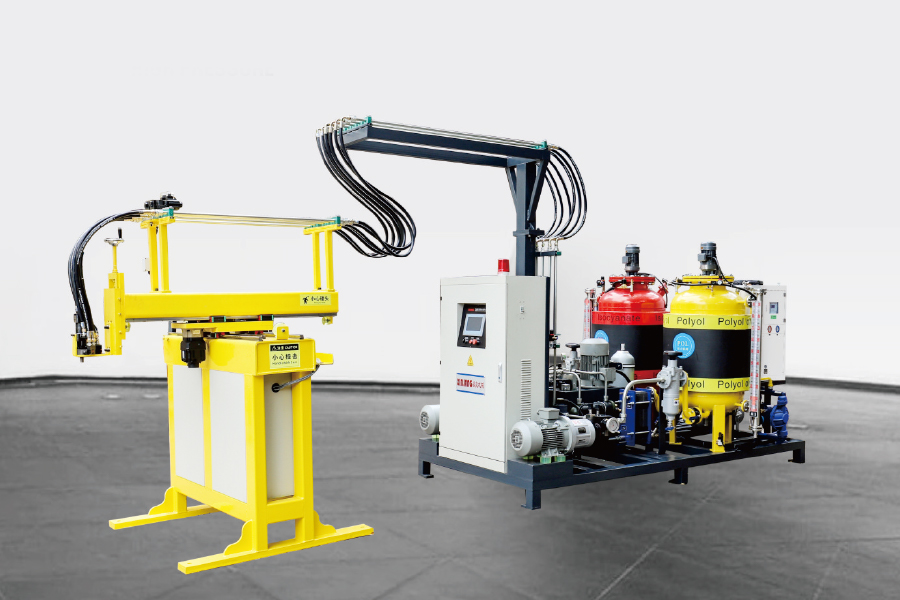
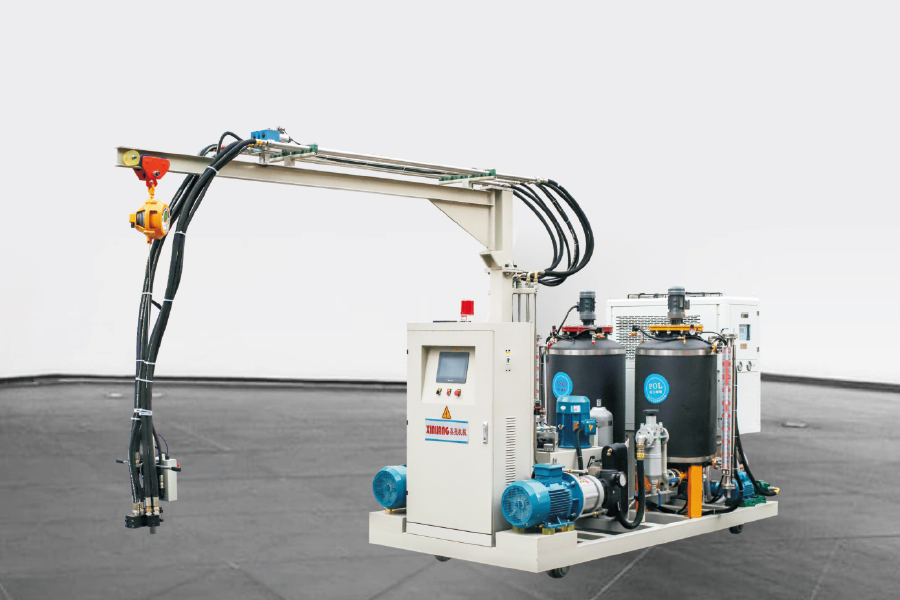
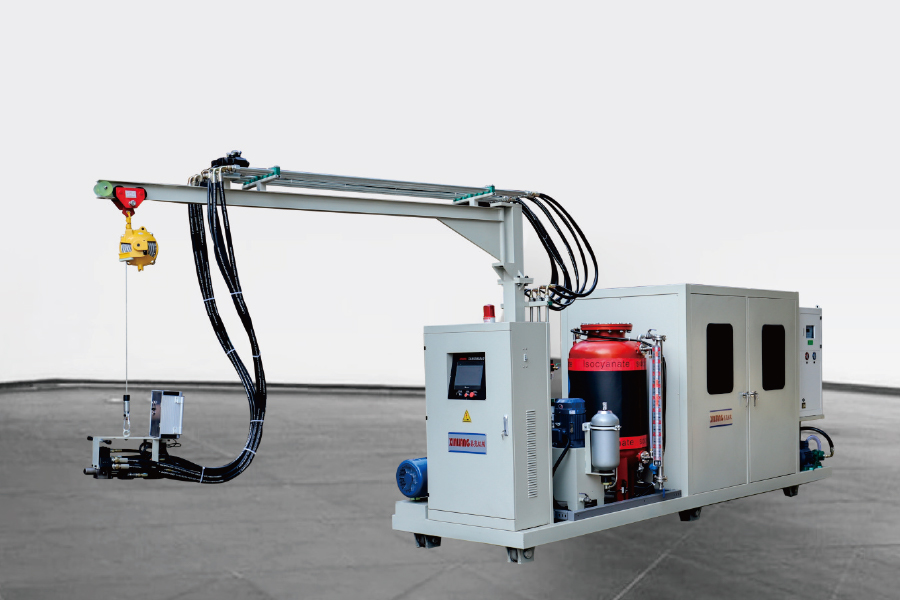
For foam producers, worker safety begins with the machine. Open pouring, manual mixing, and unvented curing rooms are the situations where isocyanate exposure actually happens. High-pressure equipment changes the picture because it meters and mixes the components inside a self-cleaning mixing head under pressure, then delivers the reacting mixture directly into the mold or substrate.
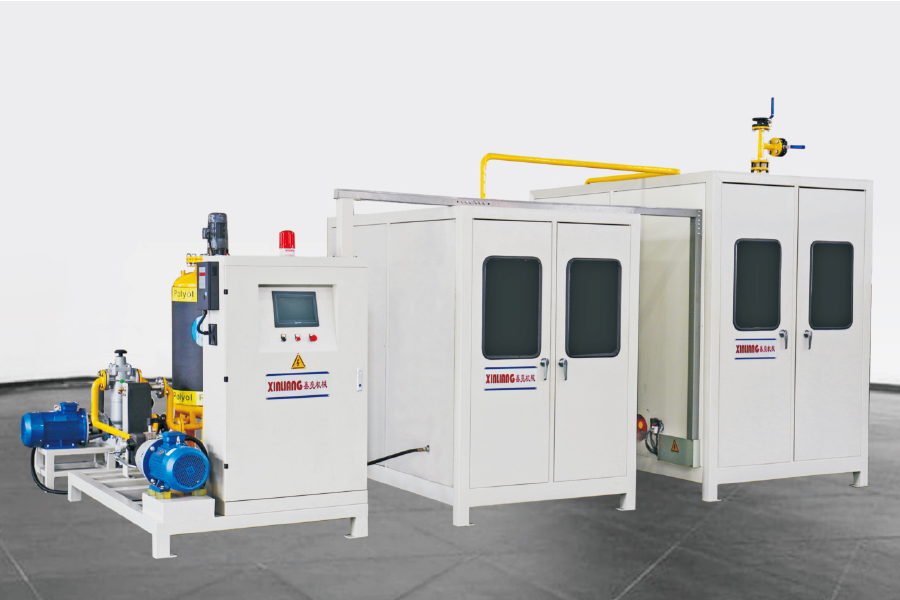
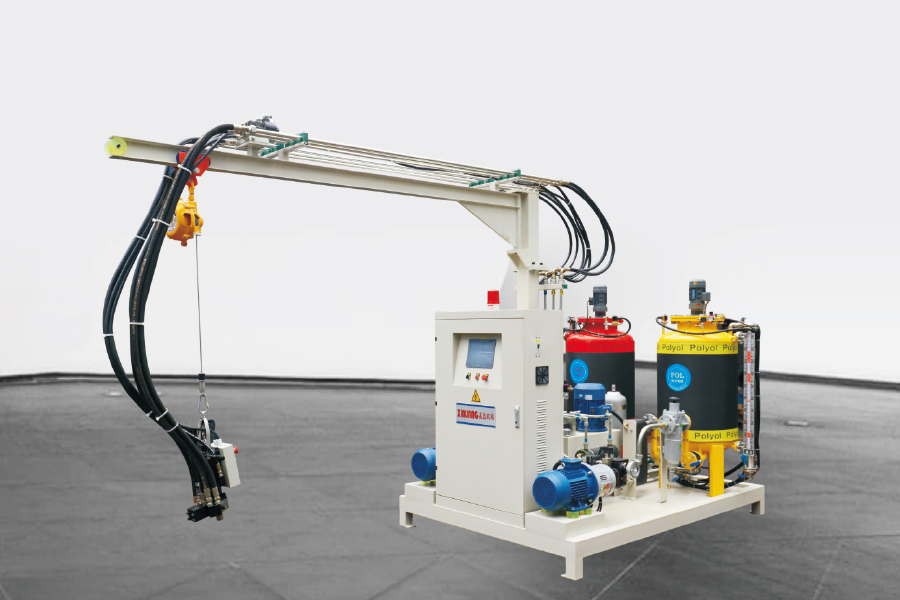
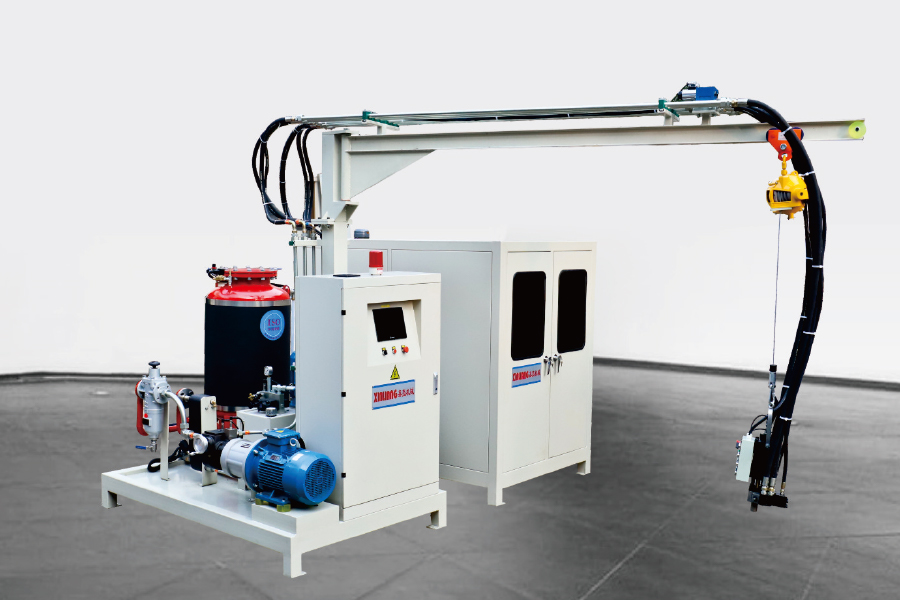
A two-component polyurethane high-pressure foaming injection machine is a clear example of this principle: the polyol and isocyanate remain inside sealed tanks and hoses at all times before the injection shot, which is the first line of defense against operator contact. Precise ratio control also prevents the unreacted isocyanate residue that can remain in poorly mixed foam. Factory trials show the difference in practice; our equipment demonstration videos show the enclosed mixing heads and automated cycles in operation.
Plants that produce refrigerator panels, insulation boards, or automotive interior parts often upgrade to cyclopentane polyurethane high-pressure foaming injection machines that integrate hydrocarbon handling, metering, and injection in one safety-monitored line. Regardless of the machine type, ventilation, air monitoring, and operator training remain mandatory complements to the equipment.
Common claims about polyurethane foam toxicity compared with the current technical understanding.
Myth
Fact
"Polyurethane foam is toxic."
Cured polyurethane foam is chemically inert in normal use; the toxicity concern applies mainly to the liquid raw materials before the reaction.
"If foam smells, the product is dangerous."
The new-foam smell comes from VOCs that decrease quickly with ventilation; certified low-emission foam may barely smell at all.
"All polyurethane foam is the same."
Formulations differ widely. Catalyst residues, flame retardants, and blowing agents can affect emissions, flammability, and long-term stability.
"Polyurethane foam causes cancer."
No consistent evidence links cured foam in normal use to cancer. The carcinogenicity discussion in older literature refers to unreacted isocyanates in occupational settings.
How to reduce risk when buying or producing foam
For consumers:
Look for CertiPUR-US, OEKO-TEX, or GREENGUARD labels on mattresses and upholstered furniture.
Let new foam products air out for 24 to 72 hours in a ventilated room before use.
Choose products without added flame retardants when the application does not legally require them.
For insulation projects, prefer water-blown or hydrocarbon-blown foam systems.
For manufacturers and converters:
Use closed high-pressure mixing equipment rather than open manual mixing.
Check metering ratios, hose integrity, and the mixing-head flush cycle daily.
Handle hydrocarbon blowing agents only in explosion-protected areas with gas detection.
Provide isocyanate-specific respiratory protection, skin protection, and operator training.
Frequently asked questions about polyurethane foam safety
Q1: Is polyurethane foam toxic to humans?
Cured polyurethane foam is not toxic under normal use. The liquid isocyanates used in manufacturing are hazardous, which is why industrial safety regulations focus on raw materials rather than the finished product.
Q2: How long does polyurethane foam off-gas?
Off-gassing is strongest in the first 24 to 72 hours and drops sharply after that. Certified low-emission foam may release only trace amounts for weeks, but normal ventilation resolves most household concerns quickly.
Q3: Is memory foam safer than polyurethane foam?
Memory foam is a type of polyurethane foam modified for viscosity and temperature response. The same certification standards apply, so "safer" depends on emission test results, not on the foam type itself.
Q4: Can polyurethane foam cause breathing problems?
Properly cured low-emission foam rarely causes respiratory irritation. Occupational exposure to unreacted isocyanates can trigger asthma or sensitization, which is exactly why industrial exposure limits exist.
Q5: Is polyurethane foam safe for babies?
Many baby mattresses use certified low-emission polyurethane foam that meets strict chemical and VOC limits. If an infant product lacks certification, air it out and look for a certified alternative.
Q6: What is the safest type of foam for furniture?
Certified low-VOC, high-resilience polyurethane foam without added flame retardants is widely considered a safe choice. For those avoiding petrochemicals entirely, latex foam is an alternative, but its own certifications still need checking.


 English
 русский
 عربى
عربى