Home / News / Industry news / How Is Polyurethane Foam Made? Step-by-Step Manufacturing Process Explained
How Is Polyurethane Foam Made? Step-by-Step Manufacturing Process Explained
Industry news-
Making polyurethane foam is not a single event—it is a controlled chemical process. In commercial production, two liquid streams are brought together under high pressure. The reaction starts immediately, generates gas, and turns the mixture into a solid foam in a matter of seconds. The quality of that foam depends on how precisely those liquids are measured and mixed.
If you are evaluating equipment for your own production line, the same principles that govern the chemistry also determine which machine settings will deliver consistent results.
Every polyurethane foam begins with two reactive components: an isocyanate and a polyol. The isocyanate is usually MDI or TDI. The polyol is a polymer with multiple hydroxyl groups, and it can be derived from petroleum or renewable sources. When these are mixed, the –NCO groups react with the –OH groups to form urethane linkages, building the polymer chain.
Blowing Agents Create the Foam Structure
A foam needs gas bubbles. That gas can come from a chemical reaction or from a physical blowing agent. Water is a common chemical blowing agent: it reacts with isocyanate to produce carbon dioxide. Physical blowing agents like cyclopentane or HFC evaporate under the heat of the reaction to create bubbles.
The choice of blowing agent changes the environmental footprint. According to an assessment from the IPCC, water has a global warming potential (GWP) of 0, cyclopentane about 11, and HFC-245fa over 1000.
The Foaming Process Step by Step
In an industrial setting, the process is usually organized into four main stages:
Preparation: Both components are heated and degassed to the correct temperature and viscosity.
Metering: Precision pumps deliver the exact ratio of isocyanate to polyol, along with additives.
Mixing and injection: The streams are brought together in a mix head at high pressure, then injected into a mold or onto a conveyor.
Curing: The polymer network forms and the foam expands, then hardens in 30 seconds to several minutes depending on thickness.
The mixing pressure is one of the most important differentiators between machine types. High-pressure injection machines typically operate at 150–250 bar, while low-pressure equipment works at only 2–10 bar. This gap directly affects how finely the two components are dispersed and how uniform the resulting foam will be.
The difference in mixing pressure translates into different mixing ratio accuracy. High-pressure machines can keep the ratio deviation under 1%, while low-pressure equipment may vary by 2–4%.
Even with the right chemistry, small changes in process parameters will change the foam. The four most important variables to monitor are:
Mixing ratio: The isocyanate index is usually between 105 and 115. A change of ±1% can alter density and hardness.
Component temperature: Polyols are typically heated to 20–30°C. Higher temperatures speed up the reaction, but can cause premature gelling.
Injection pressure: Higher pressure gives finer droplet dispersion and more uniform cells.
Mold temperature and venting: Proper venting prevents trapped air and internal voids.
For manufacturers producing insulation panels, refrigerators, or automotive parts, these parameters must be repeatable. That is why automatic controls and precise metering pumps are essential on any production line.
In a complete polyurethane foam production line, the foaming machine works with pre-mixing systems, conveyor rails, and temperature control units.
Equipment Used in PU Foam Manufacturing
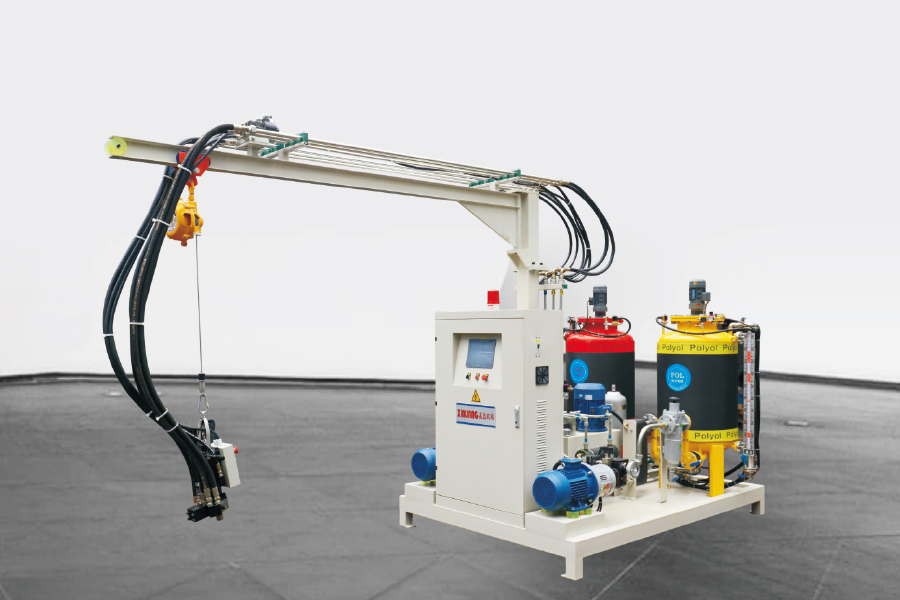
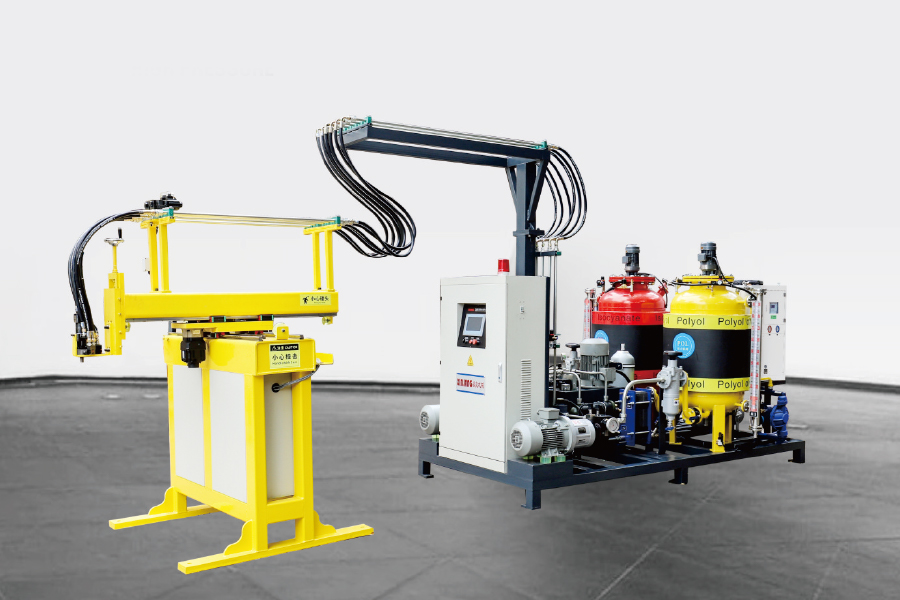
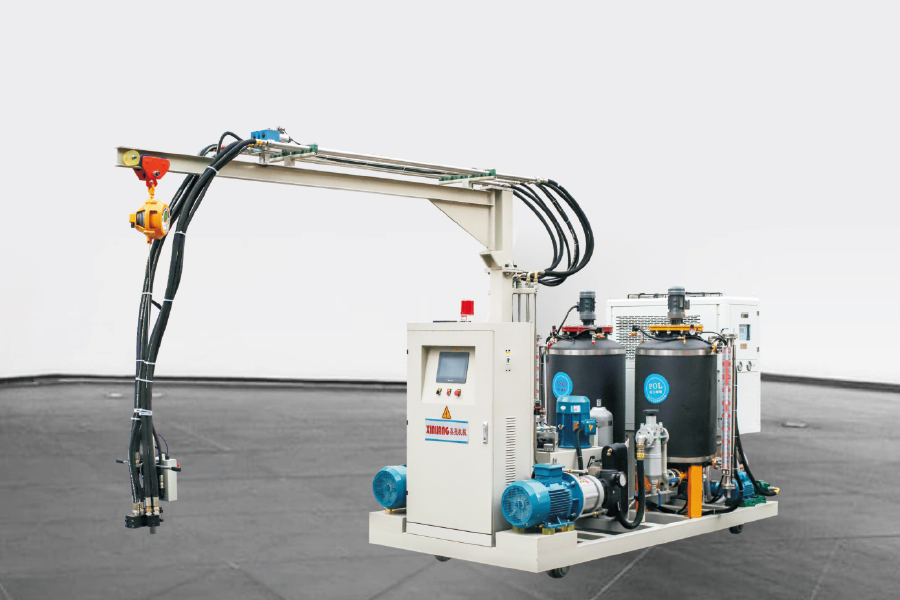
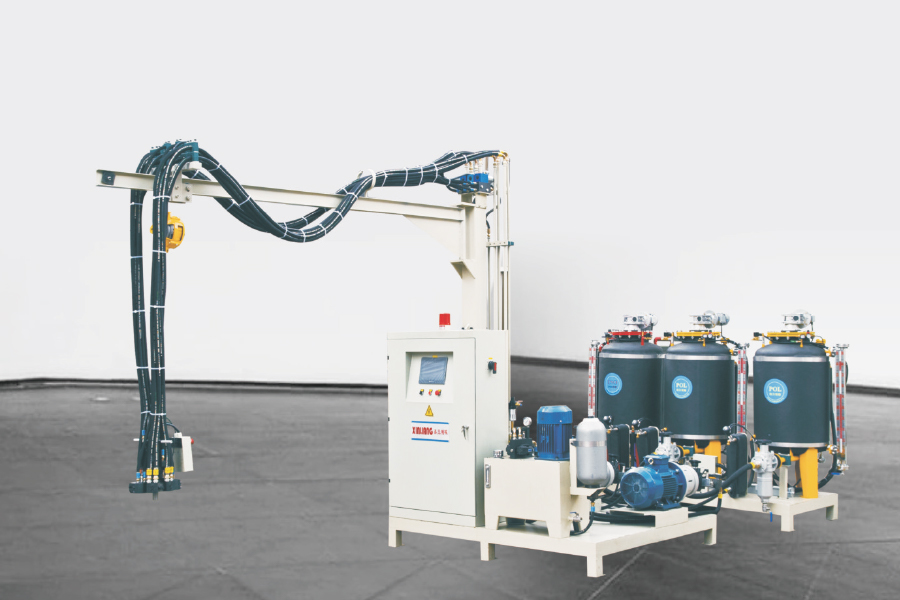
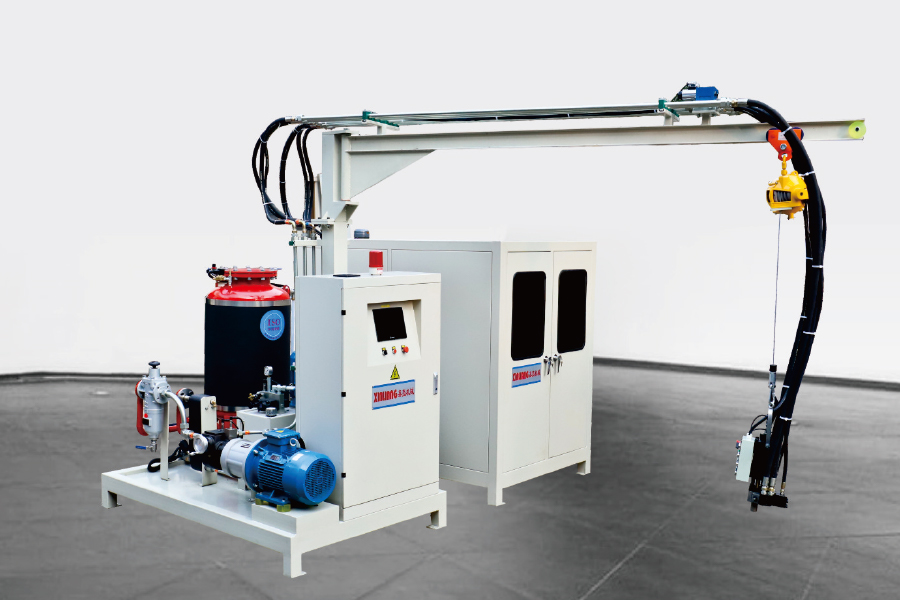
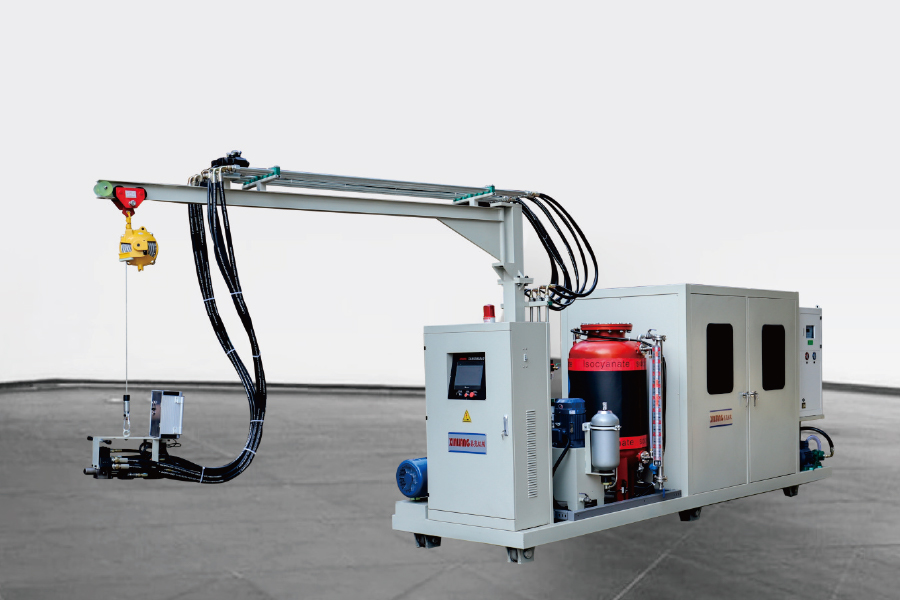
Choosing the right equipment depends on the scale and the products you make. A small workshop might use a simple two-component injection machine, while a large appliance factory may need a full automated line with robots. The core equipment types include:
Two-component high-pressure machines for rigid and flexible foams.
Three-component machines with additional injection streams for colorants or additives.
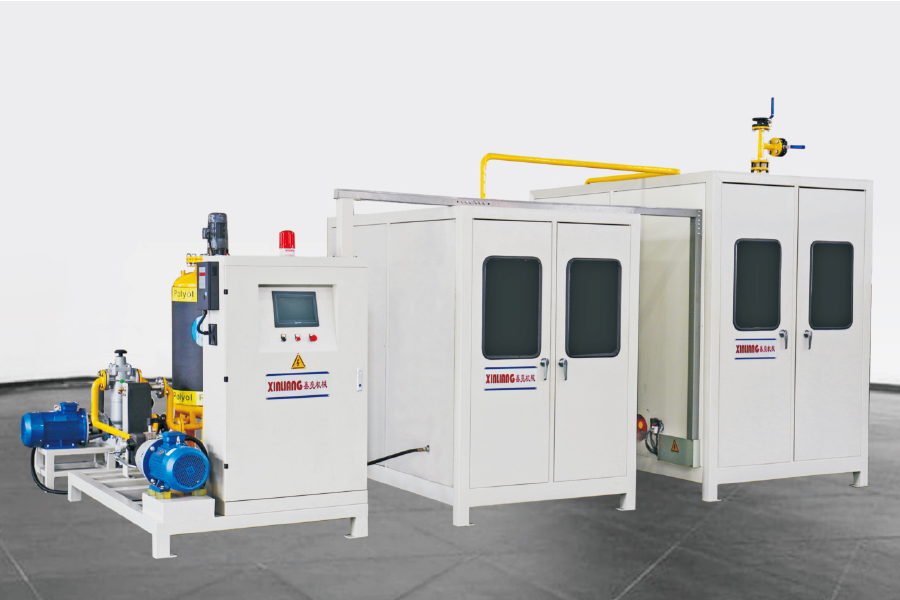
Cyclopentane premix systems for blowing agent blending in a safe, controlled manner.
Automated production lines with turntable, annular, or H-type structures for high-volume output.
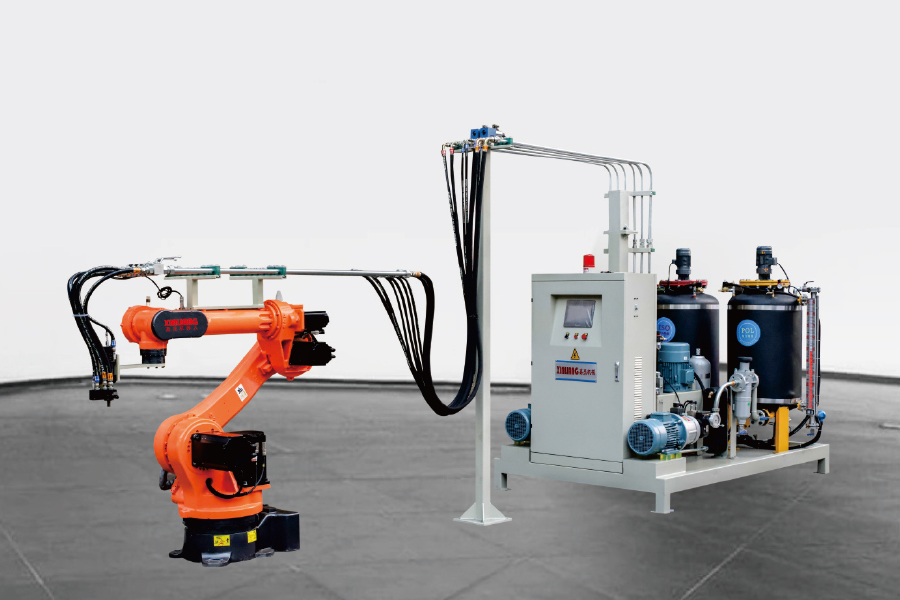
Automatic lines are especially valuable in industries like refrigeration and automotive sealing. For example, a six-axis robot can control the injection path precisely, which reduces scrap and improves consistency.
For larger operations, a six-axis robot mounted on a two-component high-pressure machine provides repeatable injection across complex molds, which is a common requirement in automotive interior parts.
When the application involves cyclopentane as a blowing agent, a dedicated premix system ensures the agent is blended thoroughly and safely before injection.


 English
 русский
 عربى
عربى