Home / News / Industry news / How Does a Polyurethane Foaming Machine Work? High-Pressure Mixing Explained
How Does a Polyurethane Foaming Machine Work? High-Pressure Mixing Explained
Industry news-
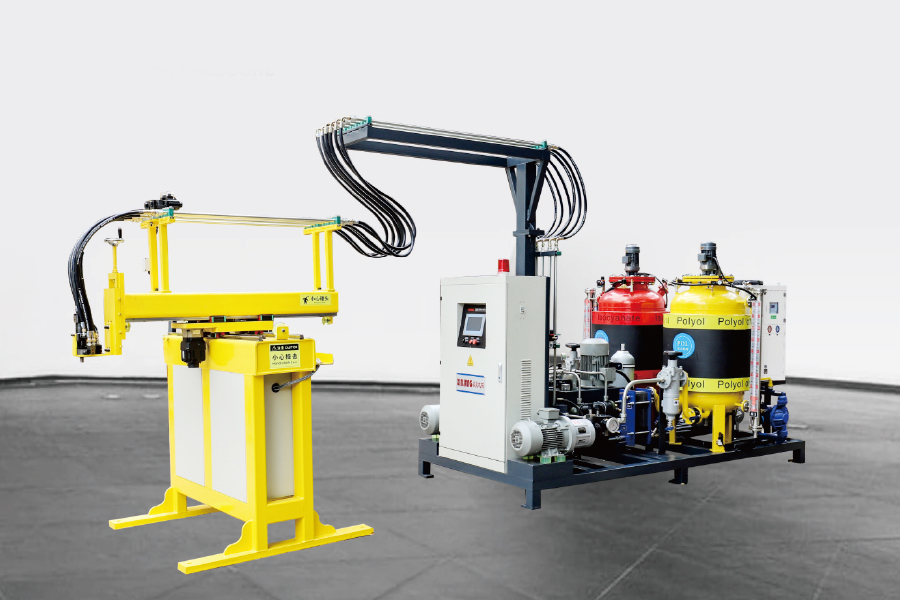
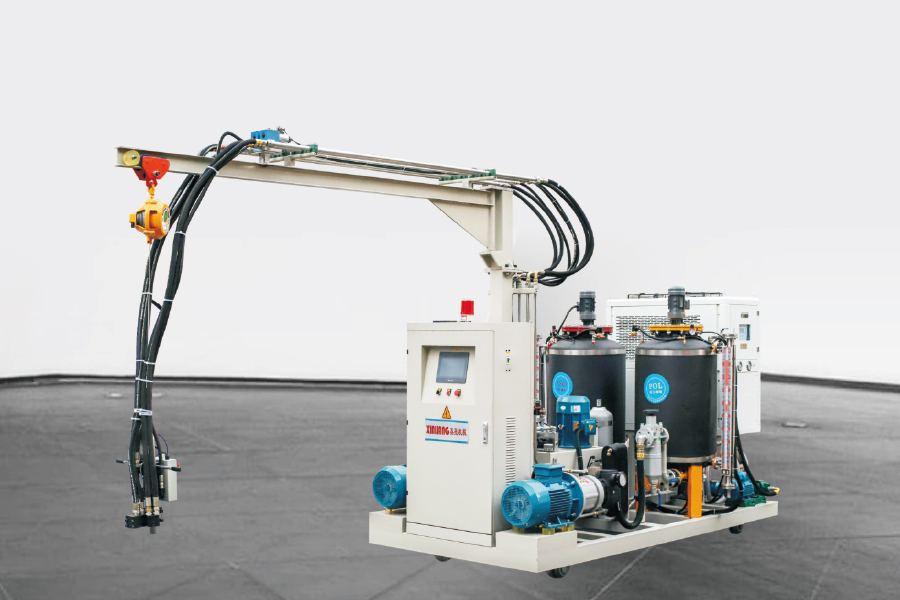
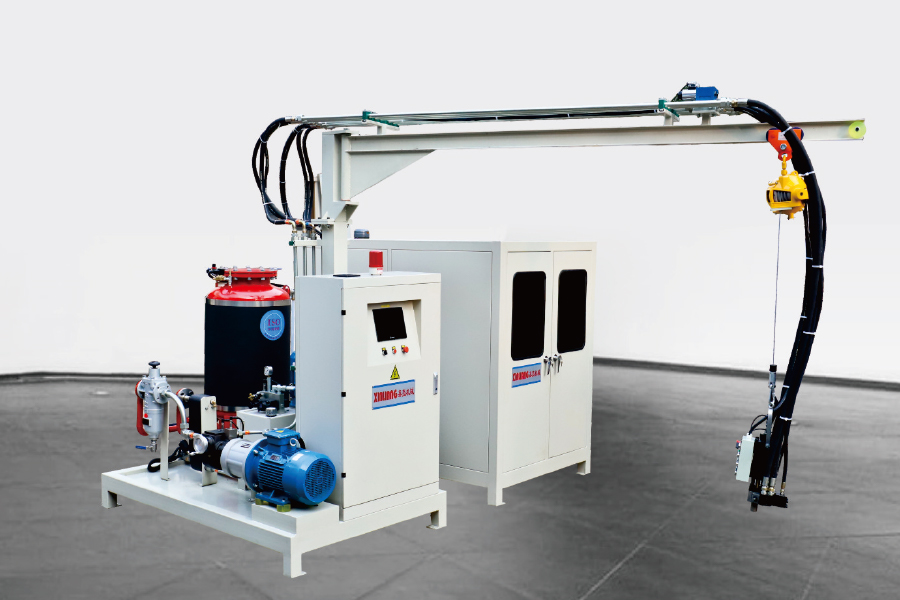
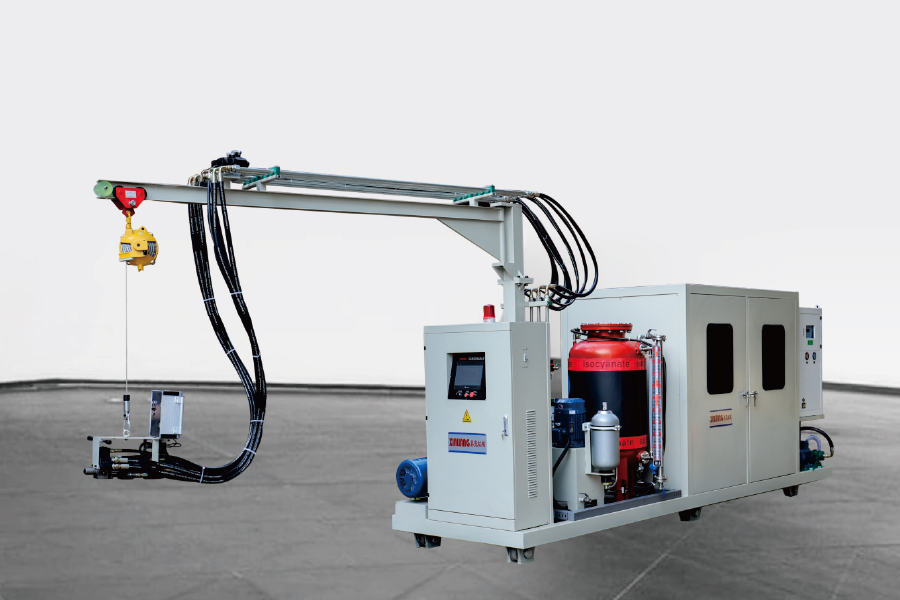
A polyurethane foaming machine is judged by what happens during a short injection, not by the size of its tanks. It must deliver two reactive liquids at a controlled ratio, temperature, and pressure; mix them thoroughly enough for the reaction to start evenly; and place the expanding foam where the mold or cavity needs it before gelation begins. That is why two machines with similar nominal output can behave very differently on a refrigerator cabinet, a sandwich panel, or a car seat pad.
The short answer: metering, mixing, injection, expansion
A polyurethane foaming machine works by circulating a polyol component and an isocyanate component separately, metering each one, bringing them together in a mixhead under high pressure, and injecting the mixed liquid into a mold or onto a substrate. The chemical reaction starts as soon as the two streams meet. The liquid first creams, then rises as gas is generated or a physical blowing agent expands, and finally gels and cures into foam.
The machine does not “make foam” by itself. It creates the conditions for a repeatable reaction: correct ratio, stable temperature, clean mixing, accurate shot size, and a controlled injection path. When one of those conditions drifts, the defect usually appears in the foam density, cell structure, adhesion, or surface finish.
From day tanks to the mixhead: the material path
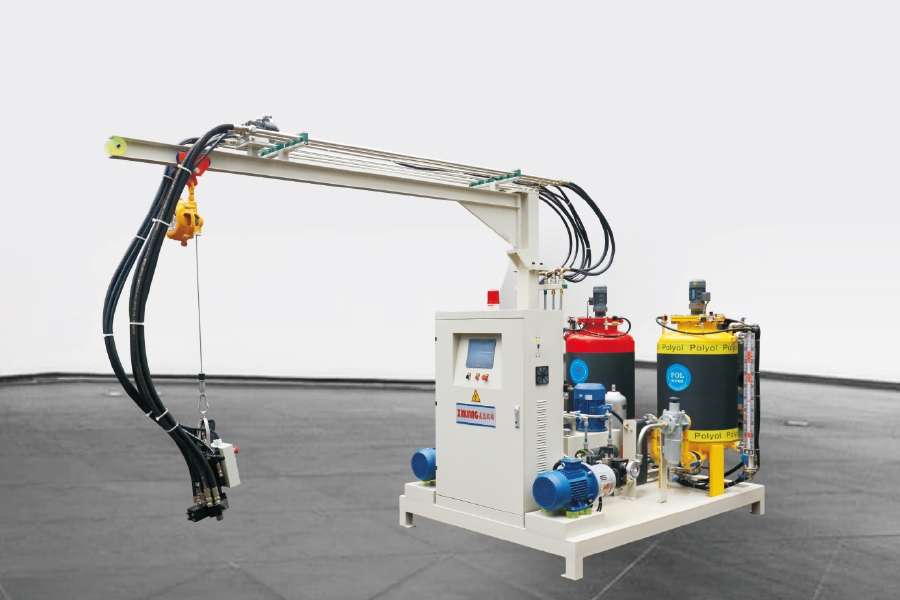
Most high-pressure polyurethane foaming machines use two separate material circuits. The polyol side may contain polyols, catalysts, surfactants, blowing agents, pigments, or fillers. The isocyanate side is kept separate because it reacts with moisture and with the polyol blend. Each circuit typically includes a day tank or working tank, a filter, a metering pump, a heat exchanger, pressure gauges, and a recirculation loop back to the tank.
The recirculation loop keeps both components moving and at a stable temperature before the shot. When the injection signal is given, valves redirect the streams from recirculation into the mixhead. The metering pumps determine the output and the mix ratio. On many machines, ratio is set and verified by calibration, because a small ratio error can change foam hardness, density, or dimensional stability.
Temperature control matters as much as pressure. Component viscosity changes with temperature, and viscosity affects pump slip, pressure drop, and mixing quality. That is why heat exchangers and temperature sensors are part of the working process, not just accessories.
Why high-pressure impingement mixing matters
In a high-pressure machine, the two components enter a small mixing chamber through opposing nozzles. The kinetic energy of the streams creates impingement mixing without a mechanical stirrer. Many high-pressure PU systems run in the range of roughly 100–200 bar, but the correct setpoint depends on viscosity, output, nozzle size, and mixhead design. Too little pressure can leave streaks or unmixed zones; too much pressure can increase wear and shear-sensitive additive damage.
Good mixing is not only about pressure. Nozzle condition, valve seating, component temperature, and ratio stability all affect the result. A machine can hold steady pressure and still produce poor foam if one filter is partly blocked or one pump is slipping. For a deeper explanation of the internal sequence, see this working principle of a high-pressure foaming injection machine.
What happens after the shot
After injection, the mixed liquid wets the mold surface or substrate, then the reaction proceeds through cream, rise, gel, and cure. In rigid foam, the rising mass fills cavities and adheres to surfaces; in flexible foam, cell opening and resilience become important. Mold temperature, shot pattern, venting, and overpacking influence whether the foam fills corners without voids or internal stresses.
The operator sees only part of this sequence. A short cream time may be normal for a fast-cycle appliance cabinet, while a slower system may suit a large panel or a complex automotive part. The machine’s job is to repeat the same shot weight, ratio, and mixing condition cycle after cycle. For a broader view of the chemical and equipment steps, this step-by-step polyurethane foam manufacturing process is useful.
What the control system is actually adjusting
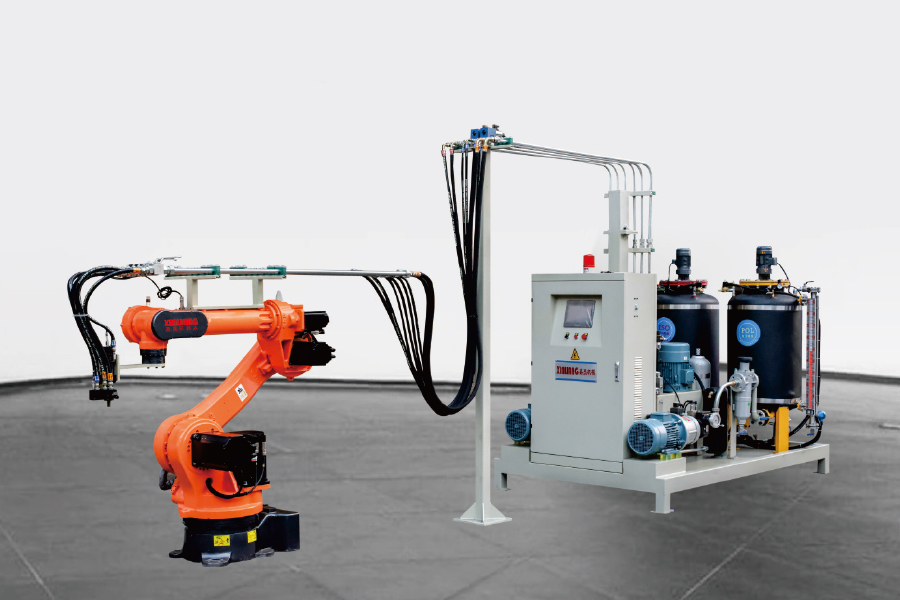
A modern control system monitors and adjusts more than pump speed. It may track component pressure, temperature, ratio, shot size, injection time, mixhead position, and conveyor or turntable position. On automated machines, the control system also coordinates the robot or manipulator path so the mixed liquid is deposited before it starts to expand.
Ratio: controls the stoichiometry and therefore foam strength, density, and cure behavior.
Pressure: affects mixing quality and the ability to overcome mold or transfer-line resistance.
Temperature: stabilizes viscosity and reaction speed.
Shot size and pattern: determine fill, overpacking, and material waste.
Machine configurations and what they change
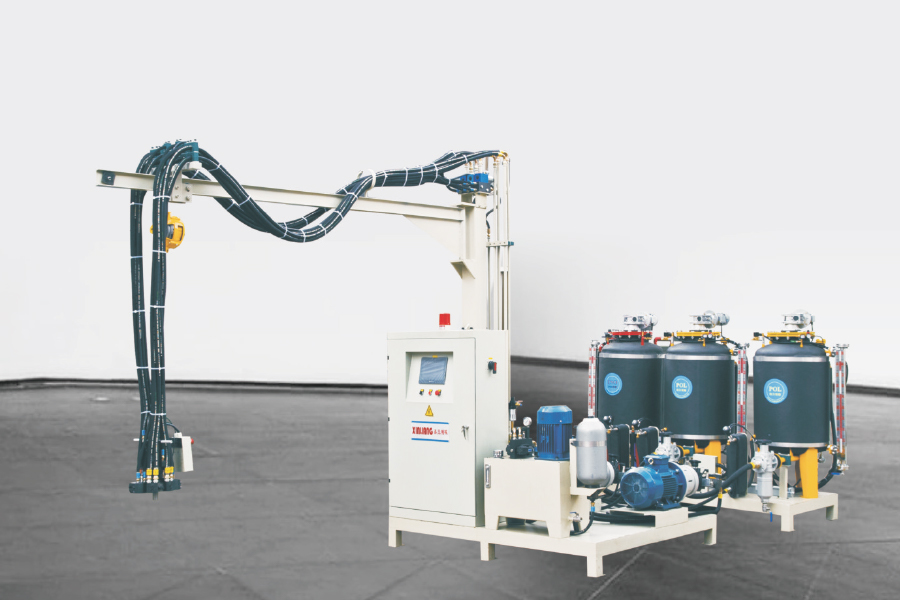
A basic two-component machine is the core configuration for many foam applications. A three-component machine adds a third stream for a blowing agent, additive, or color component, which can improve formulation flexibility. Track-mounted and robotic versions change how the mixhead reaches the mold, not the basic metering principle.
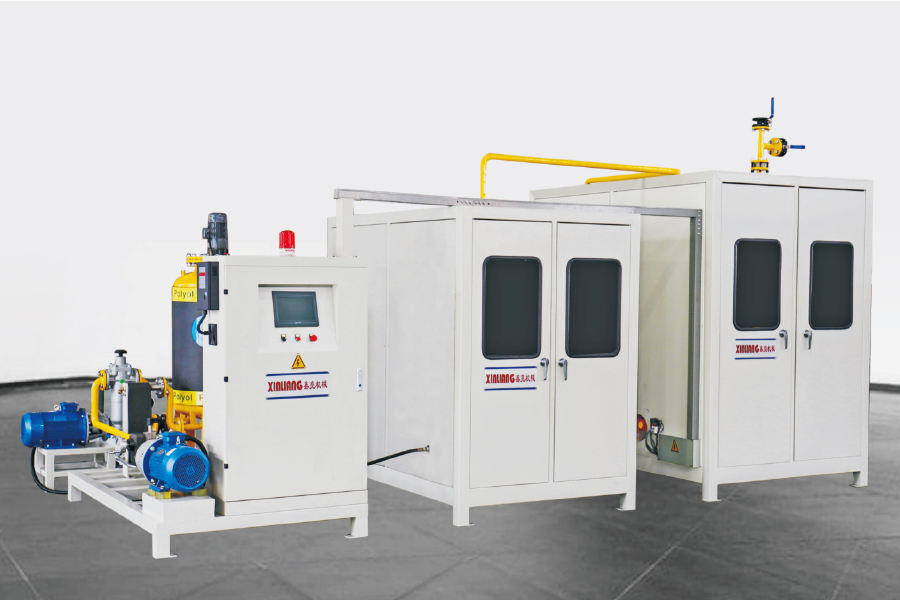
For cyclopentane-based formulations, the machine arrangement must address premixing, concentration control, and safety. A cyclopentane premix system is typically used to prepare and supply the blowing agent blend in a controlled way before it reaches the foaming machine.
Production lines add conveyors, turntables, multiple stations, and synchronization with mold handling. The foam machine still performs the same metering and mixing task, but the line layout determines cycle time, labor requirements, and how consistently the shot is placed.
Common process problems and what to check
Most foam defects point back to a small number of process variables. The table below is a practical starting point, not a complete troubleshooting manual.
Table 1. Common foam symptoms and basic process checks
Symptom
Likely areas to check
Useful first step
Streaks or poor mixing
Pressure, nozzle condition, ratio, component temperature
Verify calibration and inspect mixhead nozzles
Short shots or voids
Shot size, injection pattern, venting, mold temperature
Confirm shot weight and adjust pour path
Density drift
Pump slip, ratio error, blowing agent level, temperature
Check calibration and material conditioning
Surface defects or scorch
Mold temperature, overpacking, catalyst level, demold time
Review thermal profile and venting
How to specify a machine for your foam application
Start with the part, not the machine size. The part volume, foam type, target density, cycle time, mold material, and available utilities define the working range. Then compare the machine’s metering accuracy, pressure capability, ratio range, temperature control, and mixhead options.
Required output per shot and shots per hour.
Component viscosity, fillers, and whether a third stream is needed.
Blowing agent type, including cyclopentane if applicable.
Mold size, injection points, and whether a robot or track is required.
Available power, chilled water, compressed air, and ventilation.
Spare parts, calibration support, and operator training.
For OEM or custom production, ask the manufacturer to review the full process window rather than only the nominal output. A machine that suits a small panel may not suit a deep refrigerator cabinet or a high-volume automotive line.
Frequently asked questions
Q1. How does a polyurethane foaming machine mix two chemicals?
It meters polyol and isocyanate separately, then brings them together in a high-pressure mixhead. Opposing jets create impingement mixing, and the mixed liquid is injected before the reaction advances.
Q2. What pressure is used in high-pressure foaming?
Many systems operate around 100–200 bar, but the correct pressure depends on viscosity, output, nozzle size, and mixhead design. The setpoint should be confirmed with the machine builder and process trials.
Q3. How does the machine control foam density?
Density is influenced by ratio, shot weight, blowing agent, temperature, and mold fill. The machine controls the repeatable inputs, while the formulation and mold conditions determine the final foam structure.
Q4. What is the difference between two-component and three-component machines?
A two-component machine handles polyol and isocyanate. A three-component machine adds a third stream for an additive, color, or blowing agent, giving more formulation flexibility.
Q5. Can one machine run rigid and flexible foam?
Sometimes, but it depends on the pressure range, ratio range, temperature control, mixhead, and material compatibility. Rigid and flexible formulations may require different settings and sometimes different equipment details.
Q6. What information do I need to size a foaming machine?
Provide the part volume, foam type, target density, cycle time, component viscosity, blowing agent, mold size, and available utilities. A manufacturer can then recommend a suitable output, pressure, and configuration.
If you are comparing configurations for a specific part, share the foam type, shot weight, cycle time, and mold layout with the manufacturer. A specification review is more useful than a generic price comparison because the working principle stays the same, but the machine arrangement changes with the application.


 English
 русский
 عربى