Home / News / Industry news / Cyclopentane Insulation Foam Production Equipment: Selection and Safety Guide
Cyclopentane Insulation Foam Production Equipment: Selection and Safety Guide
Industry news-
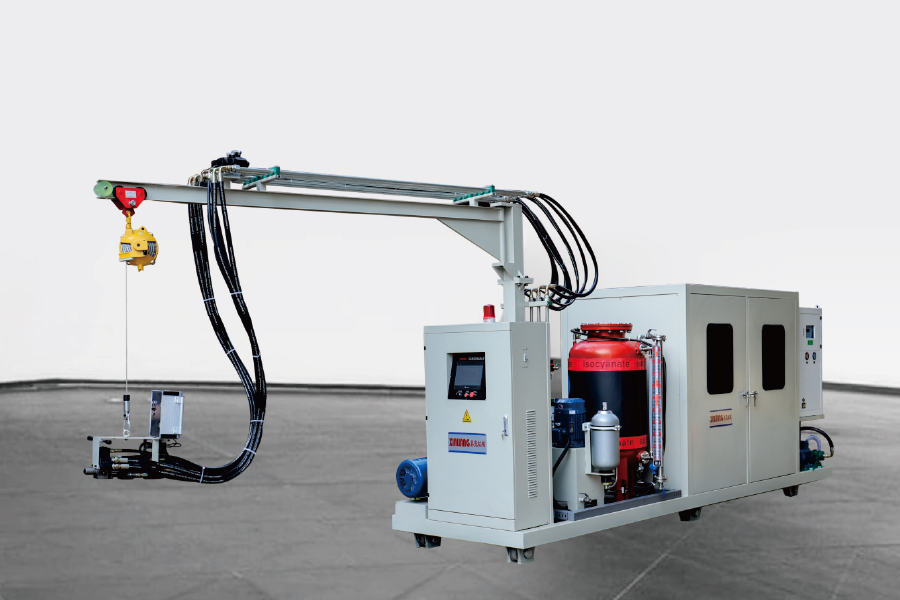
A cyclopentane insulation foam production equipment quotation that lists only an injection machine is incomplete. The line also depends on pentane storage, premix or direct-dosing architecture, explosion protection, ventilation, fixture sealing, and control interlocks. Get those boundaries wrong, and the first symptoms are rarely dramatic: a slightly heavier cabinet, a longer cure, a density reading that drifts after lunch, or a safety review that stops the project before the first shot.
This guide is for buyers and process engineers comparing cyclopentane high-pressure foaming systems for refrigerator cabinets, insulation panels, doors, and similar PU foam parts. It focuses on where specifications matter, which options change total cost, and what evidence to request before signing.
Cyclopentane is a flammable hydrocarbon blowing agent with a low global warming potential compared with HFC-245fa and HCFC-141b. The exact GWP-100 value varies by assessment, but the direction is clear in IPCC reports. That environmental advantage is why the equipment set must be designed around safe handling from delivery to mixing head, not around a standard PU machine with a different tank.
A complete scope usually includes:
Pentane storage, transfer, and grounding provisions.
Premix system or direct-injection dosing arrangement.
High-pressure metering unit with ratio and temperature control.
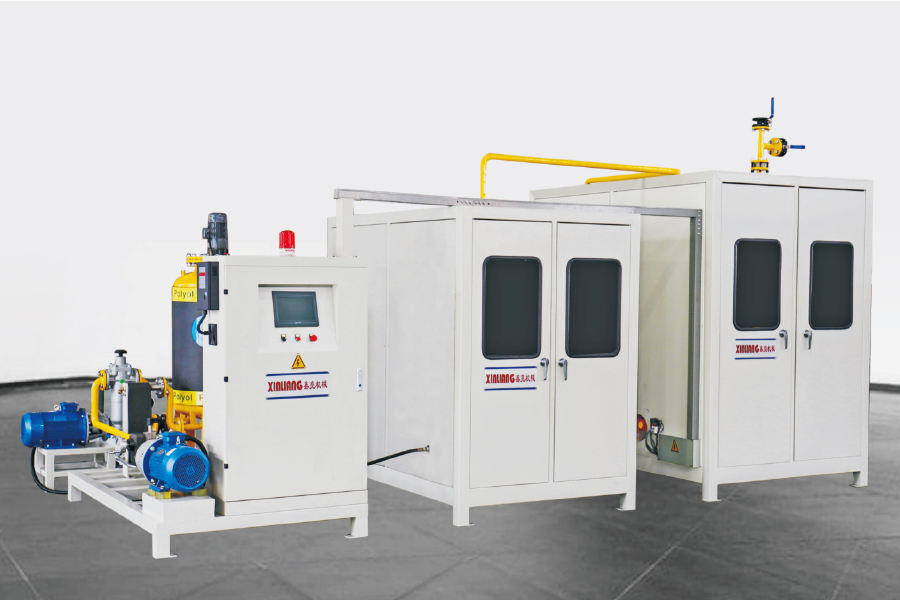
Explosion-protected electricals, ventilation, and gas detection.
Mixing head, fixture interface, and line control recipes.
A cyclopentane line should be reviewed as an explosive-atmosphere installation, not as a standard PU machine with a different feed tank. Practical checks include classified-area drawings, nitrogen blanketing where required, leak detection, forced ventilation, grounded and bonded transfer lines, explosion-proof motors and sensors, and interlocks that stop metering if ventilation or detection fails.
Use the IEC 60079 series as a common reference for hazardous-area equipment, then verify against local codes and insurance requirements. Ask for the safety concept in writing, including what happens during a power failure and how the mixing head is purged.
Table 1. A compact safety review checklist for cyclopentane foam equipment; local codes and the project risk assessment always take precedence.
Review item
Why it matters
Evidence to request
Area classification
Defines electrical and instrument protection.
Drawings and hazardous-area schedule.
Ventilation interlock
Prevents foaming without adequate air changes.
Logic diagram and alarm test record.
Premix temperature control
Reduces ratio drift and vapour pressure variation.
Control range and calibration method.
Grounding and bonding
Controls static ignition risk during transfer.
Resistance checks and installation notes.
Emergency stop logic
Stops feed and injection without trapping pressure.
Cause-and-effect matrix.
Premix or Direct Injection? Decide Before You Compare Prices
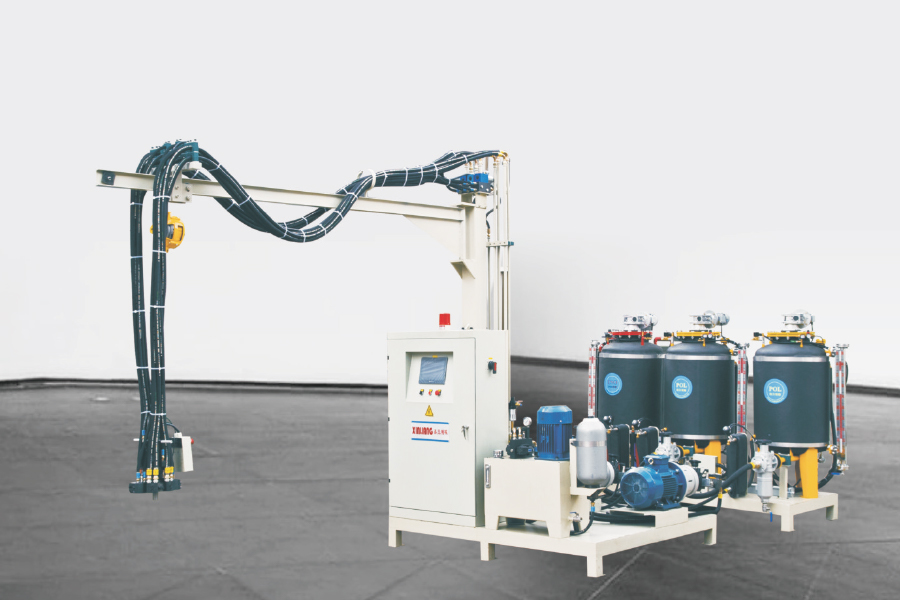
The premix route blends cyclopentane with polyol under controlled conditions before the high-pressure metering unit. Direct injection introduces the blowing agent at the mixing head. The right choice depends on output, product mix, plant layout, and how much buffer you need between delivery and dosing. A premix system usually adds tanks, circulation, temperature control, and safety instrumentation. It can improve consistency, but it also adds cleaning and monitoring routines.
For a line making one cabinet size at high volume, a well-instrumented premix system can simplify repeatability. For a job shop with frequent formulation changes, direct injection may reduce changeover complexity, but only if the safety case and metering controls are designed for it. Review energy use and purge losses over a full shift, not just at the test shot. This comparison of cyclopentane premixing and direct injection is a useful starting point for that review.
Metering, Mixing, and Foam Quality: The Variables That Actually Move
Foam density and cell structure are not controlled by one number. They respond to ratio accuracy, injection pressure, component temperature, mixing-head condition, shot weight repeatability, and fixture venting. A machine that holds pressure on a test bench can still produce drift on a cold morning if temperature conditioning and circulation are weak.
When comparing cyclopentane insulation foam production equipment, ask for repeatability data at the shot size you will run, not only at the supplier's reference condition. Check how the control system compensates for viscosity changes, how calibration is documented, and how the mixing head is cleaned without solvent reaching the foam.
Figure 2. Practical quotation review weighting
Safety and explosion protection
30%
Metering and shot repeatability
25%
Line and fixture fit
20%
Service and spare parts
15%
Energy and purge losses
10%
Editorial weighting for a refrigerator-cabinet project. Adjust to your product and risk assessment; this is not a measured performance claim.
Match the Machine to the Line Layout, Not the Other Way Around
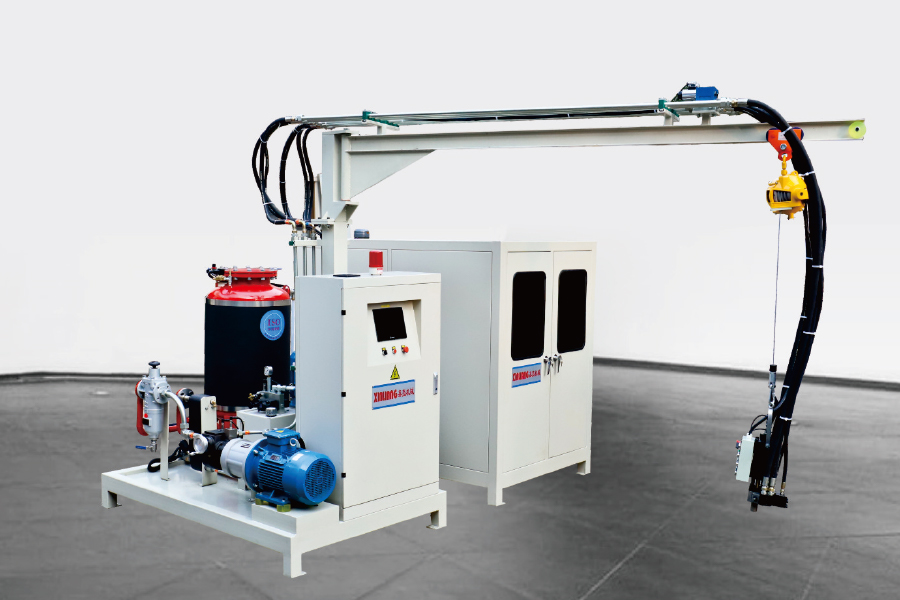
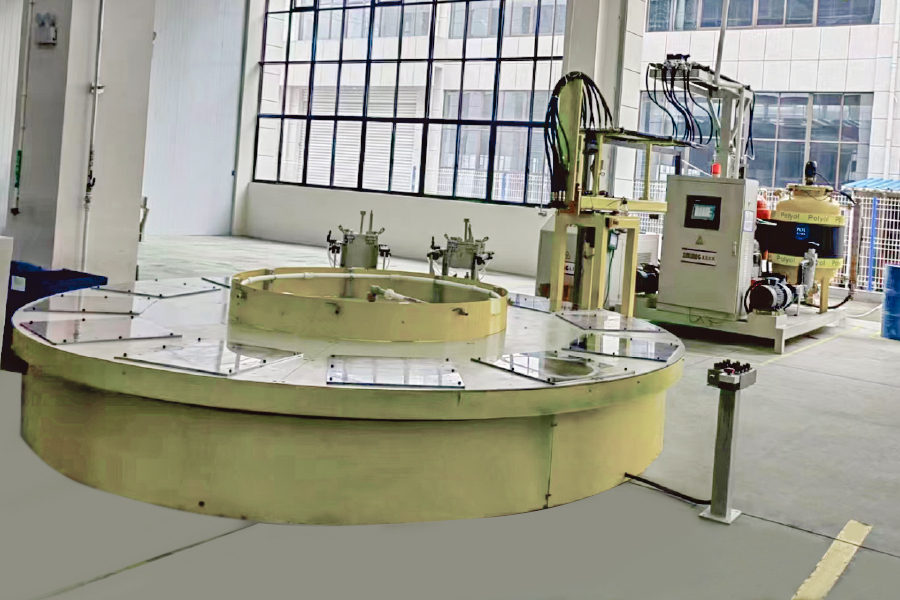
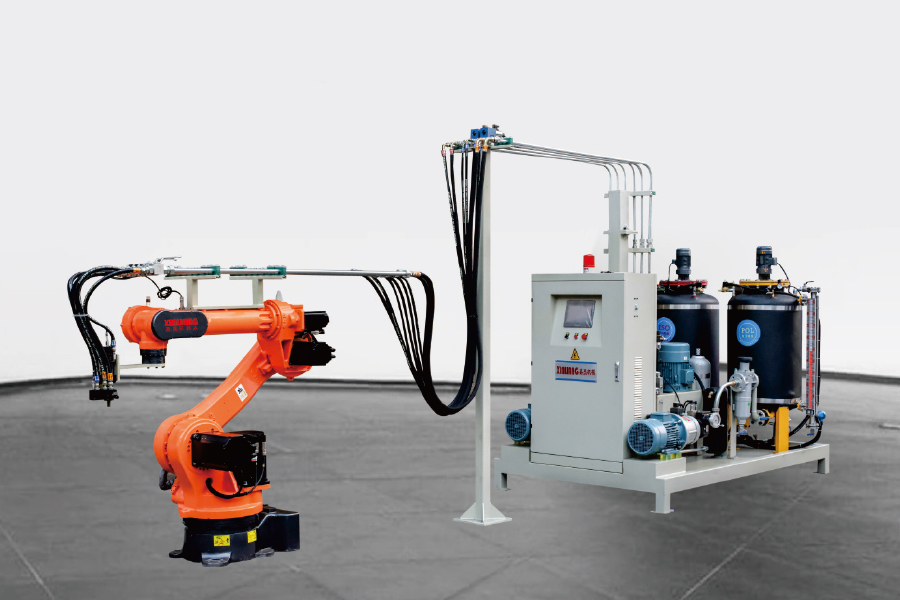
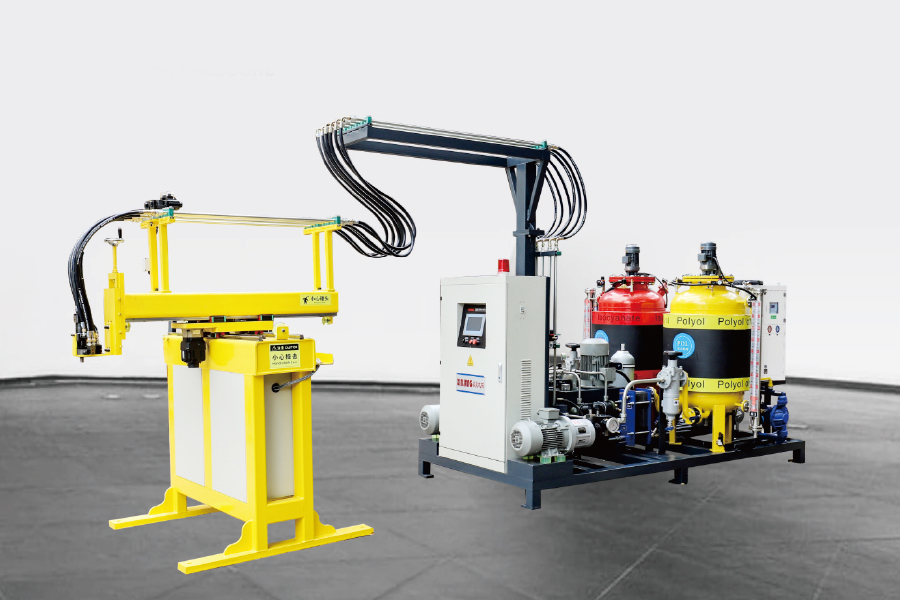
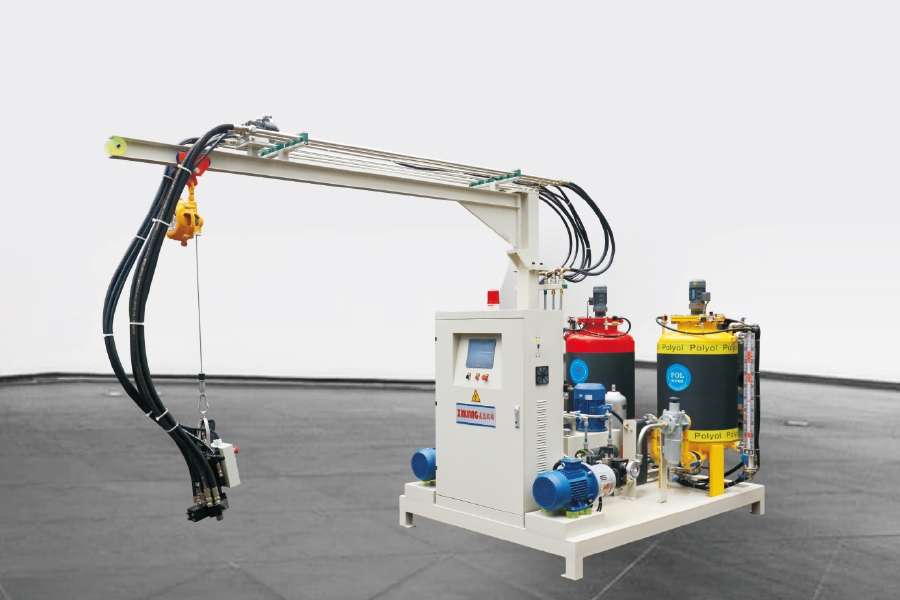
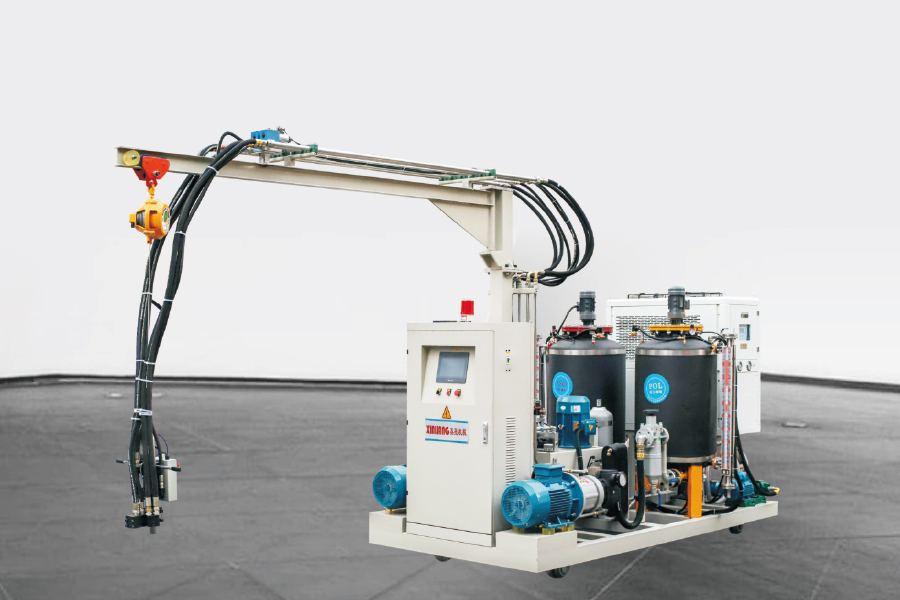
A cyclopentane high-pressure foaming injection machine can be mounted on a track, paired with an XY-axis manipulator, or integrated with a six-axis robot. Turntable, annular, and H-type production lines solve different fixture-flow problems. The machine choice should follow the fixture layout, cure time, and changeover pattern. If the line is designed around a fixed machine position and the product mix later changes, the bottleneck is expensive to remove.
For low-to-medium volume with several product variants, a tracked or turntable layout is often easier to justify. For high-volume cabinet lines, robot or manipulator positioning can reduce manual handling and improve shot placement repeatability. The trade-off is programming, maintenance skills, and spare-parts support. Ask for the integration scope in writing: who supplies the fixture interface, who writes the recipe, and who validates the first article?
Figure 3. Configuration trade-offs
Qualitative comparison on a 1–5 scale for planning discussion; validate against your own cycle-time study and safety review.
A factory acceptance test should reproduce your part, your shot weight, and your cycle. Record ratio accuracy, pressure stability, injection time, cure time, and density at the start, middle, and end of a shift. Run a power-failure and ventilation-failure scenario. Check that alarms are visible, that the event log is readable, and that the operator can recover without bypassing an interlock.
Total cost of ownership is not just kilowatt-hours. It includes cyclopentane handling losses, filter and seal replacement, mixing-head rebuild intervals, calibration labour, and the cost of a line stoppage. For a two-shift operation, one unplanned stop can outweigh a small price difference between two quotations. Ask for a recommended spare-parts list with lead times, and confirm which parts are proprietary.
A Supplier Review That Goes Beyond the Price Sheet
Use a scored review with evidence. A supplier that can explain the safety concept, show the control architecture, and name the standards used in the explosion-protection design is easier to qualify than one that only sends a general brochure. For a custom line, ask for the interface list between machine, fixture, ventilation, and plant control. This is where scope gaps usually appear.
Confirm the hazardous-area drawings and ventilation logic.
Compare metering accuracy at your shot size and cycle.
Review premix or direct-injection losses over a full shift.
Check fixture interface ownership and recipe validation.
Verify spare-parts lead times and service response scope.
Ningbo Xinliang Machinery's product range includes cyclopentane high-pressure foaming injection machines, premix systems, and turntable, annular, and H-type production lines, so the mechanical scope can be discussed as one system rather than separate purchases. That is useful, but it does not replace your own risk assessment, utility review, and acceptance test plan.
Frequently Asked Questions
Q1. What is cyclopentane insulation foam production equipment?
It is an integrated set for handling cyclopentane, metering polyurethane components, mixing, and injecting foam into fixtures under explosion-protected conditions.
Q2. Is cyclopentane foaming equipment explosion-proof?
The hazardous area must be classified and equipment selected accordingly. Ask for the area drawing, ventilation interlock, gas detection, and grounding plan.
Q3. What output can a cyclopentane high-pressure foaming machine handle?
Output depends on shot size, cycle time, and fixture count. Compare repeatability at your required shot weight rather than a single maximum flow figure.
Q4. Do I need a premix system for cyclopentane?
Not always. Premix improves consistency and buffer control but adds equipment and routines. Direct injection can suit frequent formulation changes if safety and metering are designed correctly.
Q5. Can one line make refrigerator cabinets and insulation panels?
It can be designed for multiple products, but fixture sealing, shot weight, cure time, and changeover must be checked. A flexible line often trades some peak output for changeover speed.
Q6. What should I ask about spare parts and service?
Request a recommended spare-parts list, lead times, calibration support, mixing-head rebuild interval, and the service scope for safety-critical components.


 English
 русский
 عربى