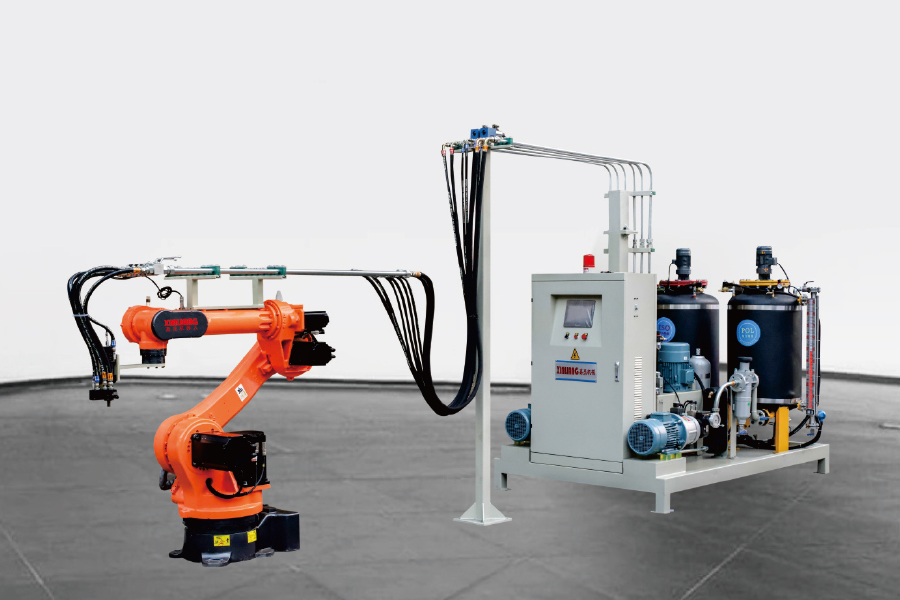
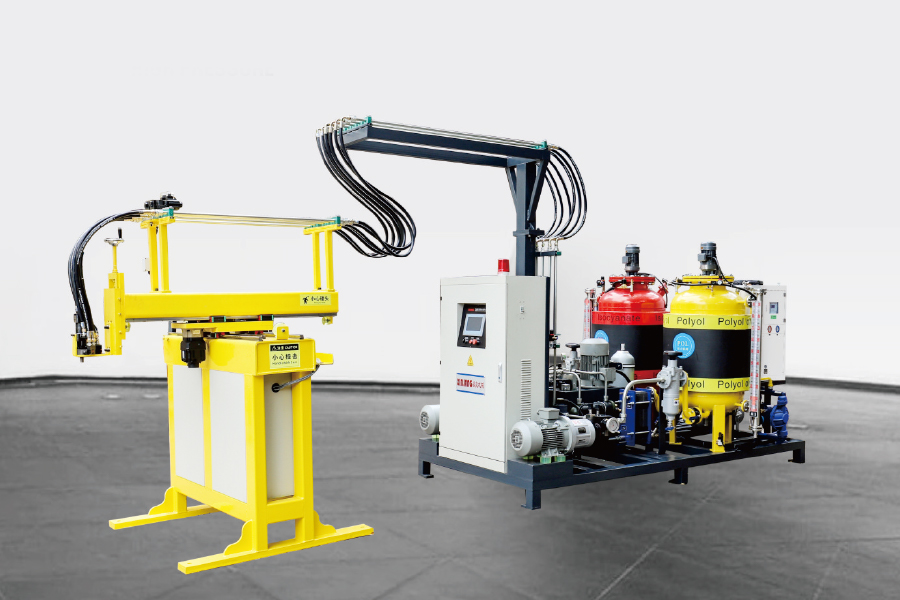
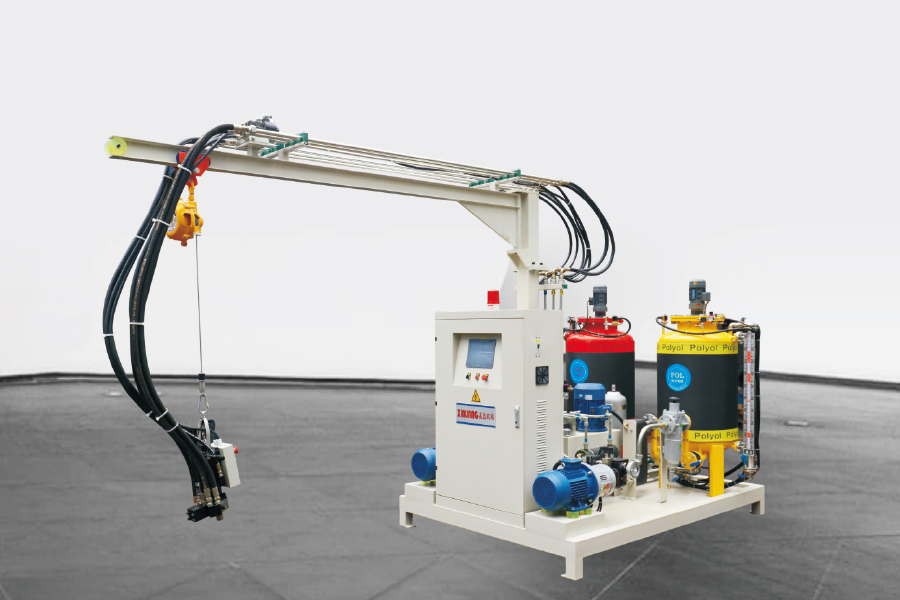
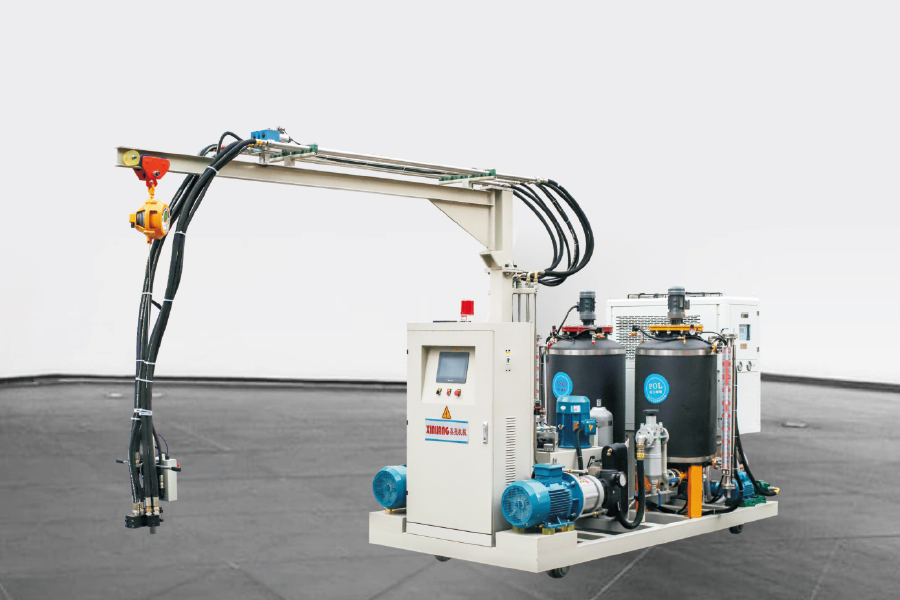
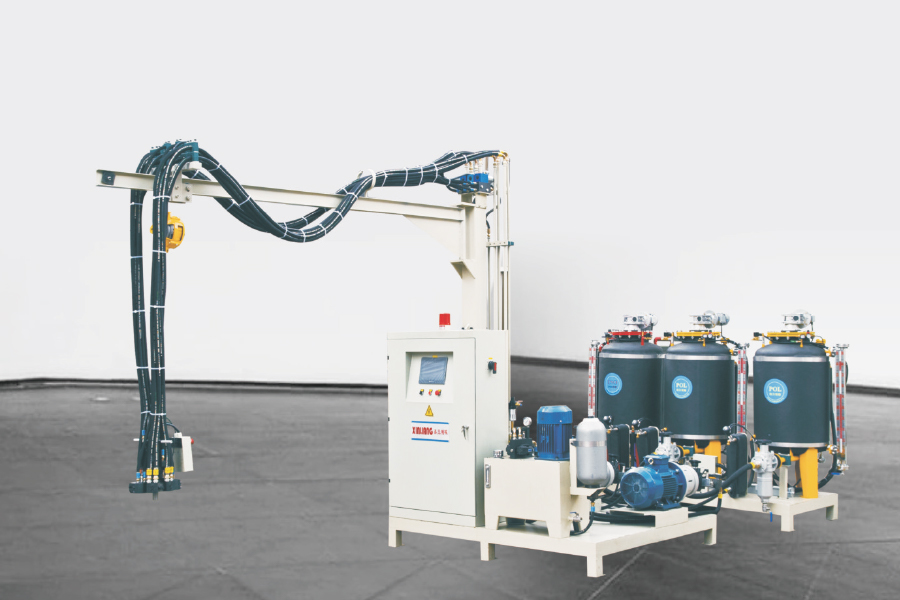
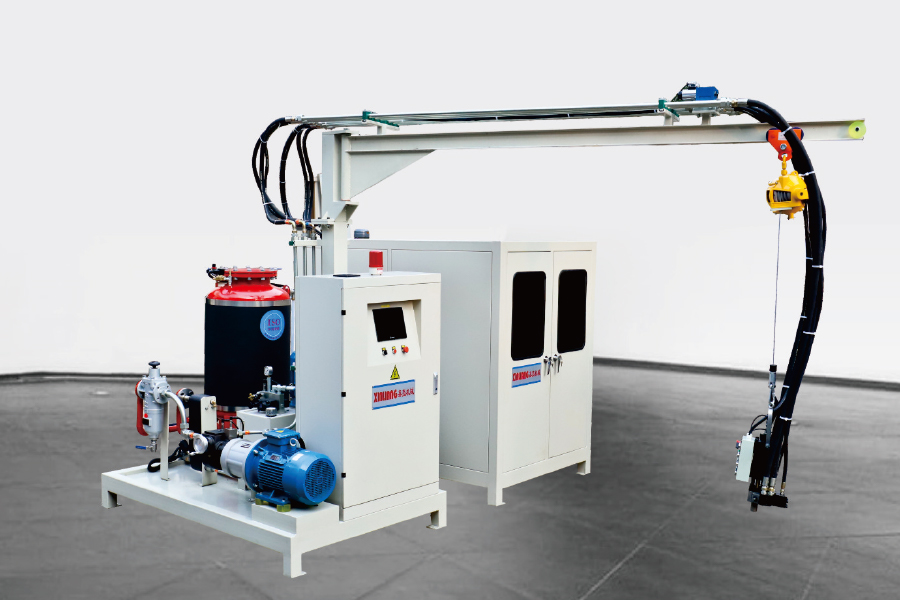
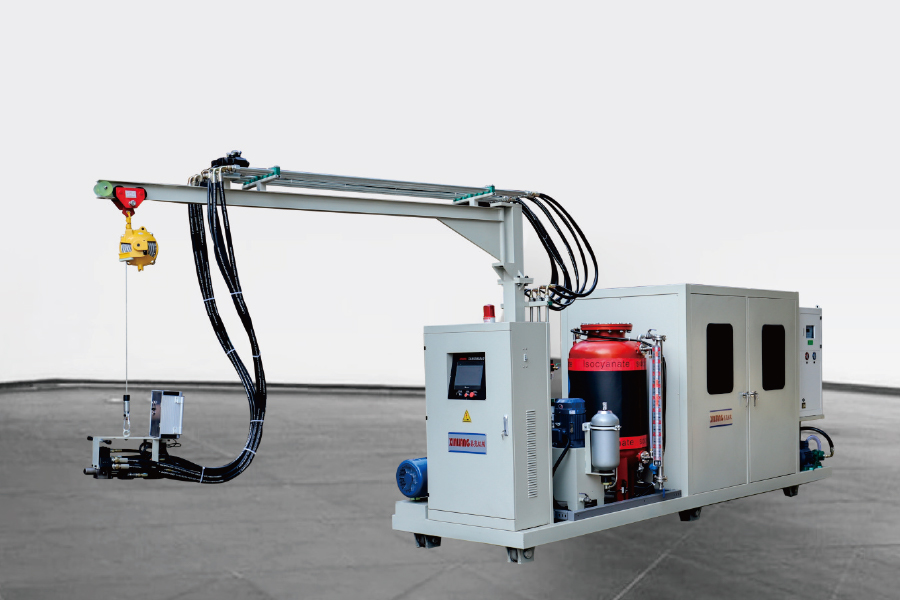
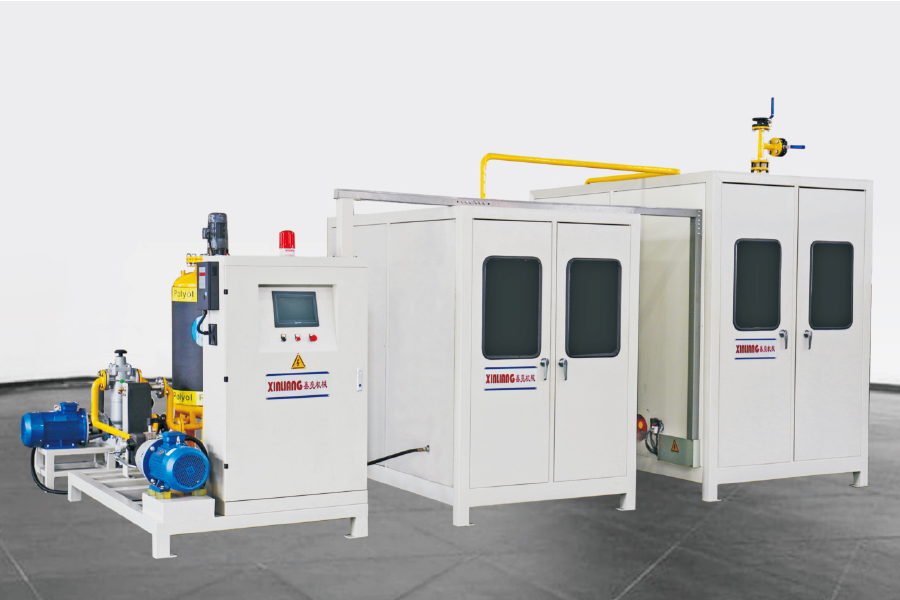
A correctly specified and calibrated foam injection machine production line reduces raw material waste by 25% to 32% compared to manual or semi-automated pouring methods — and this figure is consistently validated across polyurethane foam manufacturing audits in the appliance, furniture, and automotive seating sectors. The mechanism is precision: automated metering systems deliver exact shot weights to within ±0.5% of target, eliminating the over-pour margins that manual operators add as insurance against underfill.
In a production line processing 500 kg of polyurethane raw material per shift, a 30% waste reduction translates to saving approximately 150 kg of chemical per shift — material that previously ended up as rejected parts, flash trimming, or purge waste. Across a full production year of 250 shifts, this represents a substantial and measurable reduction in material consumption without any change to output volume or product specification.
Why Manual Foaming Loses So Much Material — and What Automation Fixes
Understanding where waste originates in a conventional foam production line clarifies exactly why switching to industrial foam molding production equipment delivers such a reliable improvement. Manual and semi-automated systems create waste through four compounding mechanisms that automated foam injection eliminates or minimizes.
Over-Pour Compensation
Manual operators must pour excess material to guarantee mold fill — a typical over-pour margin of 8% to 15% is built into manual shot targets to avoid costly underfilled parts. Automated foam injection systems eliminate this margin entirely by delivering a controlled, repeatable shot weight based on closed-loop metering, reducing this waste category to near zero.
Mix Ratio Deviation
Polyurethane foam quality is extremely sensitive to the isocyanate-to-polyol ratio (the ISO:POL index). A deviation of just 2% from the target ratio produces foam with incorrect density, reduced mechanical strength, or cosmetic defects — all of which result in rejected parts. Industrial foam molding production equipment with real-time flow monitoring maintains mix ratio accuracy to within ±0.3%, reducing ratio-related rejects by 80% or more compared to manual systems.
Purge and Startup Waste
Every production run start and color or formula change requires purging the mixing head. Manual purge procedures are inconsistent — operators tend to over-purge to ensure clean material, wasting 0.5 to 2 kg of chemical per purge event. Automated purge cycles on a foam injection machine production line are timed precisely, reducing per-purge waste by 60% to 70%.
Temperature and Viscosity Drift
Polyol and isocyanate viscosity changes significantly with temperature — a 5°C rise in tank temperature can shift viscosity enough to alter effective flow rate by 8% to 12% even with the same pump setting. Foam injection machines with temperature-controlled component tanks (typically maintained at 20°C to 25°C ±0.5°C) eliminate viscosity-induced shot weight variation that causes both overfill and underfill waste cycles.
Waste Reduction by Production Method: Quantified Comparison
The following table compares material waste rates across three levels of foam production automation, based on polyurethane foam manufacturing data from appliance insulation and furniture seating production lines.
Production Method
Typical Over-Pour Margin
Mix Ratio Accuracy
Reject Rate (Density/Fill)
Total Material Waste
Manual hand-pour
10–15%
±5–8%
6–12%
18–30%
Semi-automated metering
5–8%
±2–3%
3–6%
10–18%
Automated foam injection machine production line
0.5–1%
±0.3–0.5%
0.5–2%
2–6%
Material waste comparison across foam production automation levels in polyurethane manufacturing
Total Material Waste Rate by Production Method (%, midpoint values)
24%
Manual Pour
14%
Semi-Automated
4%
Foam Injection Machine
Automated foam injection machine production lines reduce total material waste to 2–6%, a reduction of up to 30 percentage points vs. manual methods.
Core Components of a Foam Injection Machine Production Line
Industrial foam molding production equipment is a system — not a single machine. Understanding what each subsystem contributes to waste reduction helps production engineers identify which upgrade points deliver the greatest return in their specific operation.
High-Pressure Metering Unit
The metering unit controls the volumetric flow rate of each component (polyol, isocyanate, and additives) with hydraulic or servo-driven piston pumps. Modern high-pressure systems operate at 100 to 250 bar mixing pressure with flow rates calibrated to within ±0.5% of target. This level of precision is physically impossible with manual dosing and is the single largest contributor to waste reduction across the production line.
Temperature-Controlled Component Tanks
Insulated, jacketed tanks with circulation heaters and chillers maintain polyol and isocyanate at stable processing temperatures. Most polyurethane foam formulations require components at 18°C to 28°C depending on the grade. Temperature-controlled tanks equipped with continuous circulation ensure that the material at the mixing head is always at the correct viscosity — eliminating shot weight variation caused by thermal drift in ambient temperature during shift changes or seasonal transitions.
Mixing Head with Self-Cleaning Mechanism
The mixing head is where polyol and isocyanate combine under high-pressure impingement. A self-cleaning mixing head uses a hydraulic cleaning piston that sweeps residual reacted material from the mixing chamber after each shot, preventing buildup without solvent purging. This mechanism reduces per-shot purge material consumption by 65% to 80% compared to solvent-flushed open-pour mixing heads and eliminates solvent contamination of the foam product.
Mold Clamping and Conveyor System
A continuous rotary or linear conveyor system moves molds through the injection, curing, and demolding stations in a fixed cycle time. Consistent mold positioning under the mixing head nozzle — repeatable to within ±1 mm — is critical for uniform fill distribution and prevents edge-heavy pours that result in density gradients and part rejection. Hydraulic clamping systems ensure mold closure force is applied correctly before injection, preventing flash leakage.
Control System and Data Logging
PLC-based control systems log every shot's component weights, temperatures, pressures, and mix ratios in real time. This data enables process engineers to identify drift trends before they generate rejects — catching a 0.5% ratio deviation before it compounds into a batch of off-spec parts. Plants that implement closed-loop process monitoring with automatic shot weight correction report reject rates below 1%, compared to 4% to 8% for manually monitored lines.
Cyclopentane Foaming Lines: Waste Reduction with Environmental Compliance
A growing segment of industrial foam molding production equipment is designed specifically for cyclopentane-blown polyurethane foam — the standard blowing agent for refrigerator and freezer insulation globally following the phase-out of HCFC-based agents. Cyclopentane presents additional process control challenges compared to water-blown or HFC systems, making precise injection control even more critical.
Flammability management: Cyclopentane is highly flammable (LEL 1.1%). Fully enclosed foam injection machine production lines with integrated gas detection, explosion-proof electrical components, and nitrogen purge systems are required — and these systems simultaneously prevent atmospheric cyclopentane losses that contribute to material waste.
Pre-blend stability: Cyclopentane must be pre-blended into the polyol component at precise concentrations (typically 6% to 12% by weight) before injection. Automated pre-blend metering with gravimetric verification maintains blend consistency to within ±0.2%, preventing density variation that leads to failed thermal performance tests and part rejection.
Mold fill optimization: Cyclopentane-blown foam has a faster cream time and tack-free time than many alternative systems — the injection and mold filling must be completed within a tighter process window. Automated injection timing on complete cyclopentane foaming equipment ensures each shot is delivered in the correct time window, preventing short-fill or overblown parts.
Production Line Configuration Options and Their Waste Impact
Foam injection machine production lines are configurable in multiple layouts depending on part size, cycle time requirements, and plant floor constraints. The choice of configuration directly affects achievable waste rates.
Line Configuration
Typical Application
Cycle Time
Waste Reduction vs. Manual
Linear conveyor (single-station)
Simple slab or panel insulation
3–6 minutes
20–25%
Rotary carousel (multi-mold)
Appliance door panels, seat cushions
45–90 seconds
28–32%
Continuous lamination line
Sandwich panels, pipe insulation
Continuous
25–30%
Multi-component robot-assisted
Complex automotive interior parts
60–120 seconds
30–35%
Foam injection machine production line configurations and corresponding material waste reduction benchmarks
Material Waste Rate During Transition from Manual to Automated Foam Injection (Indexed % Waste per Month)
Most production lines reach their target waste rate within 3 to 4 months of commissioning a foam injection machine system, as operators complete parameter optimization.
Commissioning and Process Optimization: Reaching 30% Waste Reduction Consistently
Installing a foam injection machine production line is necessary but not sufficient for achieving 30% waste reduction. The commissioning and parameter optimization phase — typically lasting 4 to 12 weeks depending on complexity — determines whether the equipment reaches its designed performance potential.
Shot weight calibration: Run a series of open-mold shots into a weigh scale to verify that metered component weights match programmed targets within ±0.5%. Adjust pump stroke or speed until this tolerance is consistently achieved across at least 20 consecutive shots.
Mix ratio verification: Collect separate component samples during a simultaneous injection and analyze component weights. The ISO:POL ratio by weight must fall within ±1% of the formulation specification. Adjust metering ratios in the control system until verified.
Mold fill pattern assessment: Inject into a transparent or dissected mold to observe foam flow path. Adjust injection point location or add venting if density gradients or voids appear. Uniform fill reduces trim and secondary rejection waste by 40% to 60%.
Cure cycle confirmation: Verify that demolding time matches formulation tack-free time at the target mold temperature. Early demolding causes part deformation and rejection; late demolding wastes cycle time and increases energy consumption per part.
Purge cycle minimization: Program the minimum effective purge volume for each material changeover scenario and document it in the line operating procedure. Audit actual purge consumption weekly during the first month of production.
Industries and Applications Where Foam Injection Machine Production Lines Deliver the Greatest Impact
Industrial foam molding production equipment is applicable across a wide range of manufacturing sectors. The following application areas consistently report the highest material waste reduction gains from automation, based on documented production line upgrade outcomes.
Refrigerator and freezer insulation: High-volume, thin-wall foam fills with tight density tolerance requirements — automated injection reduces rejection rates from 8–12% (manual) to below 1.5%, with cyclopentane blowing agent savings of 20–28% per unit.
Automotive seating and headrests: Complex mold geometry and varying density zones within a single part demand precise injection control — automated lines reduce seat foam material cost by 18–25% per seat through shot weight control and reduced trim waste.
Furniture and mattress production: Large-format foam blocks for slab stock cutting — continuous pour lines with gravimetric metering maintain consistent block density, reducing downgrade and off-specification material from 10–15% to 2–4% of production volume.
Construction sandwich panels: Continuous lamination lines for PIR and PUR insulation panels require uniform foam distribution across panel widths of 600–1200 mm — automated traversing mixing heads eliminate edge density variation that causes panel rejection rates of 5–10% in manual operations.
Industrial pipe insulation: Foam injection into annular molds around pipe sections requires controlled fill rates to prevent voids — automated systems reduce void-related rejection from 6–10% to below 2%.
About Ningbo Xinliang Machinery Co., Ltd.
Ningbo Xinliang Machinery Co., Ltd. is an enterprise combining industry and trade, dedicated to producing polyurethane foaming equipment, polyurethane foaming production lines, and cyclopentane polyurethane foaming complete equipment. It is a professional high-tech enterprise specializing in polyurethane foaming equipment research and development, manufacturing, and technical services. The company's R&D personnel have more than ten years of professional design experience and are familiar with the advanced technology of polyurethane foaming equipment both at home and abroad.
As a professional custom foam injection machine production line supplier and OEM foam injection machine production line company, Ningbo Xinliang relies on Zhejiang's strong industrial foundation and good location advantages to take the development path of "scientific and technological innovation, the pursuit of specialization" — focusing on providing customized solutions for users in the polyurethane industry. From project consultation and engineering design through to installation, commissioning, and long-term technical support, the company provides end-to-end services that ensure every production line achieves its designed material efficiency and output quality targets.
Frequently Asked Questions
Q1: How long does it take to achieve 30% waste reduction after installing a foam injection machine production line?
Most production lines reach their target waste reduction within 3 to 4 months of commissioning. The first month typically focuses on baseline parameter calibration and operator training. Months 2 and 3 involve process optimization — fine-tuning shot weights, mix ratios, and purge cycles. Full target performance is usually confirmed and stabilized by the end of month 4, once all formulation and mold variables are documented and controlled.
Q2: Can a foam injection machine production line handle multiple polyurethane formulations on the same line?
Yes. Modern industrial foam molding production equipment is designed for multi-formulation operation with programmable recipe management. The control system stores separate shot weight, mix ratio, temperature, and pressure parameters for each formulation, and operators switch between them via the HMI. Multi-formulation lines require defined purge procedures between changeovers to prevent cross-contamination — but with a self-cleaning mixing head, changeover waste is typically under 500g per transition.
Q3: What minimum production volume justifies the investment in a full foam injection machine production line?
There is no universal threshold, as it depends heavily on material costs, reject rates, and labor costs in the specific market. As a practical guideline, production operations consuming more than 200 kg of polyurethane raw material per shift typically find that automated foam injection equipment delivers measurable efficiency gains that justify the capital investment. Below this volume, a semi-automated metering machine often provides an intermediate improvement at lower capital commitment.
Q4: What maintenance is required to keep a foam injection machine production line performing at its waste reduction target?
Key maintenance tasks include daily verification of component temperatures and pressure readings, weekly calibration checks of metering pump flow rates, monthly inspection and cleaning of mixing head components, and quarterly replacement of pump seals and flow meter filters. Lines that follow a documented preventive maintenance schedule maintain shot weight accuracy within ±0.5% throughout the equipment's service life — those that do not typically see accuracy drift to ±2–3% within 12 to 18 months, progressively eroding the waste reduction gains.
Q5: Is cyclopentane foaming equipment significantly different from standard polyurethane foam injection systems?
The core metering and mixing principles are identical, but cyclopentane systems require additional engineering for safety and blend stability. This includes explosion-proof electrical classification throughout the line, integrated LEL gas detection with automatic shutdown, nitrogen purge capability for the component tanks and mixing head, and a dedicated cyclopentane pre-blend unit with gravimetric dosing. These systems are fully engineered solutions — not standard foam injection machines with minor modifications — and should be sourced from suppliers with specific cyclopentane foaming equipment experience and the relevant safety certifications.


 English
 русский
 عربى
عربى