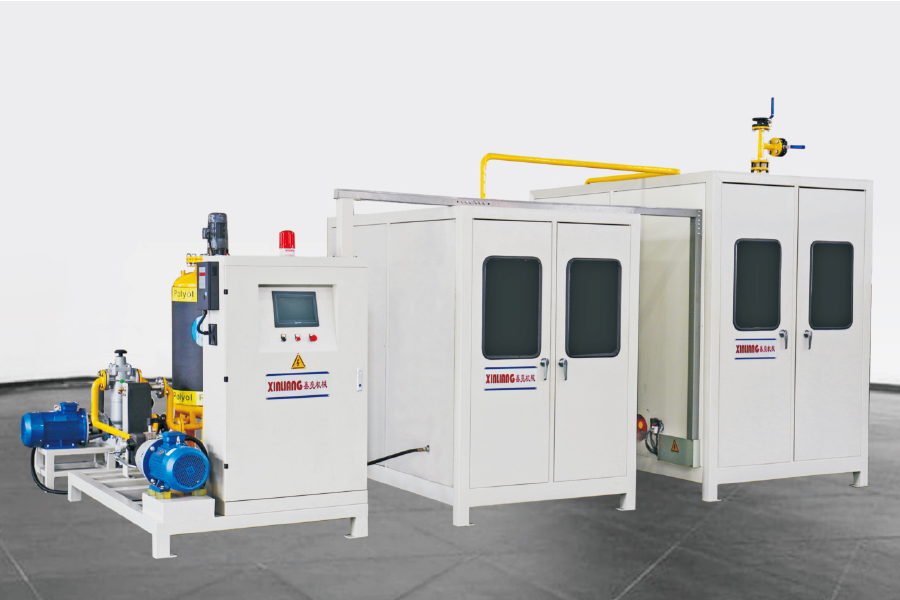
The Direct Answer: How To Choose The Right Cyclopentane Foaming Machine
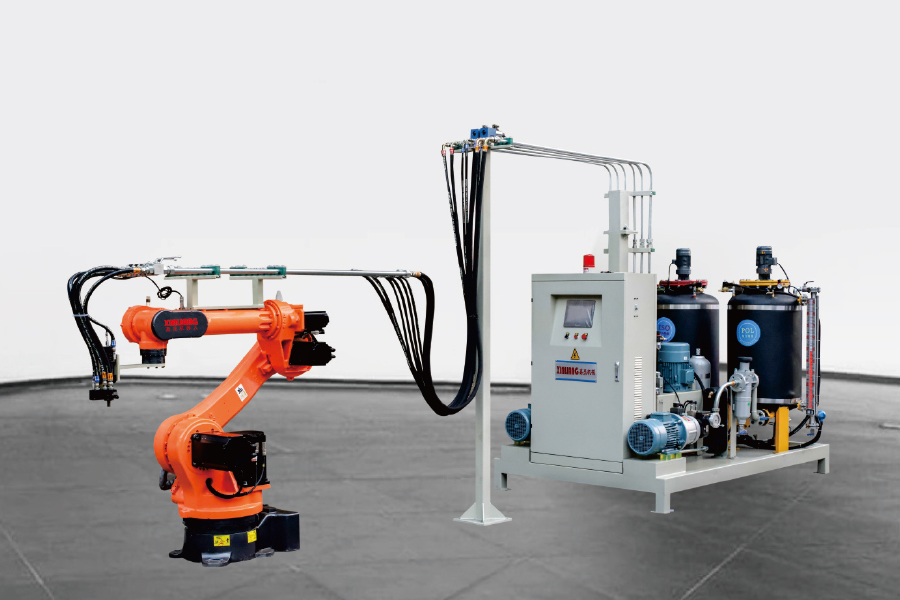
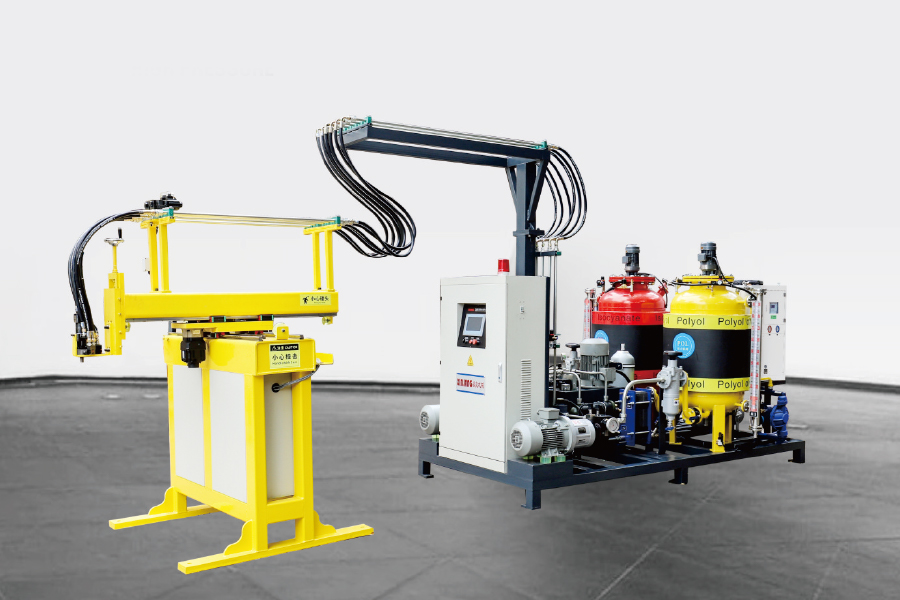
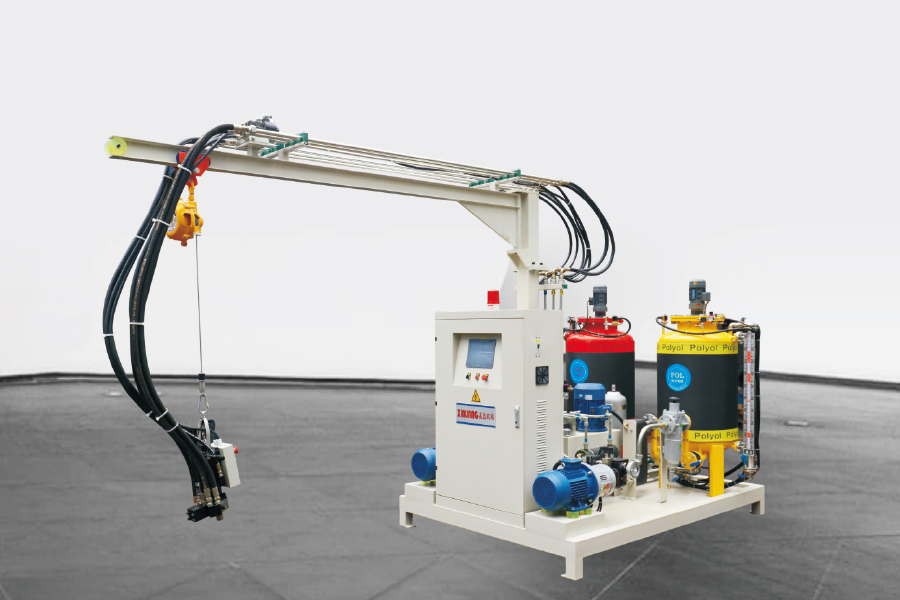
The right Cyclopentane Series Polyurethane High-pressure Foaming Injection Machine is the one matched to your foam application, your required output volume, and the explosion-proof design your cyclopentane formulation requires. For small workshops producing mixed part types in limited batches, a standalone high-pressure foaming machine with a self-cleaning mixing head offers the most flexibility. For mid-size continuous production, such as door panels or multiple cabinet types, a gantry foaming production line balances automation with manageable footprint. For high-volume repetitive production, such as refrigerator or freezer cabinet foaming, a turntable foaming production line generally delivers the highest throughput per operator. Continuous insulation panel or board manufacturing tends to call for a dedicated insulation building material foaming production line built around stable, high flow metering.
Application first - identify the part geometry and foam density target before comparing models
Metering precision - confirm the ratio accuracy needed for consistent cell structure
Explosion-proof design - check electrical and pump components rated for cyclopentane use
Line configuration - match automation level to your production volume and labor plan
Understanding Cyclopentane Series Polyurethane High-pressure Foaming Injection Machines
A polyurethane foaming machine combines two liquid components, commonly referred to as the polyol side and the isocyanate side, at a precise ratio and injects the mixture into a mold or cavity where it expands into rigid or flexible foam. A high pressure foaming machine achieves this mixing through impingement inside the mixing head, where the two streams collide at high velocity and pressure rather than relying on a mechanical stirrer, which keeps the mixing chamber largely self-cleaning between shots.
Cyclopentane enters the process as a blowing agent, replacing older fluorinated agents in a large share of rigid foam applications. It is stored, metered, and mixed in a closed system, and because cyclopentane is flammable in its vapor form, the machine handling it needs explosion-proof electrical components, sealed pump housings, and often a nitrogen purge or ventilation arrangement around the dosing and storage areas. This is the main design distinction between a general PU foaming injection machine and one specifically built as a cyclopentane PU foaming equipment platform.
Selecting between a standalone unit, a production line, or a specialized panel line comes down to matching the equipment to the part being foamed, the output volume expected per shift, and how much of the process needs to run without constant operator input.
Metering Accuracy And Its Effect On Foam Consistency
Metering precision is one of the most direct drivers of finished foam quality. When the ratio between the polyol and isocyanate streams drifts outside the target range, cell structure becomes uneven, density varies across the part, and dimensional stability can suffer once the foam cures. A tighter metering tolerance generally produces a more uniform result shot after shot.
Metering Accuracy Against Density Consistency
Illustrative relationship between metering deviation and density consistency index, 0 to 100. Actual results depend on formulation and mold design.
Mixing Head Type And High Pressure Impingement Mixing
The mixing head is where the polyol and isocyanate streams actually combine, and its design affects both foam quality and daily cleaning workload. A self-cleaning high pressure mixing head uses a hydraulic piston to purge the mixing chamber after every shot, pushing residual material out without solvent flushing. This keeps changeover time short and reduces the material waste that a poorly maintained mixing head can generate.
Mixing head characteristics relevant to cyclopentane foaming applications
Feature
Why It Matters
Hydraulic self-cleaning piston
Removes need for solvent flushing between shots
Adjustable injection pressure
Supports consistent mixing across different mold sizes
Sealed housing rated for cyclopentane
Limits vapor exposure around the mixing zone
Quick-change nozzle options
Reduces downtime when switching between part types
Foam Density Control And Typical Application Ranges
Foam density is set by adjusting the shot weight relative to the mold cavity volume, along with the blowing agent ratio in the formulation. Different applications target different density ranges, largely driven by the insulation and structural performance the finished part needs to deliver.
Commonly Targeted Foam Density By Application
Commonly targeted rigid foam density by application, presented as a general reference range rather than a fixed specification.
Why Cyclopentane Is Used As A Blowing Agent And What It Means For Equipment Design
Cyclopentane is used as a physical blowing agent because it produces low thermal conductivity in the finished rigid foam, which supports strong insulation performance in refrigerators, freezers, water heaters, and similar appliances. It has also become a common alternative in facilities moving away from older fluorinated blowing agents, since it does not carry the same ozone depletion profile.
Because cyclopentane vapor is flammable, a cyclopentane series polyurethane high-pressure foaming injection machine is built differently from a standard PU foaming injection machine at several points in the system. Storage tanks, dosing lines, and the area around the mixing head typically include ventilation and vapor management features, electrical components in relevant zones are explosion-proof rated, and control panels are positioned to keep ignition sources away from vapor-prone areas.
Explosion-proof electrical components near dosing areas
Sealed pump and tank housings for cyclopentane storage
Ventilation or nitrogen purge around the mixing zone
Control panel placement away from vapor-prone zones
Fluorine-free upgrade paths for facilities switching blowing agents
Output Capacity And Production Line Configuration
Output volume expected per shift is usually the deciding factor between a standalone machine and a full production line. A standalone polyurethane dispensing machine suits workshops producing varied part types in smaller batches, while a gantry or turntable configuration suits facilities running the same part repeatedly at higher volume.
Relative Output Capacity By Production Configuration
Relative output index for illustration, higher value indicates greater typical throughput per operating shift.
Side By Side Comparison Of Foaming Line Configurations
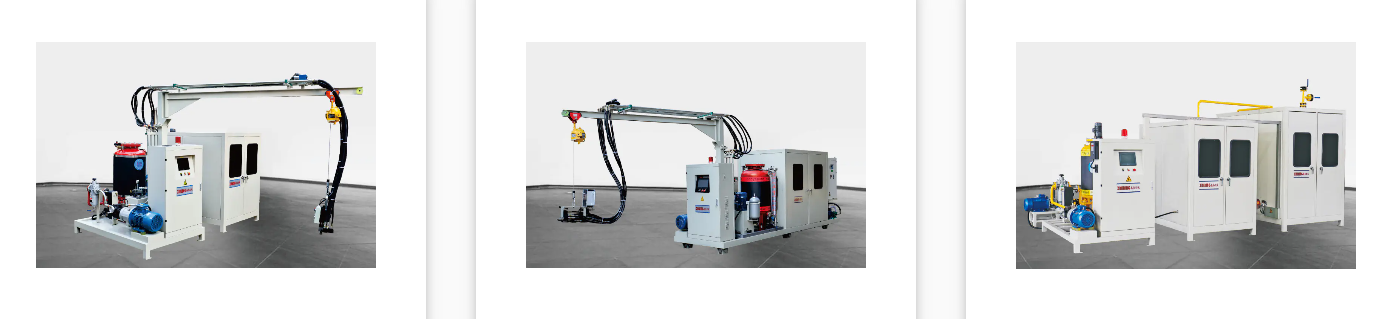
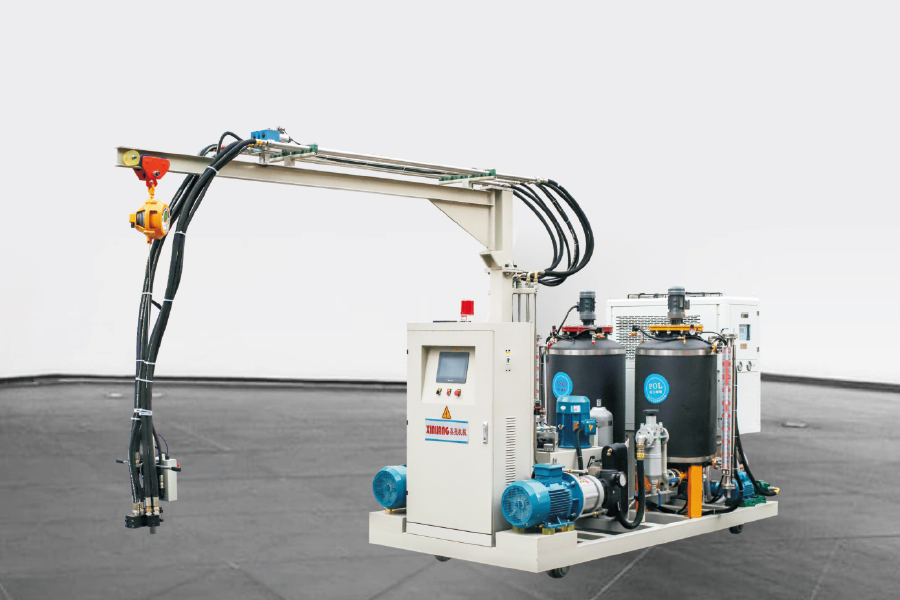
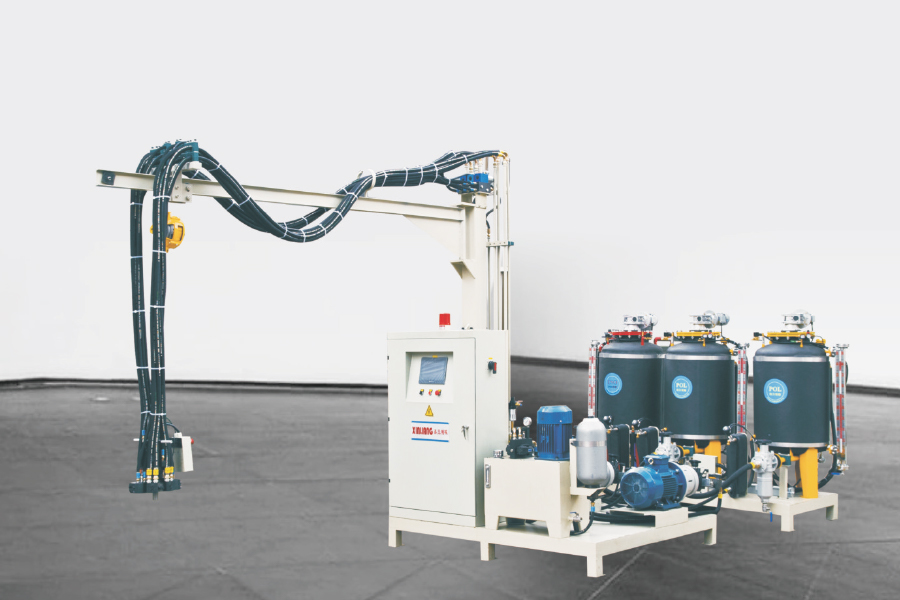
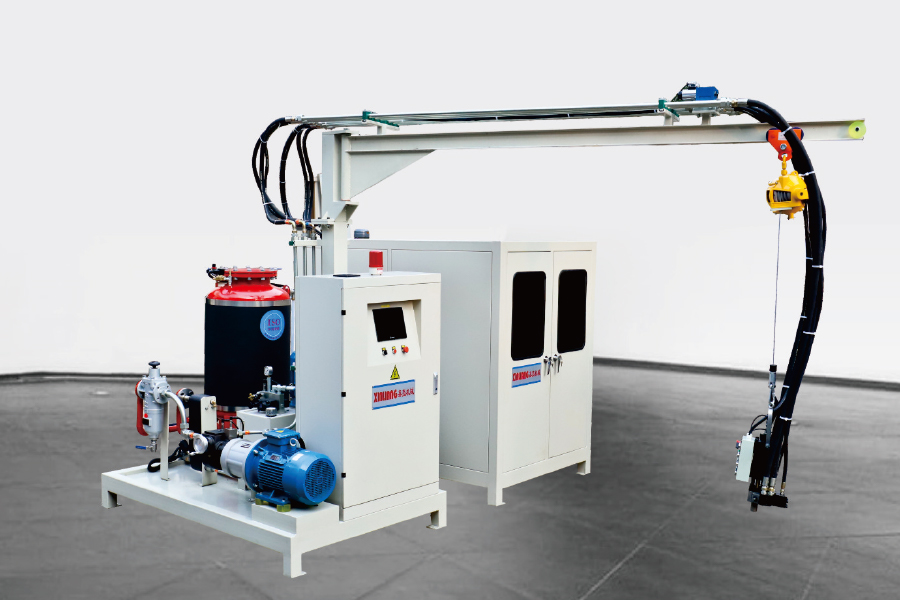
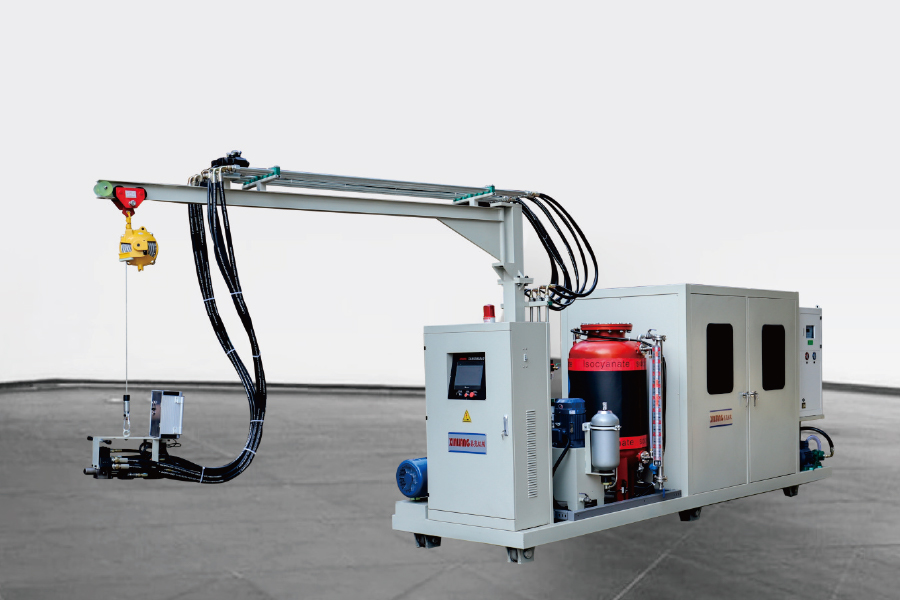
Standalone MachineGantry Foaming LineTurntable Foaming Line
General comparison across common foaming line configurations
Configuration
Automation Level
Footprint Efficiency
Best Suited For
Standalone Foaming Machine
Basic to moderate
High
Small workshops and flexible small batch runs
Gantry Foaming Production Line
Moderate to high
Moderate
Mid-size continuous production of multiple part types
Turntable Foaming Production Line
High
Moderate
High volume repetitive production such as cabinet foaming
Insulation Building Material Line
High
Moderate to low
Continuous panel and board production
Which Industries Use Cyclopentane Series Polyurethane Foaming Equipment
A cyclopentane PU foaming equipment platform, configured differently, supports a wide range of finished products across several manufacturing sectors that all depend on rigid or semi-rigid insulation foam.
Refrigerators And FreezersDisinfection CabinetsElectric Water HeatersIce MakersAir ConditionersSolar Energy EquipmentGarage And Anti-Theft DoorsCold Chain PipelinesAutomotive Interior PartsInsulation Building MaterialsFurniture And CraftsSports Equipment
Appliance manufacturers tend to favor turntable or gantry lines for repetitive cabinet foaming, while builders working on garage doors, anti-theft doors, and insulation panels often rely on gantry lines or dedicated panel lines suited to larger, flatter parts.
Choosing A Cyclopentane Foaming Machine Manufacturer Or Supplier
Once the machine category is settled, the relationship with a cyclopentane foaming machine manufacturer becomes the next factor that affects how smoothly the project runs from order to commissioning. A capable high pressure PU foaming machine supplier should be able to review your foam formulation, part geometry, and output target before recommending a configuration, rather than pointing to a single fixed model. A Cyclopentane PU Foaming Machine Manufacturer with in-house R&D and long-term parts supply generally reduces downtime risk over the equipment's working life.
A High Pressure Polyurethane Foaming Machine Supplier that also offers early project planning and technical consultation can help avoid mismatches between mold design and machine output before installation begins. For buyers evaluating a China PU Foaming Injection Machine Factory, it helps to ask about export experience, spare parts lead time, and whether the supplier offers OEM Polyurethane Foaming Equipment options for facilities that need equipment configured under their own branding or specification.
About Ningbo Xinliang Machinery Co., Ltd.
Ningbo Xinliang Machinery Co., Ltd. is an industry and trade enterprise focused on polyurethane foaming equipment, polyurethane foaming production lines, and complete cyclopentane polyurethane foaming systems. Its research and development team brings more than ten years of design experience and stays close to advanced polyurethane foaming technology both domestically and internationally, supported by Zhejiang's established industrial base.
High-Pressure Foaming Machines
Core product line spanning standalone units, intermediate tanks, and complete high-pressure foaming systems configured to customer specifications.
Gantry And Turntable Lines
Production line configurations built for mid-size to high-volume manufacturing, including gantry foaming and turntable foaming production lines.
Insulation Building Material Lines
Dedicated production lines for continuous insulation board and panel manufacturing, alongside long-term supply of foaming machine parts.
Cyclopentane Upgrade Equipment
A series of cyclopentane fluorine-free upgrade equipment for facilities transitioning away from older blowing agent systems.
Free Technical Planning
Early project planning, technical consultation, and ongoing technical services provided to users at no charge over the long term.
Global Export Experience
Equipment supplied across foreign markets including Spain, Australia, Egypt, and Morocco, along with the United States, Brazil, Russia, Southeast Asia, and the Middle East.
Frequently Asked Questions About Cyclopentane Foaming Machines
Q1. What is a polyurethane foaming machine
A polyurethane foaming machine meters and mixes two liquid components at a set ratio, then injects the mixture into a mold or cavity where it expands and cures into rigid or flexible foam.
Q2. How does a high pressure foaming machine work
The machine pumps the polyol and isocyanate streams at high pressure into a mixing head, where impingement mixing combines them instantly before the mixture is dispensed into the mold.
Q3. What is cyclopentane used for
Cyclopentane is used as a physical blowing agent in rigid polyurethane foam, helping the foam expand while supporting strong thermal insulation performance in the finished part.
Q4. Why use cyclopentane in polyurethane foam
Cyclopentane offers low thermal conductivity in the cured foam and does not carry the same ozone depletion profile as some older fluorinated blowing agents.
Q5. What industries use PU foaming machines
Refrigeration, water heating, air conditioning, solar equipment, door manufacturing, cold chain pipelines, automotive parts, and insulation building materials all rely on PU foaming equipment.
Q6. How is foam density controlled
Density is set by adjusting the shot weight relative to mold cavity volume along with the blowing agent ratio in the formulation, tuned to the insulation or structural needs of the part.
Q7. What is the mixing ratio of polyurethane
The ratio between polyol and isocyanate components varies by formulation and application, so it is generally set and verified with the foam chemical supplier rather than fixed universally.
Q8. How does a mixing head work
A high pressure mixing head brings the two component streams together through impingement at the point of injection, then a hydraulic piston purges the chamber after each shot for the next cycle.


 English
 русский
 عربى
عربى