Home / News / Industry news / Cyclopentane PU Foaming Production Line: Layout, Safety & Commissioning
Cyclopentane PU Foaming Production Line: Layout, Safety & Commissioning
Industry news-
Ask a plant that installed a cyclopentane line a few years ago what they would buy differently, and the answer rarely mentions the injection machine. They talk about the premix tank that could not hold temperature through a summer afternoon, the gas detector mounted where pentane vapour never reaches, and the cure time that was never written into the contract. Cyclopentane PU foaming is a system purchase: the blowing agent boils at about 49 °C, it is flammable, and it must stay dissolved in the polyol at a stable ratio from the first shot of a shift to the last.
The practical conclusion is simple. Design the line around four subsystems — pentane storage and premixing, high-pressure metering and injection, conveying and fixturing, and the safety layer of ventilation, detection and interlocks. Everything else, including the brand of the mix head, is a detail inside those four.
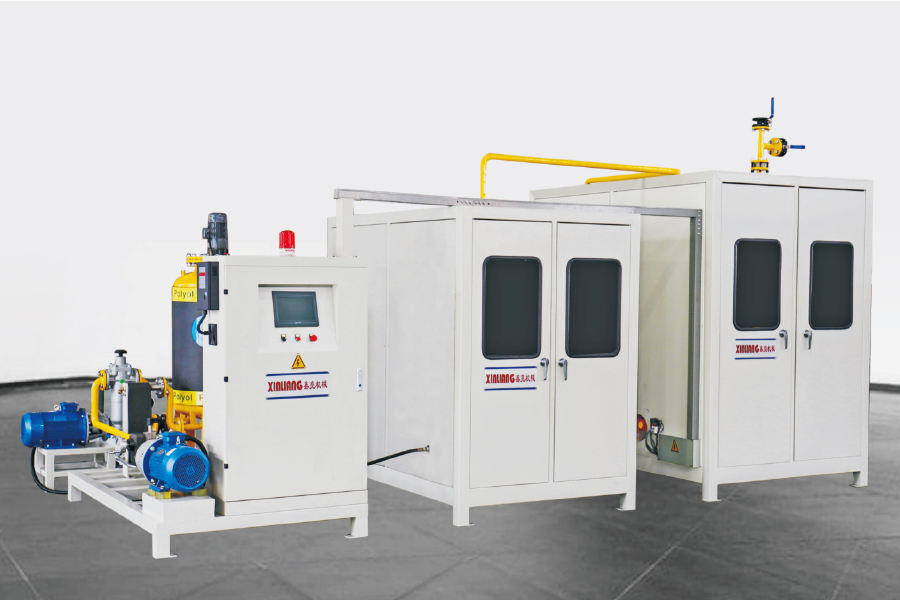
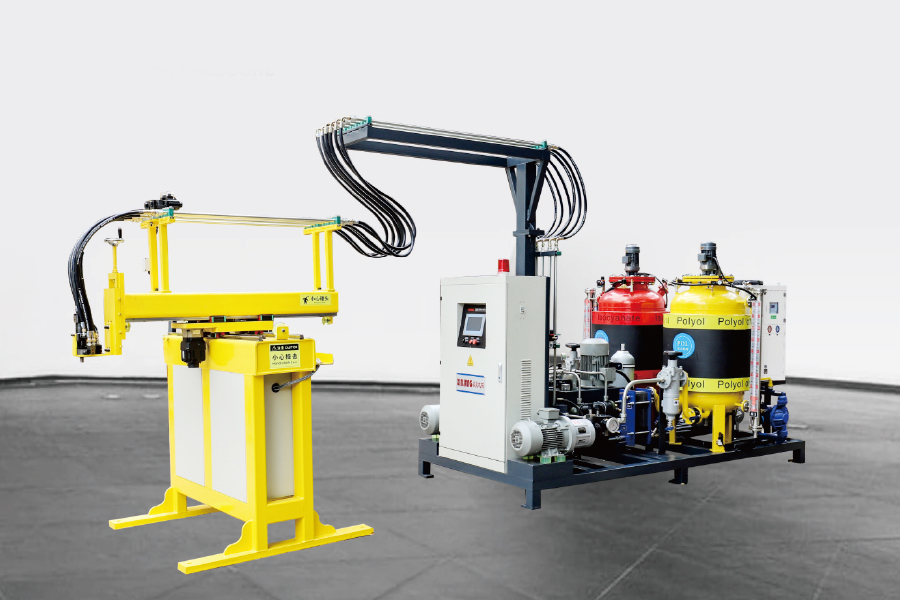
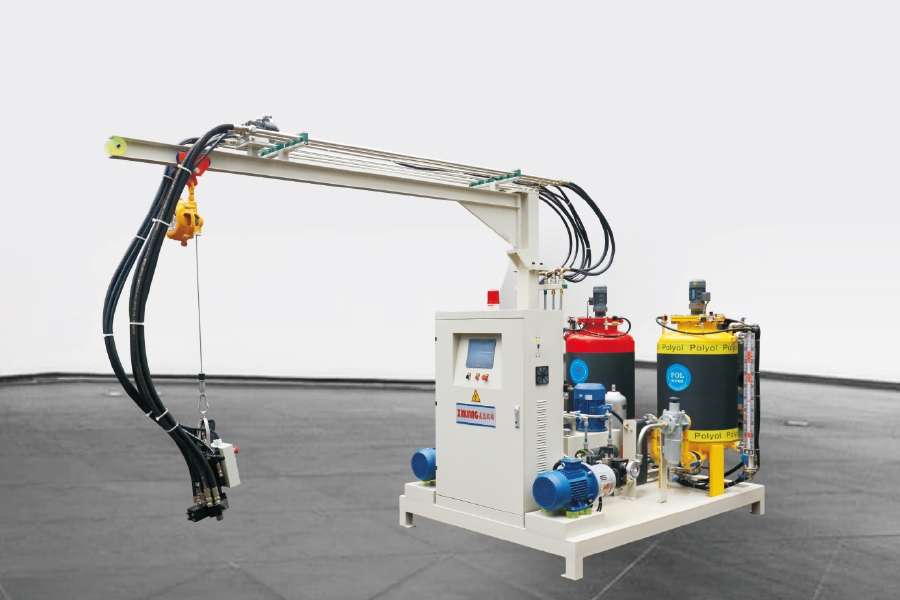
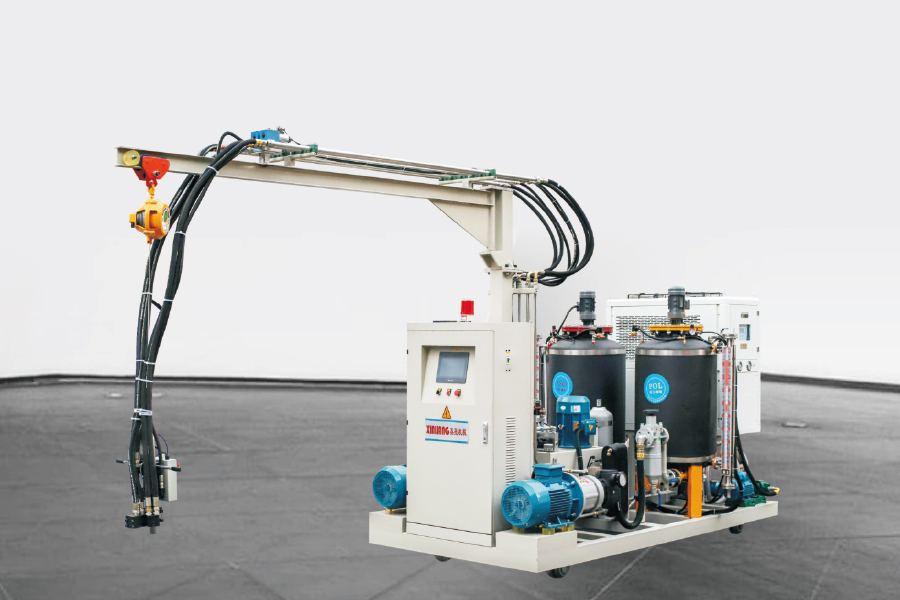
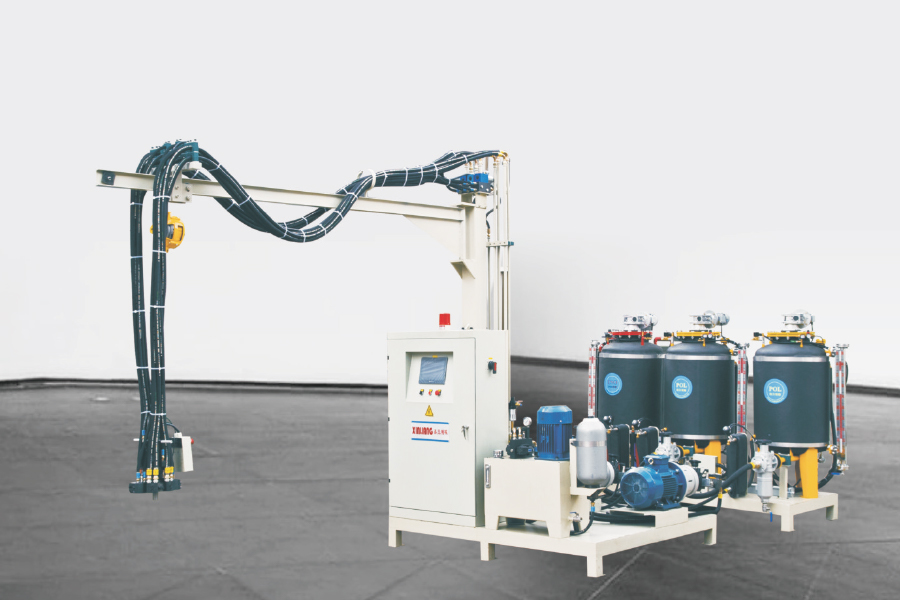
What a Cyclopentane PU Foaming Production Line Actually Includes
Most suppliers quote a line as "machine plus options". In reality the machine is one metering point in a chain, and every link carries its own failure mode:
Pentane storage and conditioning — day tanks or drum stations in a cooled, ventilated room, sized by delivery frequency rather than by convenience.
Premix system — a jacketed, stirred vessel that dissolves cyclopentane into polyol at controlled temperature and keeps the blend from stratifying.
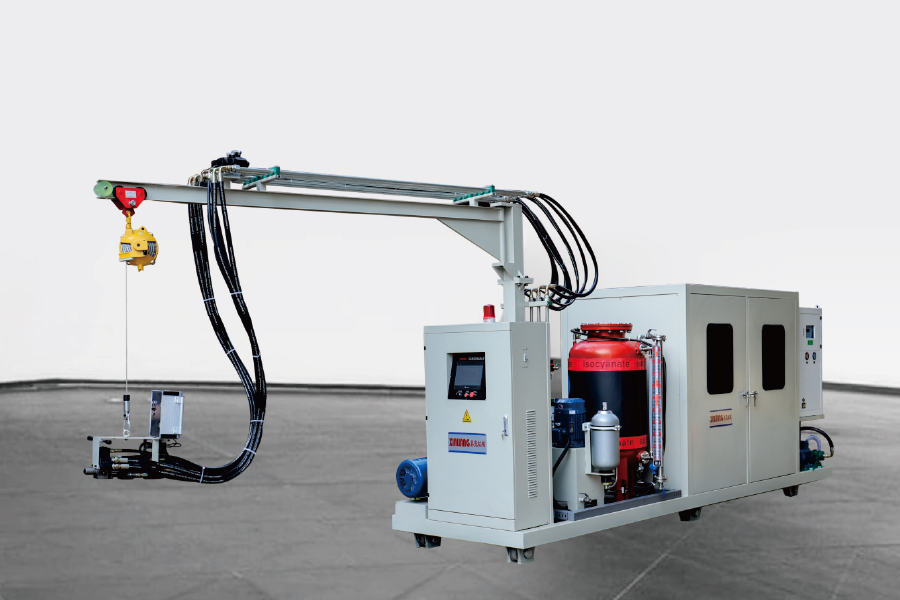
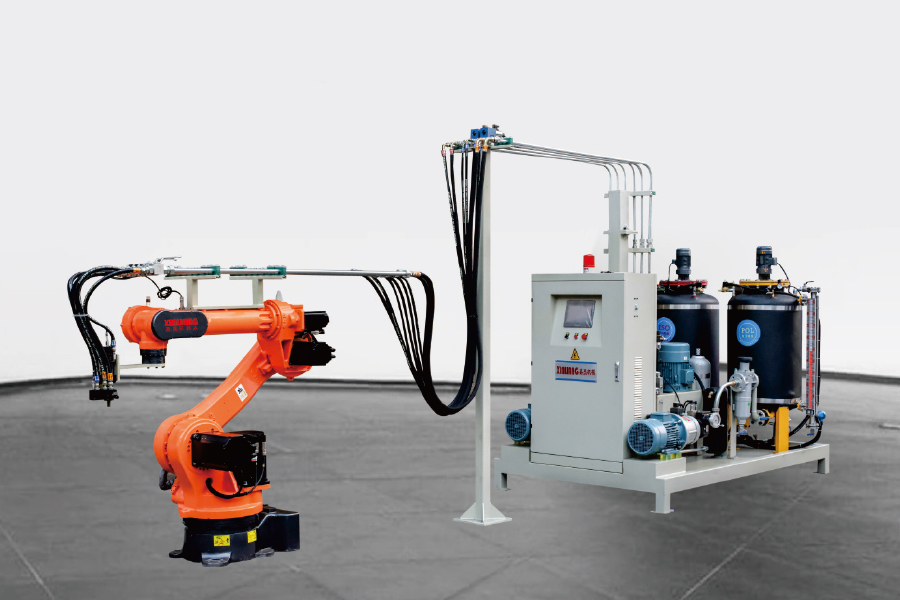
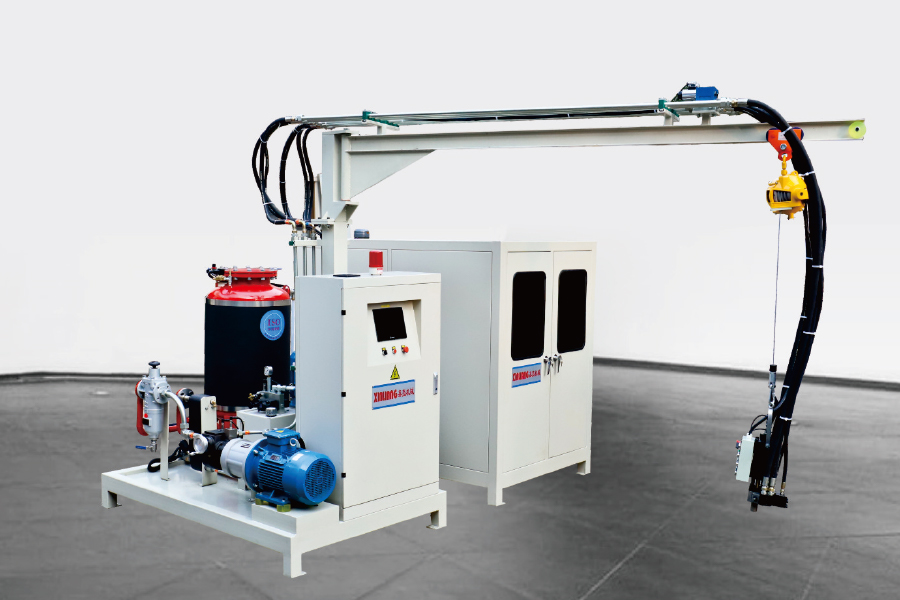
High-pressure metering and injection — two- or three-component units running impingement mixing at roughly 100–200 bar, with the head fixed, rail-mounted, on an XY gantry or on a six-axis robot.
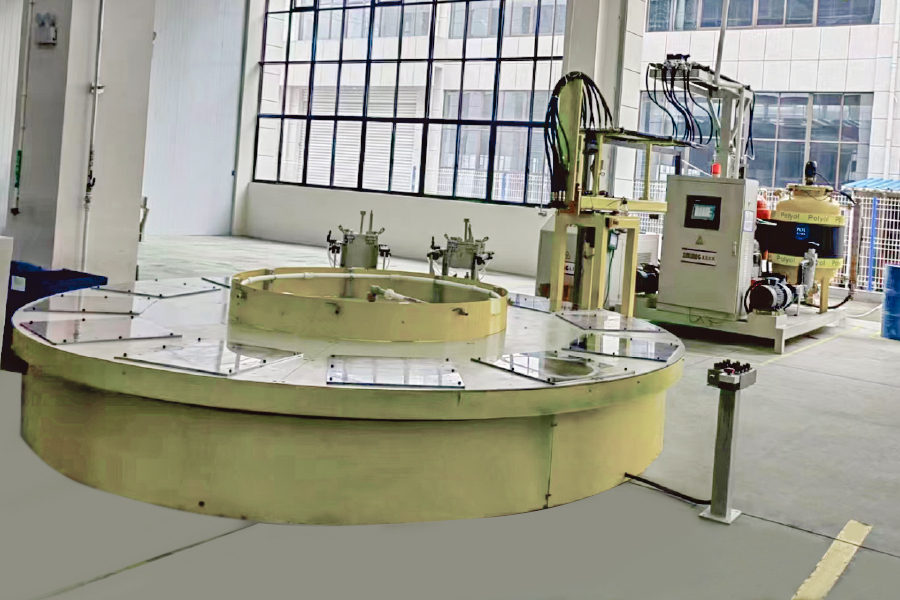
Fixtures and conveying — turntable, annular or H-type layout, plus clamps, tilting stations and demould positions.
Safety layer — forced ventilation, lower-explosive-limit detectors, explosion-proof motors and panels, bonding and earthing, and hard interlocks.
Controls and traceability — recipe management, ratio logging and alarm history, which appliance and automotive customers increasingly audit.
A useful first pass on any quotation is to mark which of these six items the supplier builds in-house and which are bought in. A line assembled from four vendors can still work, but the interlock logic and the commissioning responsibility have to sit with one party — in writing.
Why Cyclopentane Changes the Line Design
Cyclopentane is a physical blowing agent, and its physical data explains most of the engineering. It boils at 49.3 °C at atmospheric pressure, its vapour is roughly 2.4 times heavier than air, and its lower explosive limit sits near 1.4 % by volume in air (always confirm the figures on the safety data sheet for the grade you buy). Two consequences follow immediately: the liquid must be kept under pressure or below its boiling point everywhere upstream of the mix head, and any leak collects at floor level rather than at the roof.
Planning references assembled from published cyclopentane property data and common polyurethane processing practice; verify against your own SDS and supplier settings.
Temperature control is therefore not a comfort feature. Polyol and isocyanate are normally conditioned to 20–25 °C, pentane is held cooler, and the premix vessel is jacketed because blending and pump recirculation add heat. Once a blend drifts much above 30 °C you begin losing pentane into the tank headspace, the ratio walks, and foam density creeps upward through the shift.
Premix or direct injection? A premix system dissolves pentane into polyol in a controlled vessel and feeds one homogeneous component to the machine. Ratio stability is good, the machine sees a single blended stream, and quality repeats across shifts; the trade-off is a larger hazardous area and a batch of pre-blended polyol that has to be consumed before it separates. Direct injection meters pentane at the head, keeps inventory low and suits short runs and smaller parts, but it puts the whole ratio burden on the metering pumps and the flushing routine.
Either way, ask for the ratio repeatability figure in writing — many buyers write a relative deviation target of around ±1 % into the acceptance test — and ask what the control system logs so that a bad shift can be proved or ruled out afterwards.
Annular, H-Type or Turntable: Choosing the Layout
Layout follows the product, not the other way round. Most cyclopentane work falls into three families:
Layout comparison for cyclopentane foaming lines; cycle patterns reflect typical production organisation rather than a fixed specification.
Layout
Best fit
Cycle pattern
Watch out for
Annular
High-volume single product family such as refrigerator cabinets and liners
Continuous loop, no waiting for the slowest station
Demould discipline must be strict; the loop will not wait for a late part
H-type
Long moulds: panels, doors, boards, insulated building elements
Two parallel runs with good access at each end
Largest building footprint and longest conveying distances
Turntable
Multi-variant output: coolers, seat cushions, cabinets, short runs
Indexing stations with fixed process times
Station count must cover the real cure time, not the catalogue value
Turntable lines win on changeover and floor space per station, which suits plants running several mould variants in one shift. Annular lines win on volume and on demould discipline. H-type layouts give the longest moulds and the best access for panels and doors, at the cost of a bigger building. The rating above is an editorial planning aid, not measured output — always compare quotations against your own cycle time.
Two lines built to the same general arrangement can still perform very differently, because the numbers that decide output and scrap are often left out of the annex. Put these on the specification sheet:
Contract parameters worth fixing in writing before a cyclopentane foaming line is ordered.
Parameter
Value to agree
Why it decides the outcome
Shot weight and output
Minimum and maximum grams per second, per component
Sets the largest part the line can fill before the foam gels
Mixing pressure
Working range at the head, typically 100–200 bar
Impingement quality drives cell structure and surface defects
Ratio repeatability
Test method, tolerance and who witnesses the test
Density consistency across a shift and across batches
Cure and demould time
Measured on the customer's own mould at production temperature
Determines station count, footprint and real output
Premix volume and cooling
Litres plus cooling capacity at stated ambient temperature
Shift length before ratio drift forces a re-blend
Ventilation and detection
Air changes, detector positions, alarm and trip levels
Buyers who compare offers line by line usually discover that the cheaper quotation has simply moved scope: a smaller premix tank, fewer detectors, manual rather than servo head positioning. Our cyclopentane foaming machine selection guide walks through the machine-level checks that sit underneath this list.
Safety and Interlock Checklist
Pentane safety is mostly about where the vapour goes and what happens when a sensor sees it. Six items belong on every line:
Detection at low level — sensors near the tank area, at the base of the premix vessel and at the injection head, with two stages: warning and automatic stop.
Ventilation for the worst case — extract at floor level, makeup air routed so it does not short-circuit across the mix head.
Explosion-proof equipment — motors, sensors, lighting and panels inside the hazardous zone, verified against certificates rather than labels.
Bonding and earthing — tanks, pipework, machine frame and conveyor, checked as part of every planned shutdown.
Hard interlocks — detector trip, ventilation failure or loss of tank pressure stop injection and close the pentane valve without waiting for an operator.
Written emergency procedure and a spill kit that operators have physically used in a drill, not just read about.
Commissioning and Day-to-Day Uptime
Most disputes start at the first-shot trial, so agree the sequence before the line ships:
Pressure and leak test of the pentane circuit and premix vessel, with the record handed over.
Gravimetric ratio calibration at low, mid and high output, results recorded and signed.
Trial shots on production moulds rather than sample blocks — density, fill and skin quality checked.
Demould time confirmed at real mould temperature and written into the cycle recipe.
Operator training covering start-up, flushing, shutdown and detector response.
Spare parts list agreed, with seals, filters and pump wear parts held on site.
Shop-floor footage is often more useful than a brochure when you are judging layout and access, so watch a line running before you commit to a footprint.
Frequently Asked Questions
What is a cyclopentane PU foaming production line?
It is an integrated set of equipment — pentane storage, a premix vessel, a high-pressure metering and injection unit, fixturing and conveying, plus ventilation and gas detection — that produces polyurethane foam using cyclopentane as the blowing agent instead of HFCs.
Why is a premix system needed for cyclopentane foaming?
Cyclopentane has limited solubility in polyol and separates if left unstirred, so a jacketed, stirred vessel keeps the blend uniform and holds it below the boiling point, which stabilises foam density and shot weight.
How much output can a cyclopentane foaming line reach?
Output is set by shot weight, station count and cure time rather than by the machine alone. Ask every supplier to quote the cycle time and station count behind their figure, then check it against your own mould.
How is foam density controlled on a pentane line?
Mainly by ratio accuracy, raw material temperature and injection pressure. Stable pentane concentration in the polyol and repeatable metering pressure give consistent density; drifting temperatures are the usual cause of density creep.
What safety equipment is required for pentane foaming?
At minimum: lower-explosive-limit detectors at floor level, forced ventilation, explosion-proof electrical equipment, bonding and earthing, and hard interlocks that stop injection on alarm. Local regulations and insurers set the final scope.
Can an existing HFC foaming line be converted to cyclopentane?
Often only partly. The conveyor and fixtures may be reusable, but the premix, metering seals, ventilation, detection and electrical classification usually need replacement, which is why conversion is assessed case by case.


 English
 русский
 عربى