What Is High Pressure Polyurethane Foam Technology?
Industry news-
Quick Answer: High pressure polyurethane foam technology refers to a manufacturing process in which two or more reactive chemical components — typically polyol and isocyanate — are metered, mixed under high pressure (typically 100–200 bar), and injected into a mold or cavity where they react and expand into rigid or flexible polyurethane foam. This process, executed by a Polyurethane High Pressure Foaming Injection Machine, delivers superior mixing quality, faster cycle times, and more consistent foam density compared to low-pressure alternatives, making it the preferred method for industrial-scale PU foam production.
This article covers the working principles of high pressure PU foaming, how it differs from low-pressure systems, which applications it best serves, common troubleshooting scenarios, and what to look for when selecting a machine for your production line.
High Pressure Polyurethane Foaming Machine Working Principle
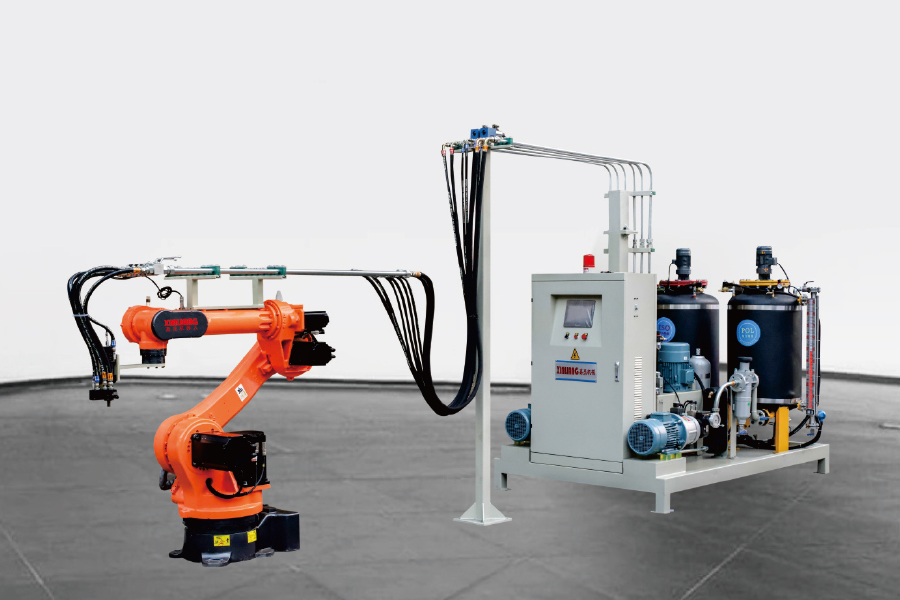
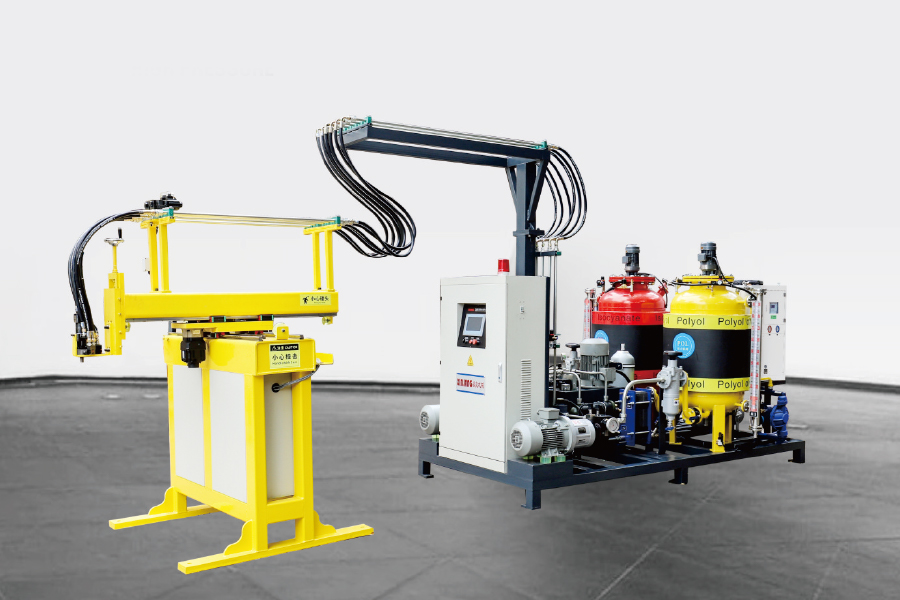
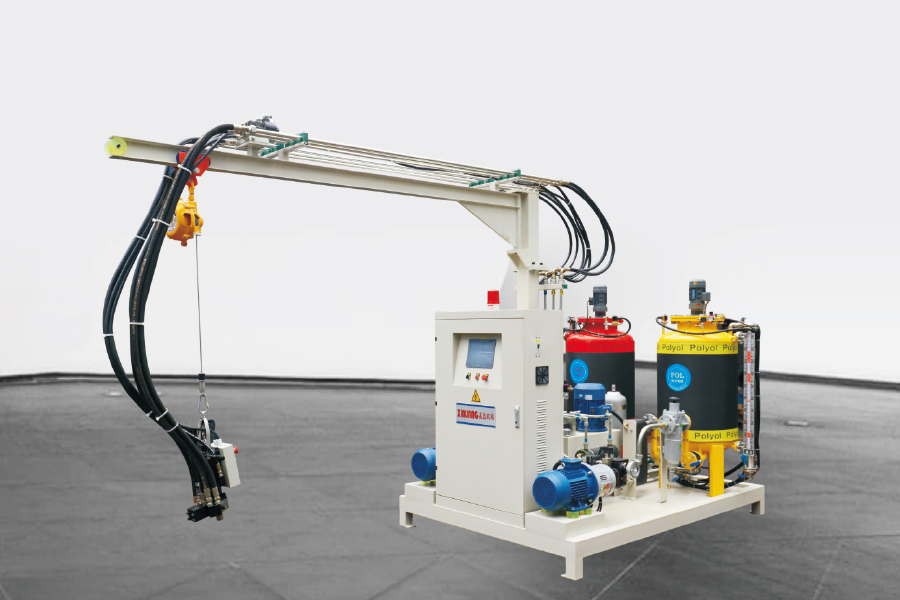
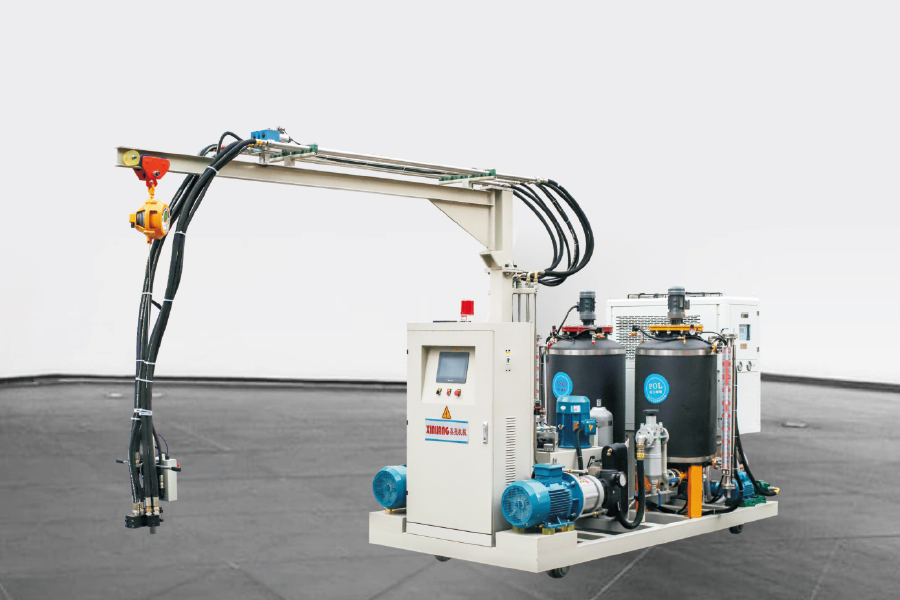
The high pressure polyurethane foaming machine working principle is based on impingement mixing — a method in which the two chemical streams (polyol and isocyanate) are forced through opposing nozzles at high velocity inside a small mixing chamber. The kinetic energy of impingement creates intense turbulence that achieves molecular-level mixing in milliseconds, without the need for a mechanical stirrer or solvent. Once mixed, the reactive liquid is immediately injected into the target cavity, where the exothermic chemical reaction causes the mixture to expand and cure into foam.
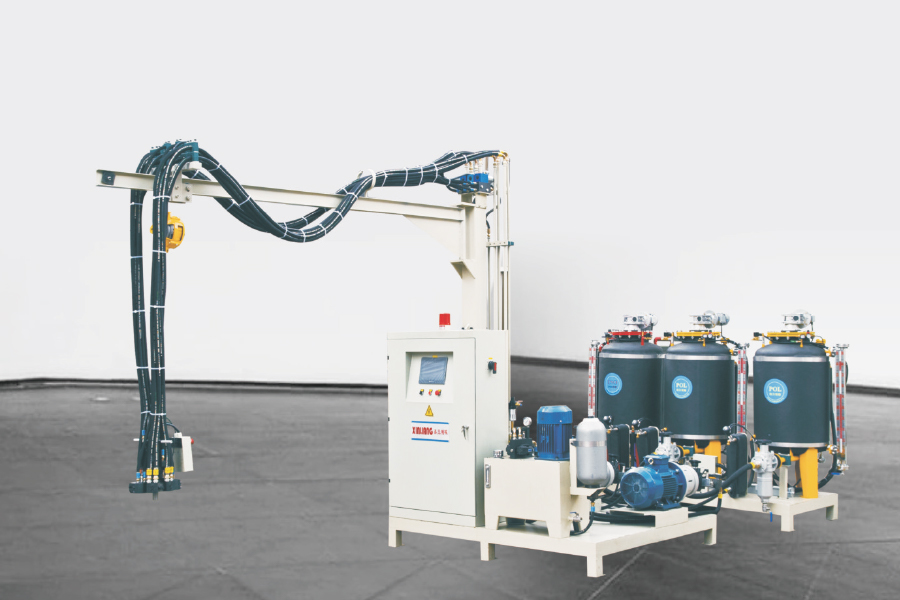
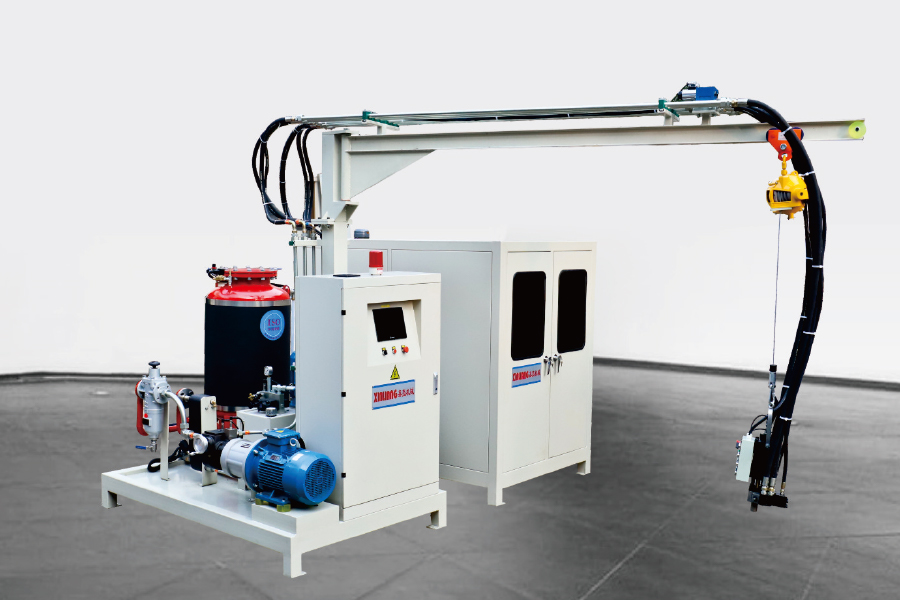
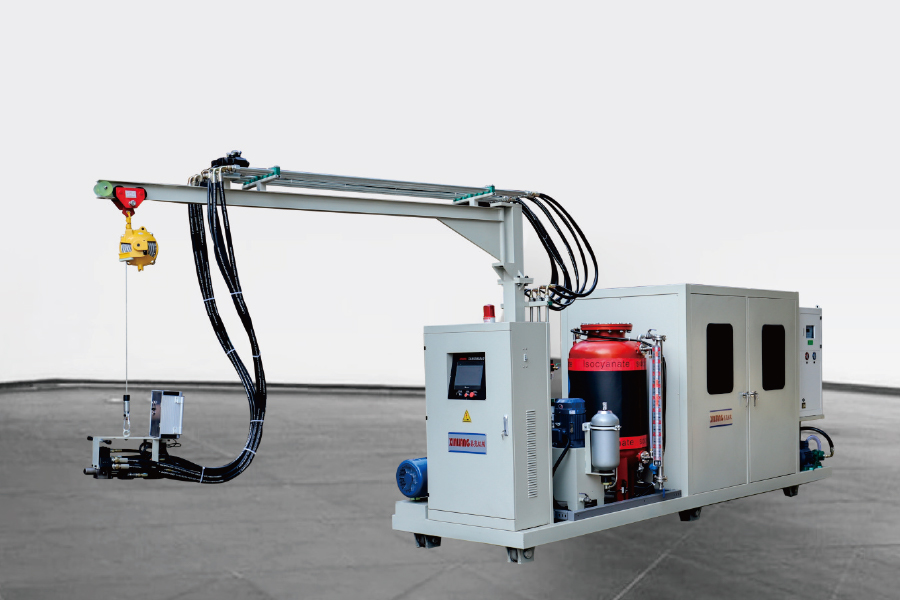
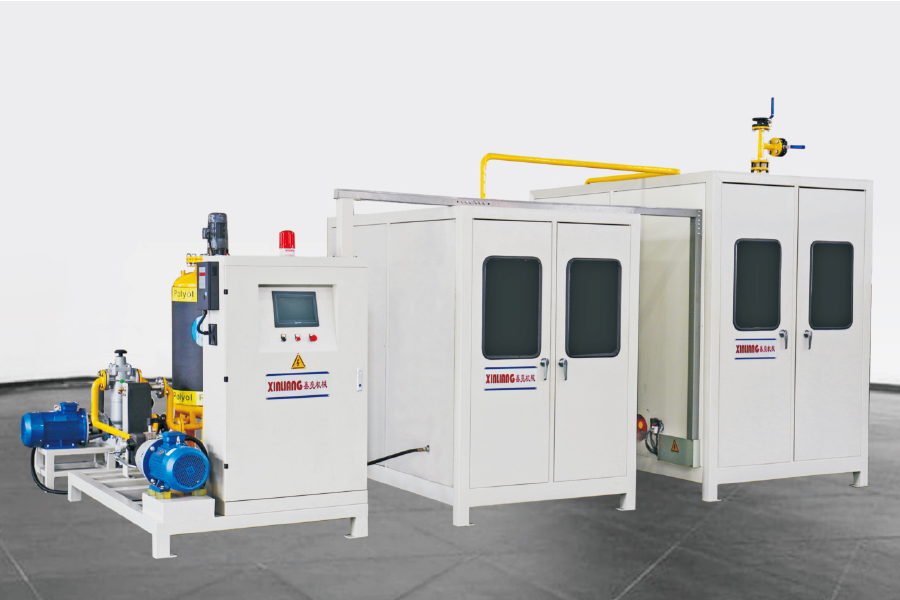
A standard PU injection system includes the following core subsystems: component storage tanks with temperature control, high-precision metering pumps (piston or gear type), a recirculation loop to maintain chemical readiness between shots, the high-pressure mixing head, and a control system managing shot volume, pressure, and mix ratio. Metering accuracy is critical — most industrial systems maintain a mix ratio tolerance within ±1% to ensure repeatable foam quality across thousands of production cycles.
The self-cleaning mixing head is one of the most important features of a high pressure foam machine. After each injection cycle, a hydraulically actuated piston purges the mixing chamber, eliminating residue and preventing chemical buildup that could affect the next shot. This allows the machine to operate continuously in a production line environment without manual cleaning interruptions.
High Pressure PU Foaming: Process Flow
The diagram above shows the five-stage production flow of a high pressure polyurethane foam injection machine. Beginning at chemical storage and ending at finished part ejection, the entire cycle from injection to demolding typically takes between 3 and 8 minutes depending on foam formulation and cavity volume. The mixing head stage is the most critical — impingement mixing at pressures of 100–200 bar ensures that the polyol and isocyanate streams are combined at a molecular level before any premature reaction can begin, which is the foundational advantage of high pressure technology over low-pressure batch mixing.
High Pressure vs Low Pressure Foaming Machine: Key Differences
The choice between a high pressure and low pressure polyurethane foaming machine has a direct impact on foam quality, production speed, and operational maintenance. Low-pressure machines rely on a mechanical mixing head (a rotating agitator) to blend the components at pressures typically below 30 bar. While they offer lower initial setup complexity and are suitable for small-batch or flexible foam applications, the mechanical mixing introduces variables — agitator wear, incomplete dispersion, and solvent-dependent cleaning — that become significant in high-volume industrial production.
High pressure machines eliminate the mechanical mixer entirely. The impingement principle produces a more homogeneous mix in a fraction of the time, yielding foam with tighter density control, smaller and more uniform cell structure, and more predictable physical properties. The self-cleaning piston makes chemical waste and downtime negligible. For a refrigerator panel PU foam injection machine or any continuous production line, high pressure is almost always the engineering-appropriate choice.
Table 1: High Pressure vs Low Pressure PU Foaming Machine — Comparative Overview
Parameter
High Pressure
Low Pressure
Operating Pressure
100–200 bar
Below 30 bar
Mixing Method
Impingement (no moving parts)
Mechanical agitator
Mix Ratio Accuracy
±1% or better
±3–5%
Foam Cell Uniformity
High
Moderate
Head Cleaning
Self-cleaning piston
Solvent flush required
Output Rate
High (continuous production)
Lower (batch or semi-batch)
Best Application
Industrial production lines, appliances, automotive
Small batch, flexible foam, prototyping
Performance Score Comparison: High Pressure vs Low Pressure (out of 10)
The bar chart above scores both machine types across four production-critical parameters. High pressure machines score consistently higher across every dimension, reflecting the engineering advantages of impingement mixing and automated head cleaning. It is worth noting that low-pressure machines have their own legitimate use cases — particularly for R&D, sample production, and flexible foam applications — where the lower initial complexity is an advantage. However, for any industrial polyurethane foam production line where volume, repeatability, and long-term reliability are priorities, high pressure technology is the more appropriate investment.
Foam Density Control in Polyurethane Machines: How It Works
Foam density control is one of the most important variables in polyurethane foam production. Density — measured in kg/m³ — directly affects the mechanical performance, insulation value, and material cost of the finished part. In a high pressure PU foam injection machine, density is controlled through three primary parameters: mix ratio (the weight ratio of polyol to isocyanate), shot weight (the total mass of reactive mixture injected per cycle), and mold temperature.
The mix ratio determines the stoichiometry of the reaction — the chemical balance between the two components. A deviation of even 2% in mix ratio can shift the resulting foam density by 3–8 kg/m³, which in turn affects compressive strength, thermal conductivity (lambda value), and dimensional stability. Modern high pressure foaming machines use closed-loop pressure-based metering with real-time feedback to maintain ratio accuracy within ±1% throughout the production run, even as component viscosity changes with temperature.
Shot weight control is equally important. Overfilling a cavity produces a denser part with potential stress cracking; underfilling leaves voids and compromises insulation performance. A well-calibrated PU foaming machine uses a timed shot valve with volume-compensated dosing to deliver consistent shot weights across thousands of cycles without operator adjustment.
Effect of Mix Ratio Deviation on Foam Density (kg/m³)
This chart illustrates how deviations from the ideal polyol-to-isocyanate ratio affect resulting foam density. At the target ratio (0% deviation), the foam achieves its specified density — in this example approximately 30 kg/m³, typical for refrigerator insulation panels. Moving in either direction, density increases sharply: a +4% over-index of isocyanate can push density above 40 kg/m³, adding material cost and potentially altering thermal performance. This is why foam density control in polyurethane machines is not just a quality metric — it has a direct and measurable impact on per-unit material cost across large production volumes.
PU Foam Injection Machine for Refrigerator Panels and Appliance Manufacturing
The refrigerator and freezer manufacturing sector is one of the largest end-markets for high pressure PU foam injection machines globally. Rigid polyurethane foam is injected between the inner liner and outer cabinet of refrigerators to provide thermal insulation, structural bonding, and acoustic damping simultaneously. The typical target density for refrigerator insulation foam is 28–34 kg/m³, with a thermal conductivity (lambda value) of approximately 0.022–0.024 W/(m·K) — performance that requires precise chemistry control and repeatable injection conditions achievable only with high pressure equipment.
In a refrigerator panel production line, the polyurethane foam equipment typically operates in a carousel or conveyor-indexed format, with jigs holding the refrigerator cabinet in position during injection and curing. Cycle times of 4–6 minutes per unit are common in high-volume appliance factories, with daily throughput targets of 400–800 units per production line depending on cabinet size and model complexity. The ability of the foaming machine to deliver consistent shot weight across every cycle — without drift or operator intervention — is the key performance requirement for this application.
Cyclopentane-blown polyurethane formulations — used for their superior insulation performance and environmental compliance compared to older blowing agents — require careful chemical temperature management because cyclopentane's boiling point (49°C) is close to the processing temperature of many polyol blends. High pressure machines equipped with dual-zone component temperature control maintain polyol at precisely the formulation-specified temperature, preventing premature nucleation that would otherwise cause surface defects and density variation.
Target Foam Density by Appliance Application (kg/m³)
Different end-product applications require quite different foam density targets, and a capable industrial polyurethane foam production line must accommodate this range without retooling. Refrigerators and freezers are at the lighter end of the density spectrum because excess weight impairs energy efficiency ratings. Automotive structural foam components, by contrast, require higher density for load-bearing performance. Water heater insulation falls at an intermediate density to balance insulation value against unit weight. Understanding these targets is essential when configuring a PU foaming machine for a specific production program.
Industrial Polyurethane Foam Production Line Configuration
A complete industrial polyurethane foam production line integrates the foaming machine with upstream material handling, mold clamping and conveying systems, temperature conditioning zones, and downstream demold and quality inspection stations. The foaming machine itself is the heart of the line, but its performance is only as consistent as the supporting infrastructure allows. Component conditioning — maintaining polyol and isocyanate at their target temperatures (typically 18–25°C for polyol and 20–25°C for isocyanate) — is non-negotiable for repeatable output.
Modern production lines increasingly incorporate PLC-based or SCADA-level process control, enabling real-time monitoring of pressure, temperature, flow rate, and cycle count across every production shift. Data logging at this level allows quality teams to trace any out-of-specification part back to the specific machine parameters in effect at the time of production — a capability that is now required for automotive and appliance supply chains operating under IATF 16949 or ISO 9001 quality management frameworks.
Raw material storage tanks with agitation and temperature control (day tanks)
High-precision metering and recirculation circuits for each component
High-pressure mixing head with self-cleaning piston mechanism
Mold carriers (turntables, conveyors, or multi-station carousels)
Mold temperature conditioning (heating/cooling circuits)
Cure conveyor or tunnel oven for accelerated demolding
PLC control panel with HMI touchscreen for parameter management
Safety enclosures, exhaust ventilation, and fire suppression (for cyclopentane lines)
High Pressure PU Foaming Machine Suitability by Industry Sector
The radar chart maps the suitability of high pressure PU foaming machines across six major industrial sectors. Appliance manufacturing leads the chart because its combination of high-volume production, precision density targets, and cyclopentane formulation requirements maps almost perfectly to the technical strengths of high pressure equipment. Automotive and cold chain logistics follow closely, driven by tight quality specifications and regulatory compliance requirements. Furniture and decorative foam, where surface appearance and flexibility matter more than density precision, score lower but remain relevant markets for purpose-configured high pressure systems. This chart helps production planners quickly identify where machine investment will deliver the strongest operational return.
PU Foaming Machine Troubleshooting: Common Issues and Solutions
PU foaming machine troubleshooting is one of the most frequently searched topics among production technicians working with polyurethane equipment. While modern high pressure machines are designed for continuous reliable operation, understanding the root causes of common quality deviations allows maintenance teams to resolve issues quickly and minimize downtime. The table below summarizes the most frequently encountered production problems and their diagnostic pathways.
Table 2: Common PU Foaming Machine Faults and Corrective Actions
Symptom
Likely Cause
Corrective Action
Foam density too high
Excess isocyanate or low blowing agent
Verify mix ratio; check blowing agent dosing
Surface voids / pinholes
Mold too cold or air entrapment
Increase mold temperature; check vent positions
Uneven foam rise
Mixing head blockage or ratio drift
Flush mixing head; recalibrate metering pumps
Cream time too short
Component temperature too high
Reduce polyol/isocyanate temperature to spec
Pressure alarm during shot
Nozzle blockage or pump wear
Inspect and clean nozzles; check pump pressure output
Foam shrinkage after demolding
Premature demolding or undercure
Extend cure time; verify mold temperature uniformity
The majority of quality deviations in polyurethane foam production trace back to one of three root causes: temperature excursion in one or both components, mechanical wear in the metering or mixing system, or mold-related factors (temperature, venting, or release agent coverage). A structured first-response protocol that checks these three areas in sequence — before adjusting formulation — resolves most production issues without unnecessary chemical changes.
About Ningbo Xinliang Machinery: Custom PU Foaming Equipment Manufacturer
Ningbo Xinliang Machinery Co., Ltd. is an enterprise combining industry and trade, dedicated to producing polyurethane foaming equipment, polyurethane foaming production lines, and cyclopentane polyurethane foaming complete equipment. As a professional high-tech enterprise specializing in polyurethane foaming equipment research and development, manufacturing, and technical services, the company brings more than ten years of specialized engineering experience to every project.
Relying on Zhejiang's strong industrial foundation and geographic advantages, Xinliang Machinery has built its reputation as a professional custom Polyurethane High Pressure Foaming Injection Machine supplier and OEM manufacturer. The company is familiar with advanced PU foaming equipment technology from both domestic and international markets, and takes the development path of scientific and technological innovation with a focus on specialization — providing tailored solutions for users in the polyurethane industry across appliance manufacturing, cold chain logistics, automotive, and construction sectors.
Customers seeking a capable, technically experienced partner for custom high pressure foam equipment or complete production line solutions are welcome to visit the facility, discuss their specific application requirements, and explore OEM and technical collaboration opportunities.
Frequently Asked Questions About High Pressure PU Foaming Machines
Q1: How does a polyurethane high pressure foaming machine work?
A high pressure PU foaming machine meters polyol and isocyanate at precise ratios, forces them through opposing nozzles inside a mixing head at 100–200 bar pressure, and uses impingement to achieve molecular-level mixing without a mechanical stirrer. The mixed reactive liquid is then injected into a mold cavity where it expands and cures into solid foam. A self-cleaning piston purges the mixing chamber after each shot.
Q2: What is the difference between high pressure and low pressure foaming machines?
High pressure machines use impingement mixing at 100–200 bar, producing more homogeneous foam with tighter density control and no need for solvent cleaning. Low pressure machines use a mechanical agitator at under 30 bar, which introduces more variability in mix quality and requires solvent-based head cleaning between runs. High pressure is preferred for industrial production lines; low pressure is more suited to small-batch or prototype work.
Q3: What is the polyurethane foam injection process in refrigerator manufacturing?
In refrigerator manufacturing, the cabinet is placed in a fixture and the PU foam injection machine injects a pre-determined shot weight of reactive polyol/isocyanate mixture (often cyclopentane-blown) into the cavity between the inner liner and outer shell. The foam expands to fill the cavity, bonding both surfaces while providing thermal insulation at densities of 28–34 kg/m³. Typical cycle time is 4–6 minutes per unit.
Q4: Which PU foaming machine is better for a production line?
For continuous industrial production lines, high pressure foaming machines are the preferred choice. They offer superior mix quality, self-cleaning operation, tighter density control, and much higher throughput than low pressure alternatives. The higher initial equipment investment is offset by lower per-unit material waste, reduced maintenance downtime, and more consistent product quality — all critical factors in high-volume manufacturing environments.
Q5: How is foam density controlled in a PU foaming machine?
Foam density is primarily controlled through three parameters: the polyol-to-isocyanate mix ratio, the shot weight delivered per cycle, and component temperature. A deviation of just 2% in mix ratio can shift final foam density by 3–8 kg/m³. Modern machines use closed-loop metering with real-time pressure feedback to hold ratio accuracy within ±1%, while timed shot valves ensure consistent shot weight across thousands of cycles.
Q6: What are common causes of foam defects in PU injection machines?
The most common causes include component temperature being outside specification (leading to cream time variation), mix ratio drift from metering pump wear (causing density shifts), mold temperature issues (producing surface voids or shrinkage), and mixing head partial blockage (resulting in uneven foam rise). A systematic troubleshooting approach that checks temperature, pressure, and mechanical condition before adjusting chemistry resolves most production deviations efficiently.


 English
 русский
 عربى
عربى