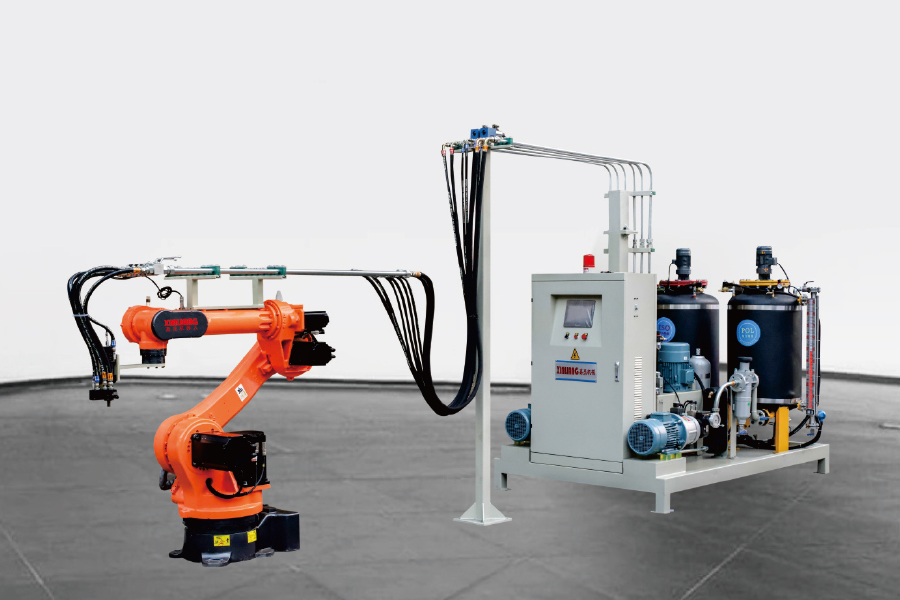
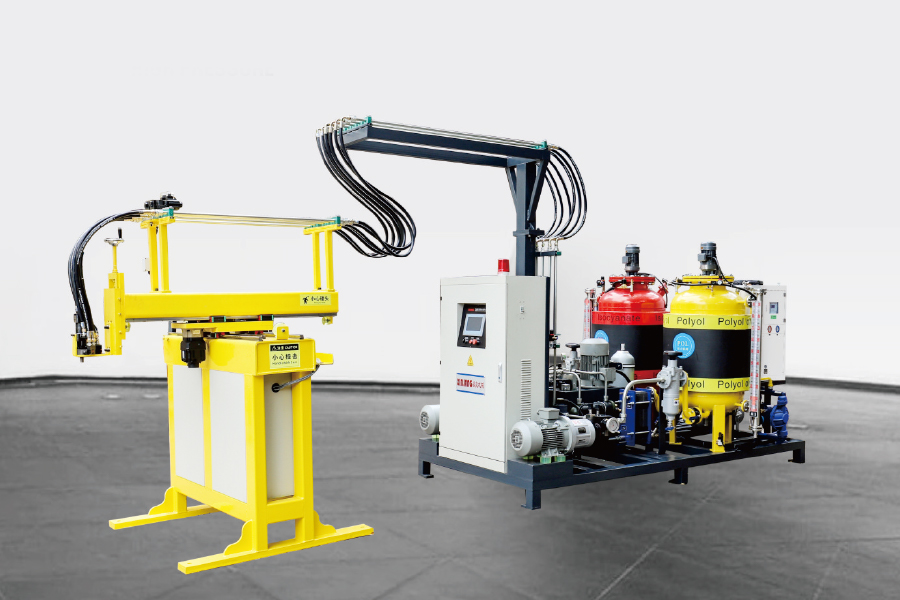
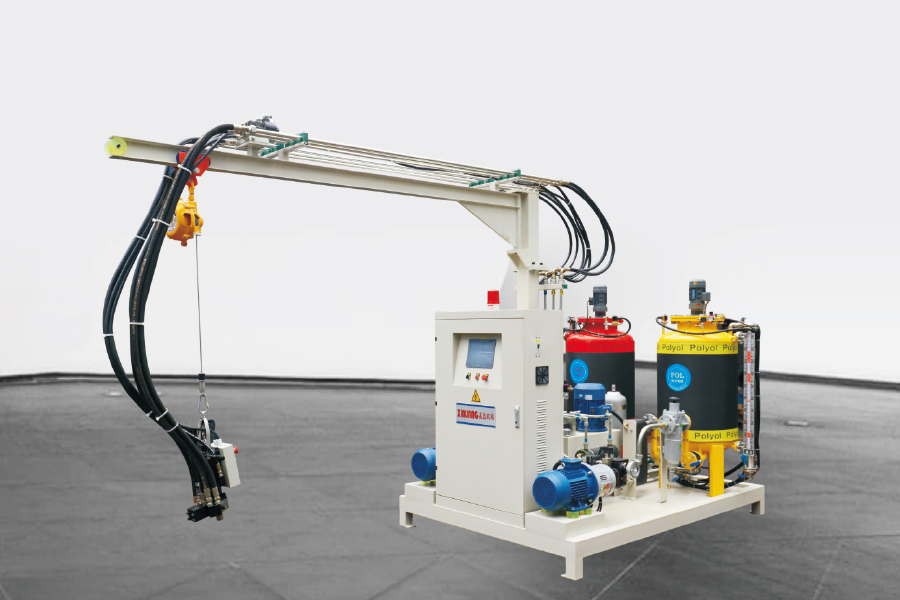
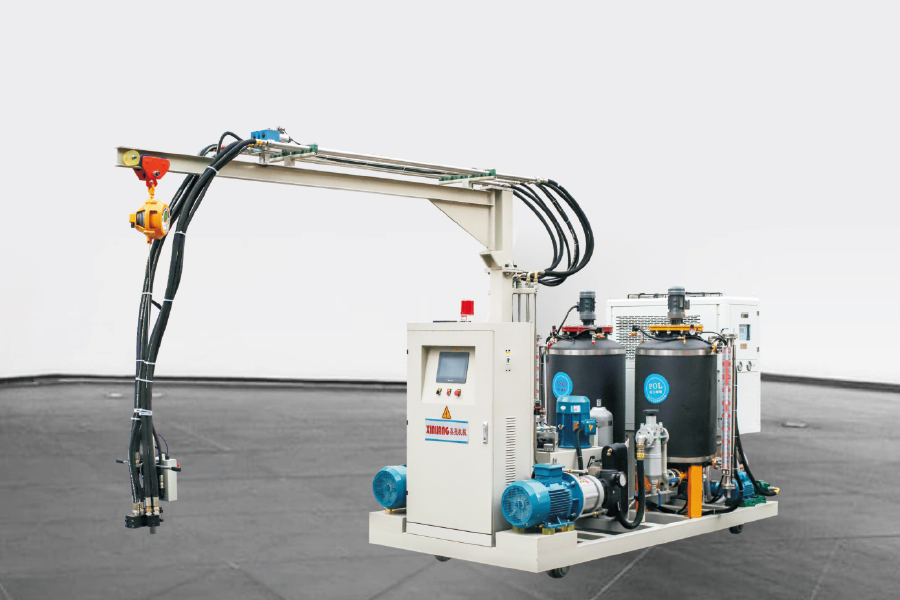
Foam injection molding is a manufacturing process in which a blowing agent — chemical or physical — is introduced into a polymer melt inside an injection molding machine, causing the material to expand and form a cellular, foam-like internal structure as it fills the mold cavity. The result is a lightweight, rigid or flexible part with a dense outer skin and a porous foam core. This structure provides an excellent strength-to-weight ratio, thermal insulation properties, and reduced material consumption compared to solid injection-molded parts.
In industrial practice, foam injection molding is carried out on dedicated Foam Injection Molding Machines or adapted standard injection machines fitted with specialized mixing heads and pressure-control systems. The technology is widely applied in automotive interiors, packaging, furniture, appliance insulation, and construction components. Understanding the process in depth — from chemistry to machine configuration — is essential for engineers, procurement teams, and manufacturers seeking to optimize production efficiency and part performance.
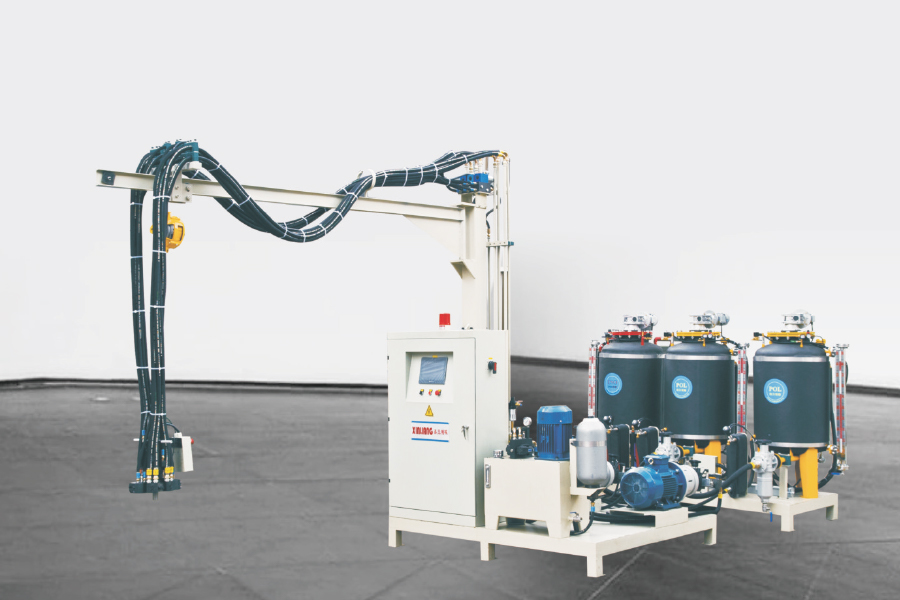
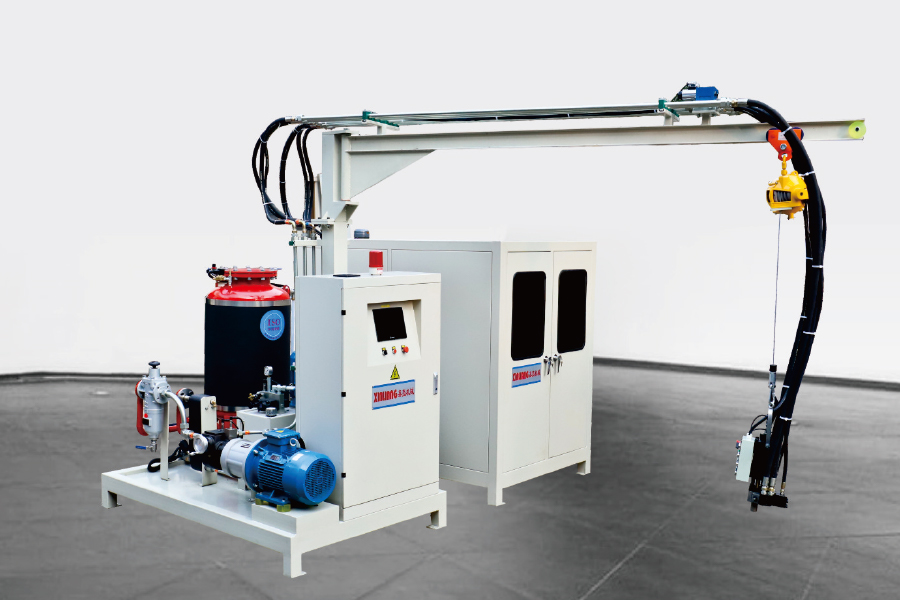
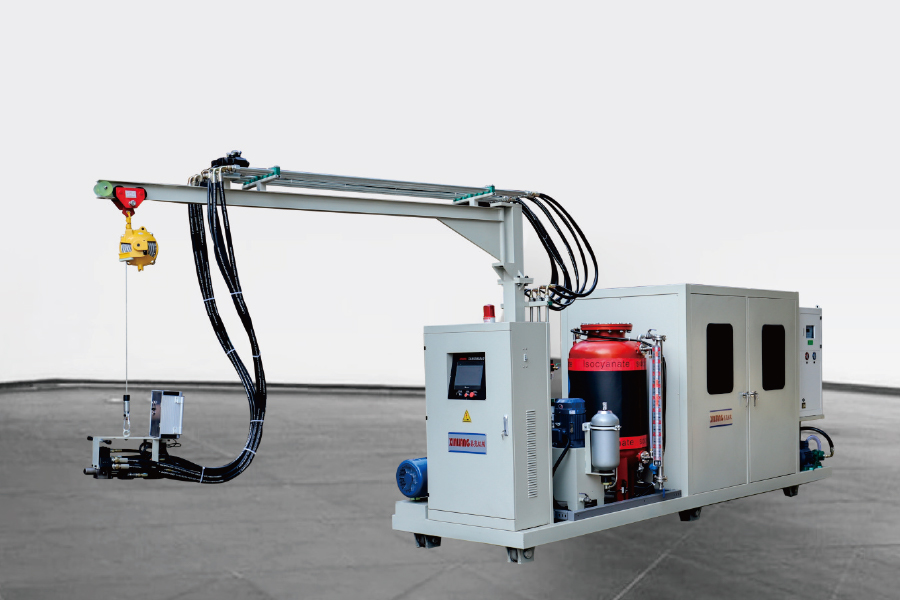
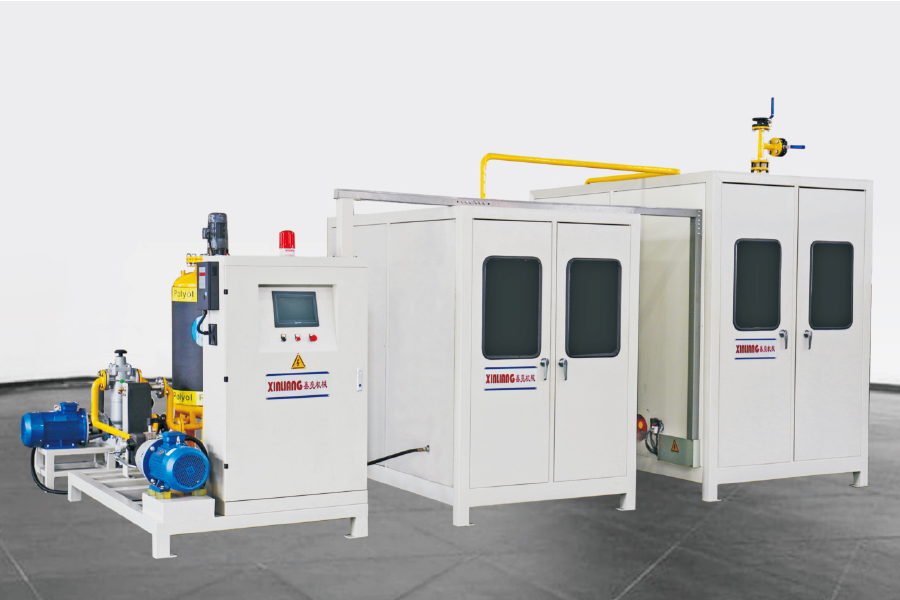
Ningbo Xinliang Machinery Co., Ltd. is a professional enterprise with more than ten years of R&D experience in polyurethane foaming equipment. As a trusted Foam Injection Machine Manufacturer, Foam Injection Machine Factory, and Foam Injection Machine Supplier, the company provides comprehensive custom and OEM production line solutions for clients across the globe.
At its core, foam injection molding exploits the physics of gas nucleation within a polymer matrix under controlled pressure and temperature conditions. When a blowing agent is mixed with molten polymer under high pressure inside the barrel or mixing head, it remains dissolved. The moment the material enters the lower-pressure mold cavity, the gas nucleates rapidly, forming millions of micro-cells throughout the melt. The outer layers of the melt, which contact the cool mold wall, solidify quickly before significant foaming occurs — creating the characteristic dense outer skin.
Chemical vs. Physical Blowing Agents
Two families of blowing agents are used commercially. Chemical blowing agents (CBAs) decompose at processing temperatures to release gas (typically CO₂ or N₂). They are easy to handle, can be added as masterbatches, and work in standard injection machines with minimal modification. Physical blowing agents (PBAs) — most commonly nitrogen or CO₂ in supercritical form, or cyclopentane for polyurethane systems — are injected directly into the polymer melt under pressure. PBAs produce finer, more uniform cell structures and leave no chemical decomposition residue in the part, making them preferred for demanding applications such as Automotive Foam Injection Molding and high-performance insulation products.
Polyurethane Foam Injection: A Special Case
Polyurethane (PU) foam injection differs from thermoplastic foam molding. Rather than melting a thermoplastic and injecting a blowing agent, PU foam is produced by a reactive two-component system: an isocyanate (Component A) and a polyol blend (Component B) are mixed at the injection head. The chemical reaction generates CO₂ as a by-product, which acts as the blowing agent. The mixture is injected into a closed mold where it expands and cures simultaneously. This is the foundation of the Foam Injection Machine Production Line technology that Ningbo Xinliang Machinery specializes in — combining precise metering, high-pressure mixing, and mold management into an integrated production solution.
Foam Injection Molding Process Flow
The foam injection molding process follows a tightly controlled sequence from raw material storage through reactive mixing, mold injection, curing, and final demolding. Each stage must be precisely managed — metering accuracy at the mixing head directly affects foam density and cell uniformity, while mold temperature and curing time determine dimensional stability and surface quality. A well-engineered Foam Injection Machine Production Line integrates all these stages with automation to maintain consistent quality across high-volume runs.
Types of Foam Injection Molding Processes
Foam injection molding is not a single process but a family of related techniques, each tailored to specific material systems, part geometries, and performance requirements. Selecting the right process variant is a critical upstream decision that affects equipment specification, tooling design, and production economics.
Table 1: Comparison of major foam injection molding process variants
Process
Material System
Density Reduction
Surface Quality
Key Applications
Structural Foam Molding
PP, PE, ABS + CBA
10–20%
Moderate (swirl marks)
Pallets, enclosures
MuCell / Microcellular
Most thermoplastics + SCF
5–15%
Good
Auto trim, electronics
PU Reactive Foam Injection
Isocyanate + Polyol
30–80%
Excellent (in-mold)
Insulation, seating, auto
Gas-Assist Foam
Thermoplastics + N₂
8–18%
Very Good
Thick-wall structural parts
Structural Foam Molding
Structural foam molding uses chemical blowing agents compounded into thermoplastic pellets. The short-shot technique — injecting less material than the full mold volume — allows the foaming pressure to complete mold filling. Parts typically show a characteristic swirl surface pattern, acceptable for non-cosmetic applications such as industrial pallets, equipment housings, and large structural panels. Weight reductions of 10–20% are achievable with maintained stiffness, since the foam core effectively increases the part's second moment of area.
Polyurethane Reactive Injection Molding (RIM)
PU foam injection, often configured as Reaction Injection Molding (RIM), delivers the widest range of foam densities — from 20 kg/m³ open-cell flexible foam to 300 kg/m³ rigid structural foam. This versatility is why PU foam injection is so widely used across industries. The equipment — a complete Foam Injection Machine Production Line — must precisely meter two reactive components, mix them in milliseconds, and inject the blend into a temperature-controlled mold before the reaction begins. Cycle times for PU foam parts typically range from 3 to 15 minutes depending on part thickness and chemistry.
Key Industries and Applications
Foam injection molding serves a broad spectrum of industries, each with distinct performance requirements, material preferences, and production volumes. Understanding the specific application context is essential for selecting the right Foam Injection Molding Machine configuration and production line layout.
Foam Injection Molding: Estimated End-Use Market Distribution (%)
Automotive is the largest single consumer of foam injection molded products, accounting for approximately 32% of total market demand. This reflects the pervasive use of PU foam in seat cushions, headrests, door panel inserts, dashboard components, and noise-damping elements. Building and insulation applications represent the second-largest segment, driven by global demand for energy-efficient wall panels, refrigerator insulation, and pipe insulation systems — all produced using Foam Injection Machine Production Lines.
Automotive Foam Injection Molding
The automotive sector applies Automotive Foam Injection Molding extensively across interior and NVH (noise, vibration, harshness) applications. Seat foam produced via PU reactive injection is one of the most volume-intensive applications: a single passenger vehicle contains approximately 8–12 kg of molded PU foam across all seating positions. Instrument panel foam-in-place processes, headliner stiffeners, wheel arch liners, and acoustic baffles are further automotive applications where precision foam injection machines are essential.
Packaging Foam Injection Machine Applications
A Packaging Foam Injection Machine is configured to produce custom-shaped protective foam inserts, corner blocks, end caps, and cushioning systems for electronics, medical devices, industrial equipment, and consumer goods. EPS (expanded polystyrene) and EPE (expanded polyethylene) are the dominant materials for packaging foam, but rigid PU foam inserts are also common in premium packaging requiring precise dimensional control. The key equipment requirement is short cycle times combined with rapid mold changeover capability to accommodate the high variety of packaging geometries in modern supply chains.
Foam Injection Machine: Key Components and Production Line Configuration
A complete Foam Injection Machine production line is more than a single machine — it is an integrated system of interconnected equipment modules, each performing a specific function. Understanding the components helps procurement teams and engineers specify the right system for their production volume and product mix.
Raw Material Storage Tanks: Temperature-controlled storage vessels for polyol blend and isocyanate components. Capacity is sized to production throughput requirements — typically 500 L to 5,000 L per tank in industrial production lines. Agitators prevent component separation in polyol blends.
Metering Pumps: High-precision gear or piston pumps that deliver each component to the mixing head at exact volumetric ratios (typically 100:40 to 100:60 polyol:isocyanate by weight). Metering accuracy of ±0.5% or better is essential for consistent foam chemistry and density.
High-Pressure Mixing Head: The critical component where components collide at pressures of 100–250 bar and mix in milliseconds via impingement. Self-cleaning mixing heads use a hydraulic cleaning piston to purge residual material after each shot, preventing clogging between cycles.
Mold Carrier / Mold Frame System: Supports and positions molds for injection. Rotary turntable systems allow parallel demolding and mold preparation while injection is ongoing, significantly increasing throughput.
Temperature Control Units: Separate circuits maintain mold temperature (typically 45–65°C for PU foam) and raw material temperatures (20–25°C for polyol, 20–22°C for isocyanate) with ±1°C precision.
Control System (PLC/HMI): Modern production lines use programmable logic controllers with touchscreen interfaces to manage shot weight, shot time, mixing pressure, component temperatures, and production statistics in real time.
Conveying and Demolding Systems: Automated conveyors, robot arms, or manual trolleys move molds through the production sequence, reducing labor and improving cycle consistency.
Production Line Throughput by Configuration (Shots/Hour)
Production throughput varies dramatically depending on the level of automation and mold handling configuration chosen for the Foam Injection Machine Production Line. A manually operated single-mold setup might achieve only 6–10 shots per hour due to operator cycle time and mold preparation delays. A two-station alternating system roughly doubles output by allowing one mold to cure while the other is being filled. A fully automated rotary turntable system with 4–8 mold positions can achieve 30–40+ shots per hour, making it the preferred configuration for high-volume automotive and furniture foam production.
Advantages of Foam Injection Molding Over Alternative Processes
Foam injection molding competes with several alternative manufacturing approaches for lightweight, insulating, or cushioning parts — including conventional injection molding, thermoforming, cut-and-bond foam fabrication, and slabstock foam conversion. In many scenarios, foam injection molding offers a compelling combination of advantages that these alternatives cannot match simultaneously.
Process Capability Comparison: Foam Injection vs. Alternatives
The radar chart profiles foam injection molding across five critical manufacturing capability dimensions. Geometry freedom scores highest — complex undercuts, variable wall sections, and integrated inserts can all be produced in a single mold cycle that would require multiple operations with cut-and-bond or slabstock methods. Weight reduction and material efficiency both score strongly, reflecting the inherent density reduction of the foam structure and the closed-mold process that eliminates material waste typical of open-pour or thermoforming methods. Combined, these capabilities explain why foam injection molding is specified for performance-critical applications in automotive, appliance, and industrial sectors.
Weight reduction without sacrificing structural integrity: PU foam parts can achieve densities as low as 20–30 kg/m³ for flexible applications or 60–120 kg/m³ for rigid structural applications, versus 900–1,100 kg/m³ for solid thermoplastic parts.
Thermal and acoustic insulation in a single part: The cellular structure inherently provides insulation (thermal conductivity of rigid PU foam: 0.022–0.028 W/m·K) and sound absorption, eliminating the need for secondary insulation layers.
Complex geometry in a single production step: Undercuts, variable section thicknesses, embedded inserts, and integrated attachment features can all be produced in one foam injection cycle.
Reduced clamping force requirements: Because PU foam injection fills the mold under relatively low pressure, tooling costs and clamp tonnage requirements are lower than solid injection molding of equivalent part sizes.
OEM and Custom Foam Injection Machine Solutions
For manufacturers seeking to establish or upgrade a foam production capability, working with an experienced Foam Injection Machine Manufacturer capable of providing complete OEM Foam Injection Production Lines is far more efficient than assembling individual components from multiple vendors. A single-source supplier integrates the entire system — storage, metering, mixing, mold handling, and controls — ensuring compatibility and providing a single point of accountability for performance.
Ningbo Xinliang Machinery Co., Ltd. offers comprehensive Custom Foam Injection Machine solutions developed through consultation with the customer's specific production requirements. The process begins with analysis of the customer's polyurethane product types, target production volume, available floor space, labor resources, and raw material supply chain. From this analysis, the engineering team develops an exclusive customized polyurethane product production solution — selecting appropriate machine models, mold frame configurations, automation level, and auxiliary equipment.
What to Expect from a Wholesale Foam Injection Equipment Partner
When sourcing Wholesale Foam Injection Equipment or engaging a factory for OEM production line supply, the evaluation should cover these key dimensions:
Engineering Experience: How many years has the supplier been designing polyurethane foaming equipment? Do they have in-house R&D personnel familiar with both domestic and international processing technology standards?
Customization Capability: Can the supplier design non-standard configurations for unusual product geometries, specialized chemistries (e.g., cyclopentane-blown rigid foam), or unique production environments?
After-Sales Support: What technical support is available post-installation? Does the supplier offer operator training, spare parts supply, and remote diagnostics?
Reference Installations: Can the supplier provide references or case studies from similar industry segments? Visiting an existing installation is valuable before committing to a major production line purchase.
Compliance and Certifications: Does the equipment meet CE, ISO, or relevant local safety and environmental standards? This is especially important for lines handling cyclopentane (a flammable physical blowing agent) where ATEX or equivalent certification may be required.
Global Polyurethane Foam Equipment Market Growth Trend (Indexed, 2018=100)
The global polyurethane foam equipment market has shown strong growth momentum over the 2018–2024 period, interrupted only briefly by supply chain disruptions in 2020. Recovery from that trough was rapid and strong, driven by post-pandemic construction activity, EV automotive adoption accelerating demand for lightweight foam components, and expanding cold-chain logistics requiring insulated packaging. For Foam Injection Machine Factories and suppliers, this trend represents a sustained period of elevated demand for both new production line installations and equipment upgrades — particularly in Asia-Pacific markets where manufacturing capacity expansion has been most aggressive.
About Ningbo Xinliang Machinery Co., Ltd.
Ningbo Xinliang Machinery Co., Ltd. is an enterprise combining industry and trade, dedicated to producing polyurethane foaming equipment, polyurethane foaming production lines, and cyclopentane polyurethane foaming complete equipment. As a professional high-tech enterprise, the company specializes in polyurethane foaming equipment research and development, manufacturing, and technical services, with more than ten years of professional design experience among its R&D personnel.
Relying on Zhejiang's strong industrial foundation and advantageous geographic location, Ningbo Xinliang pursues a development path of "scientific and technological innovation, pursuit of specialization." As a professional Custom Foam Injection Machine supplier and OEM Foam Injection Production Line company, the organization provides customized solutions for users across the polyurethane industry — from initial production capacity analysis through equipment delivery, installation, commissioning, and ongoing technical support.
The company's R&D team is familiar with advanced polyurethane foaming equipment technology from both domestic and international sources, enabling it to deliver systems that meet modern production standards for efficiency, precision, flexibility, and operator safety. Customers from all sectors are warmly invited to visit the facility and discuss their specific polyurethane production requirements.
Frequently Asked Questions
Q1: What materials are used in foam injection molding?
The most widely used material system for foam injection molding is polyurethane (PU), produced by reacting isocyanate and polyol components. Thermoplastics such as PP, ABS, and PS are also used with chemical or physical blowing agents. The choice of material determines foam density, mechanical properties, temperature resistance, and processing equipment requirements.
Q2: How long does a foam injection molding production cycle take?
Cycle times depend primarily on part thickness, foam chemistry, and mold temperature. Thin flexible PU foam parts (e.g., seat cushion inserts under 80 mm thick) typically cure in 3–5 minutes. Thick rigid foam parts or complex geometries may require 8–15 minutes. Automated multi-station production lines effectively increase throughput by running multiple molds in parallel, reducing average cycle time per part.
Q3: Can a foam injection machine production line be customized for my product?
Yes. Reputable foam injection machine manufacturers like Ningbo Xinliang Machinery analyze the customer's specific polyurethane product types, production volume targets, raw material logistics, and facility layout before designing a tailored production solution. Customization covers machine capacity, mold frame configuration, automation level, blowing agent type (including cyclopentane systems), and control system specifications.
Q4: What is the difference between open-pour and foam injection molding?
Open-pour foam production pours mixed reactive components into an open mold or cavity and allows free-rise foaming. Foam injection molding fills a closed, pressure-sealed mold, which produces tighter dimensional tolerances, better surface quality, higher and more uniform foam density, and more complex part geometries. Closed-mold injection is generally required for automotive, appliance, and structural applications where dimensional precision is critical.
Q5: Does Ningbo Xinliang provide OEM foam injection production lines?
Yes. Ningbo Xinliang Machinery Co., Ltd. provides OEM Foam Injection Production Line services for equipment distributors, system integrators, and manufacturers who wish to market customized production systems under their own brand. The company supports full OEM customization including machine configuration, branding, control system language, and documentation in the customer's required format.
Q6: What safety considerations apply to foam injection machines using cyclopentane?
Cyclopentane is a flammable physical blowing agent widely used in rigid PU foam for refrigerator and freezer insulation. Production lines using cyclopentane require explosion-proof (ATEX-rated) electrical components, dedicated ventilation systems, gas leak detection, and strict management of ignition sources throughout the production area. Reputable foam injection machine manufacturers design cyclopentane-compatible production lines with these safety systems fully integrated.


 English
 русский
 عربى
عربى