Home / News / Industry news / PU Sandwich Panel Machine Buying Guide: Components, Costs & Efficiency
PU Sandwich Panel Machine Buying Guide: Components, Costs & Efficiency
Industry news-
When a plant manager asks about a PU sandwich panel machine, the real question is usually not just how fast it can run. It is whether the line can hold a consistent foam density, keep the metal facing flat, and avoid resin waste over thousands of square meters. A PU sandwich panel machine is an integrated production line that takes a metal coil and a liquid polyurethane foam system and turns them into a rigid insulated panel in one continuous sequence.
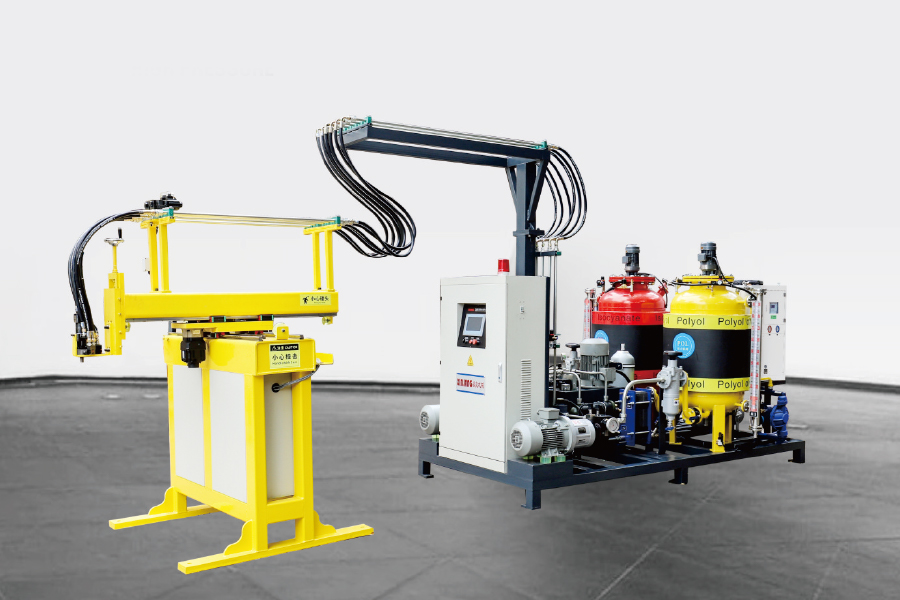
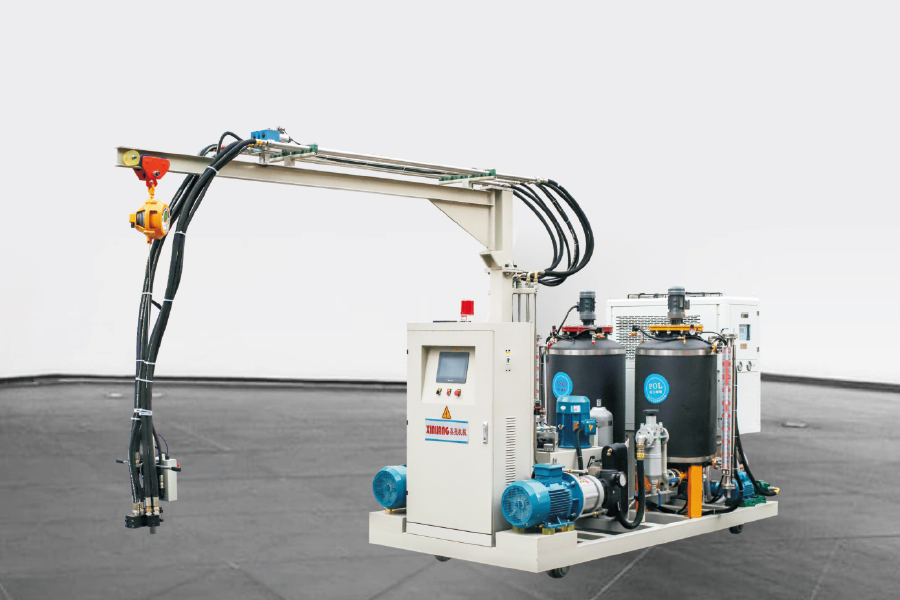
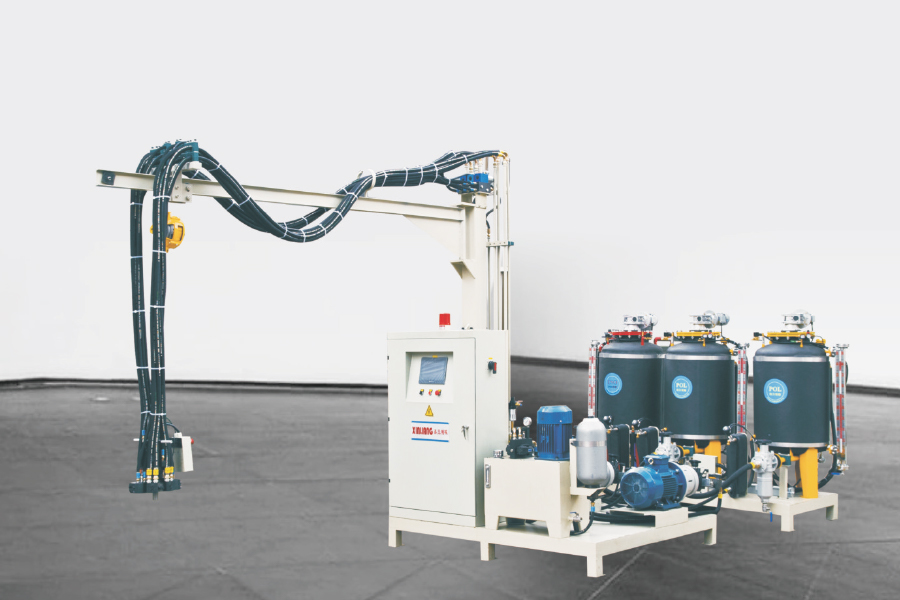
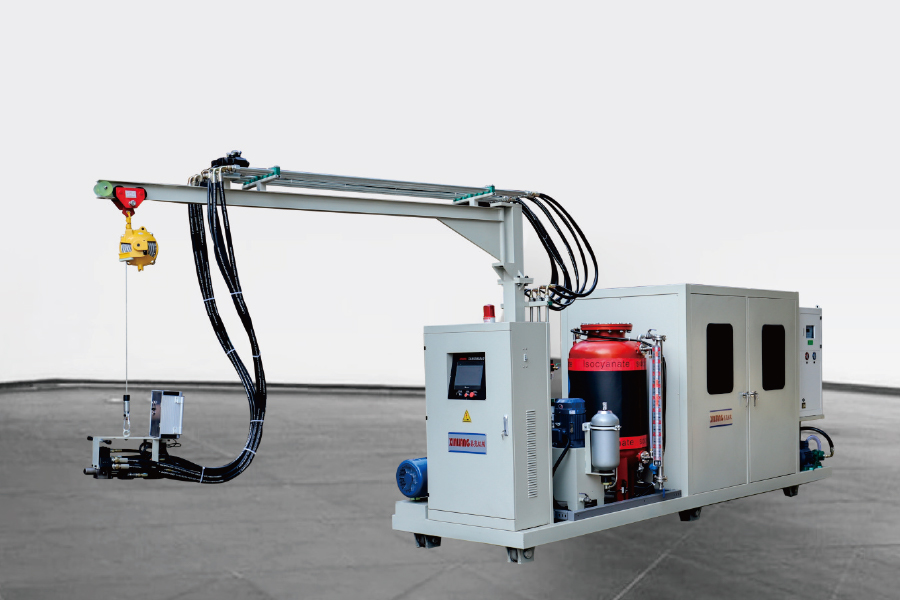
If you are evaluating a new line, the single most important part is the polyurethane foam injection section. The profiling line, preheating oven, double belt press, and cutter all matter, but the foam machine controls panel weight, thermal performance, adhesion, and cost. This guide explains what each station does, how to compare line configurations, and which purchasing details cause problems later.
A continuous line can be read from coil to finished panel in five main steps:
Uncoiling and feeding: the metal coil is straightened and prepared for profiling.
Roll forming: the metal sheet is shaped into the required panel profile or flat facing.
Preheating and surface treatment: the facing is cleaned and heated to improve foam adhesion.
PU foam injection: the polyurethane components are mixed at high pressure and injected onto the bottom facing.
Double belt pressing and cutting: the top facing is applied, the foam expands and cures, and the panel is cut to length.
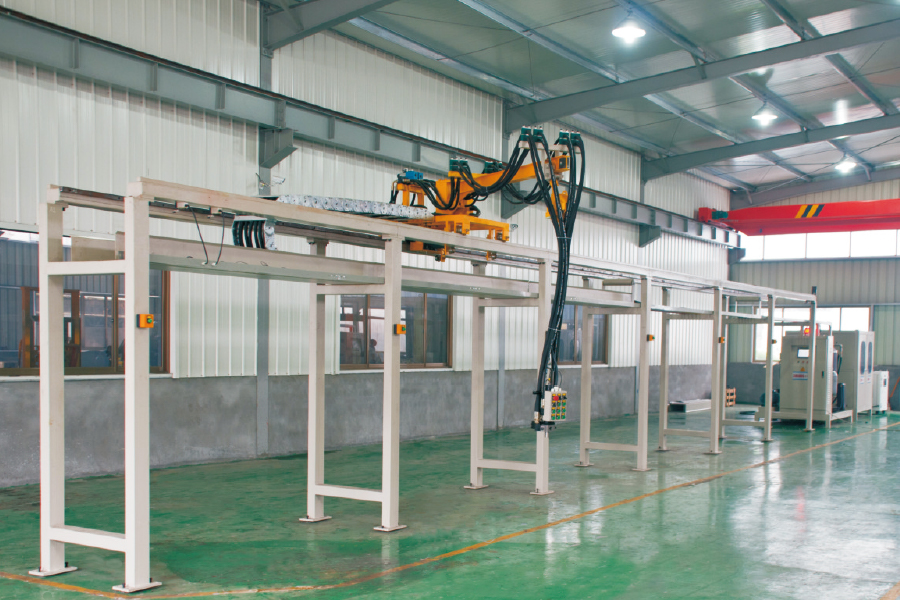
Isometric view of the main stations in a continuous PU sandwich panel line.
Table 1. Main stations of a continuous PU sandwich panel line
Station
Function
What to check
Uncoiling system
Feeds the metal coil into the line and controls tension.
Coil width range, tension stability, and changeover time.
Roll forming unit
Profiles the facing into the required panel geometry.
Tooling precision, line speed, and material thickness capacity.
Preheating oven
Heats and dries the metal facing to improve foam adhesion.
Temperature uniformity and energy consumption.
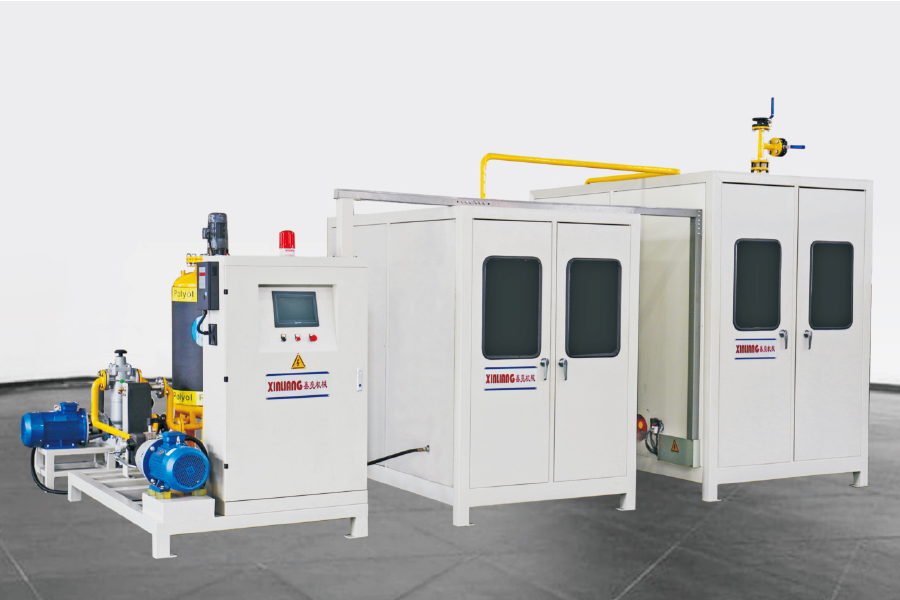
PU foam injection unit
Meters and mixes isocyanate and polyol at high pressure, then injects the mixture between facings.
Mixing ratio accuracy, pressure stability, and self-cleaning performance.
Double belt press and cutter
Guides the expanding foam and facings while the panel cures, then cuts it to length.
Belt speed control, panel thickness tolerance, and cutting accuracy.
Line Layout: H-Type, Annular, or Turntable?
Panel producers do not always need the same line structure. The supplier’s lineup often uses H-type, annular, or turntable configurations for the foaming section. Each layout balances output, floor space, changeover flexibility, automation, and capital cost.
For panel producers that need stable process control, straightforward maintenance, and a clear line flow, an H-type foaming line is a common starting point. It uses a linear path for injection and curing, which makes the process easier to observe and adjust.
When comparing quotes, do not compare only the overall price. Compare how the foam section is configured, because that is where material cost and panel quality are decided.
Injection pressure: high-pressure injection, usually above 120 bar, is preferred for sandwich panels because it creates a fine impingement mix.
Mixing ratio accuracy: a stable ratio between isocyanate and polyol is the main defense against weak foam, bubbles, and delamination.
Blowing agent compatibility: many panel makers now use cyclopentane or other low-GWP agents, which require explosion-proof design and a premix system.
Panel dimensions: confirm the maximum panel width, thickness range, and line speed your production targets require.
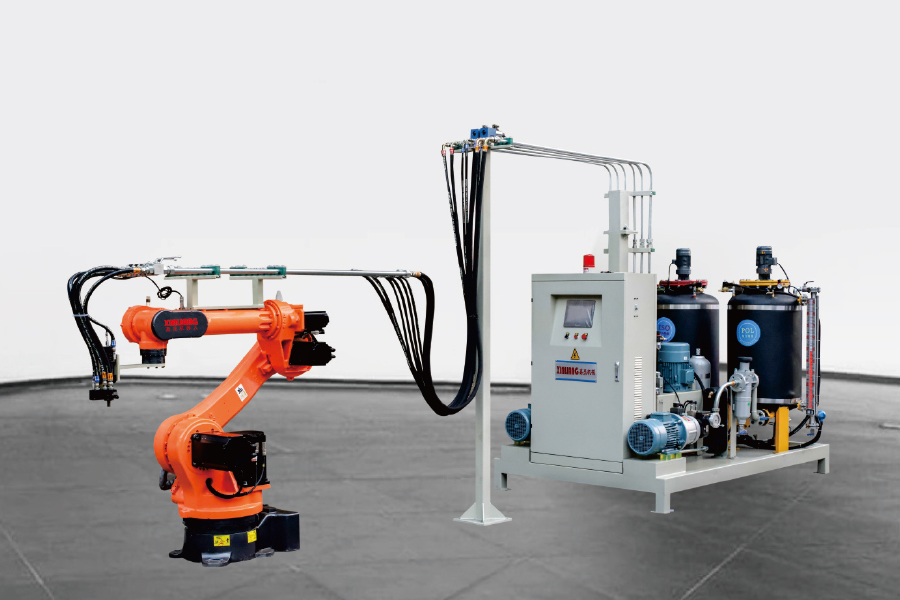
Automation level: decide whether you need a manual injection station, XY-axis positioning, or a full robotic production cell.
A well-controlled high-pressure foam injection system also limits overspray and off-ratio shots. In PU foam production, this is why high-pressure injection is associated with material savings; see this industry note on reducing material waste by 30 percent in PU foam for a closer look at the mechanism.
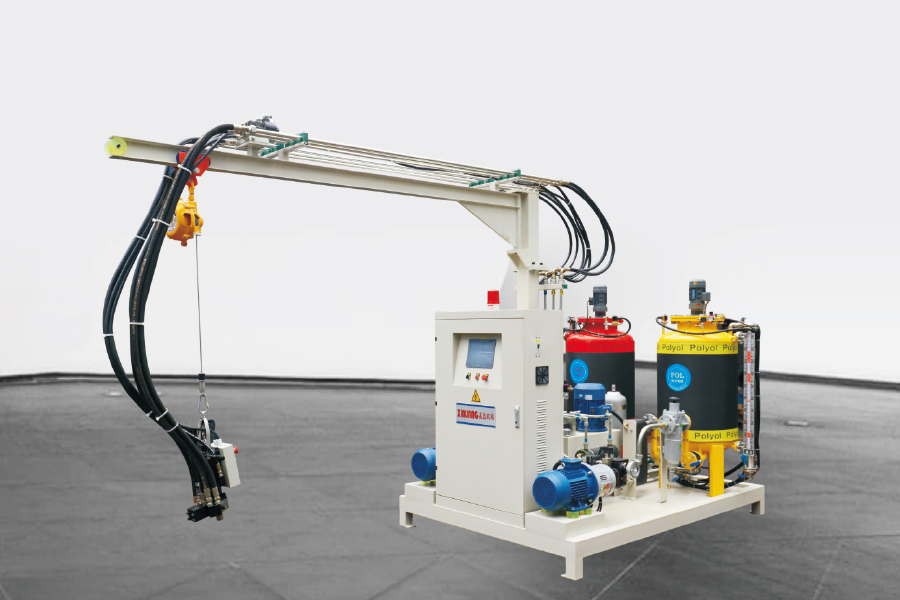
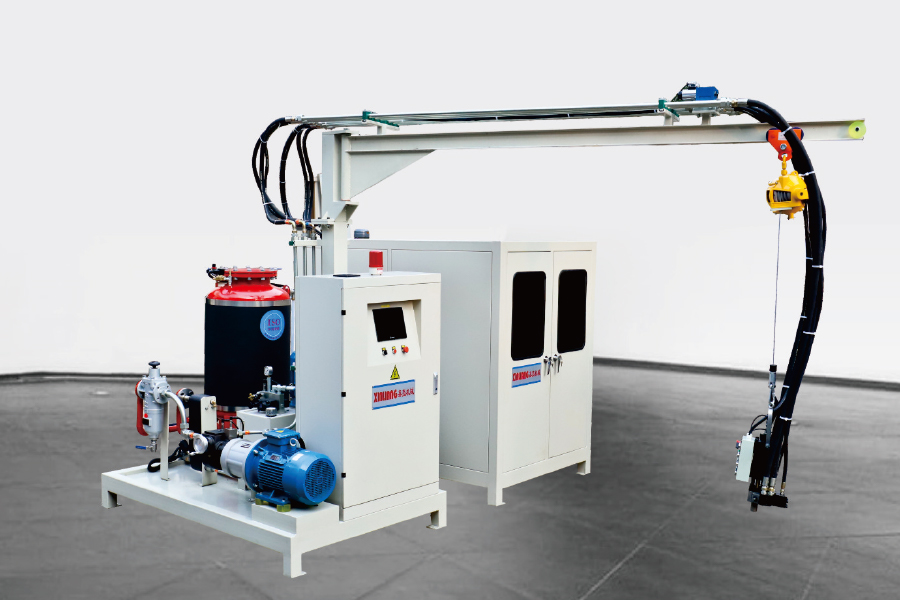
If you already have a double belt press and cutting station, you may not need a full turnkey line. A standalone high-pressure foam injection machine can be integrated with your existing panel line.
Cyclopentane is now one of the most common blowing agents for rigid polyurethane foam panels because it has low global warming potential and produces a fine, uniform cell structure. The trade-off is safety. Cyclopentane is flammable, so the machine area must use explosion-proof motors, gas detection, and nitrogen protection for the premix system.
Operating costs depend not only on foam density but also on cleaning frequency, mixing head wear, and the amount of material discarded during start-up and shutdown. A line with reliable self-cleaning and repeatable pressure control pays back by reducing waste and downtime.
Clean the mixing head daily to prevent cured polyurethane from blocking the outlet.
Calibrate metering pumps weekly and record the actual shot weight.
Inspect hoses and seals monthly for leaks or pressure loss.
Check the cyclopentane premix system for oxygen ingress and pressure fluctuations.
Test emergency stops, gas detectors, and ventilation before each production run.
Frequently Asked Questions About PU Sandwich Panel Machines
Q1. What is a PU sandwich panel machine used for?
It produces metal-faced insulated panels with a polyurethane foam core, commonly used for cold storage rooms, cleanrooms, wall panels, roofs, and prefabricated buildings.
Q2. What is the difference between a sandwich panel machine and a PU foam machine?
A PU foam machine is the core unit that meters, mixes, and injects the foam. A sandwich panel machine is the full line that feeds, profiles, bonds, cures, and cuts the panel.
Q3. Can a PU sandwich panel machine use cyclopentane as the blowing agent?
Yes. Many modern lines are configured with a cyclopentane premix system and explosion-proof components to meet environmental and safety requirements.
Q4. How much does a PU sandwich panel machine cost?
Cost depends on line speed, panel width, automation level, and whether you need cyclopentane-safe equipment. A fixed-line quotation is more meaningful than a single machine price.
Q5. What causes bubbles and delamination in PU sandwich panels?
The usual causes are incorrect raw material ratio, moisture on facings, unstable injection pressure, or insufficient curing time in the double belt press.
Q6. What is the difference between continuous and discontinuous sandwich panel lines?
Continuous lines run coils through a double belt and are best for high volumes. Discontinuous lines process panels in batches and offer more flexibility for varied sizes.
The right PU sandwich panel machine combines a reliable foam injection core, a line layout that matches your production volume, and a supplier who can help you commission the blowing agent and safety systems. Start with the foam section, compare the hidden costs of each layout, and use the checklist in this guide to ask better questions before you sign.


 English
 русский
 عربى
عربى