English
 русский
 عربى
Content
- 1 The Short Answer: Match the Machine to Your Product, Shot Size and Material System
- 2 How a Polyurethane High Pressure Foaming Injection Machine Works
- 3 High Pressure vs Low Pressure PU Foaming Machines
- 4 Key Criteria When You Choose a High Pressure PU Foaming Machine
- 5 Match the Machine to Your PU Products
- 6 Why Mixing Ratio Stability Shapes Foam Quality
- 7 Polyurethane Foaming Equipment from Ningbo Xinliang Machinery
- 8 A Practical Checklist Before You Decide
- 9 Frequently Asked Questions
- 9.1 Q1. What is a high pressure polyurethane foaming machine?
- 9.2 Q2. How does a polyurethane high pressure foaming injection machine work?
- 9.3 Q3. What is the difference between high and low pressure PU foaming machines?
- 9.4 Q4. What does a PU foaming machine mixing head do?
- 9.5 Q5. How do I choose the right PU foaming injection machine?
- 9.6 Q6. What output capacity should a high pressure PU foaming machine have?
- 9.7 Q7. How does mixing ratio affect polyurethane foam quality?
- 9.8 Q8. Can one machine handle different PU products?
The Short Answer: Match the Machine to Your Product, Shot Size and Material System
The right polyurethane foaming injection machine is the one whose output range, metering accuracy, mixing head and control system fit the parts you actually pour. Start with the product (seat cushion, steering wheel, mattress, decorative strip, fitness grip), then confirm the shot weight, the raw material system and the number of parts per shift. Every other choice follows from those four facts.
A high pressure PU foaming machine suits most repeat production work because the two components meet in the mixing head at high speed, so mixing is uniform without solvent flushing. Low pressure units remain useful for very small shots and simple manual pouring.
- Output: choose a range that covers both your smallest and largest shot.
- Metering: stable ratio control matters more than peak output.
- Mixing head: self-cleaning design reduces downtime and waste.
- Controls: a program that stores recipes shortens changeovers.
How a Polyurethane High Pressure Foaming Injection Machine Works
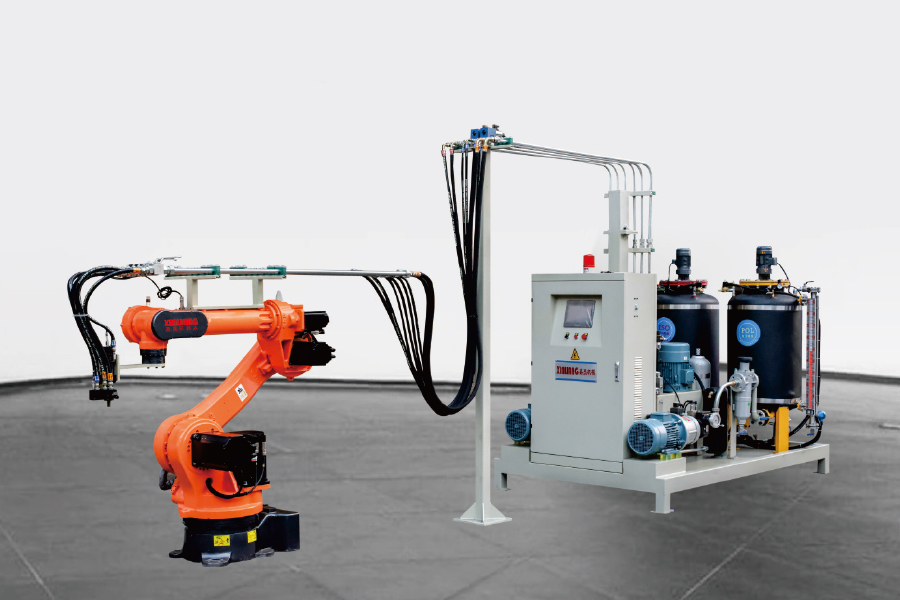
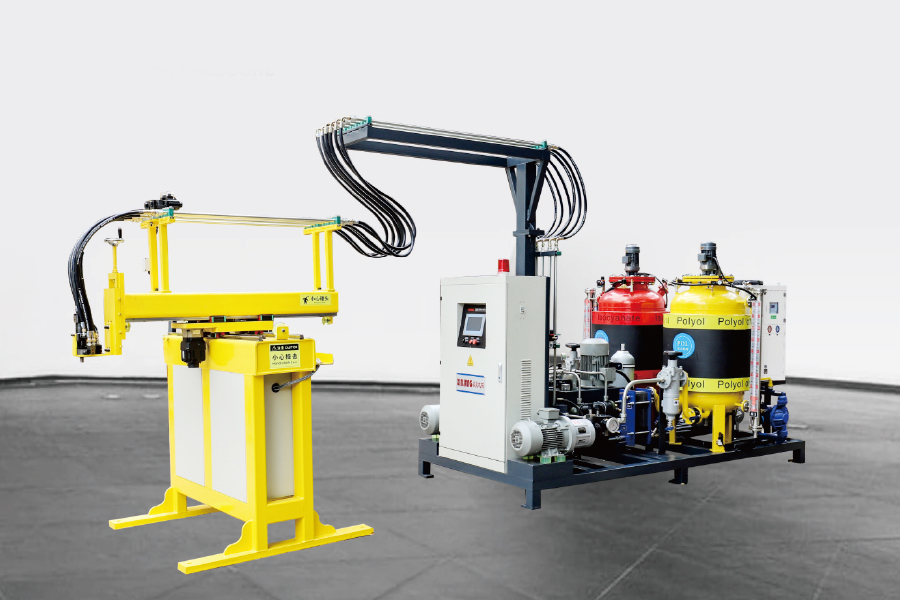
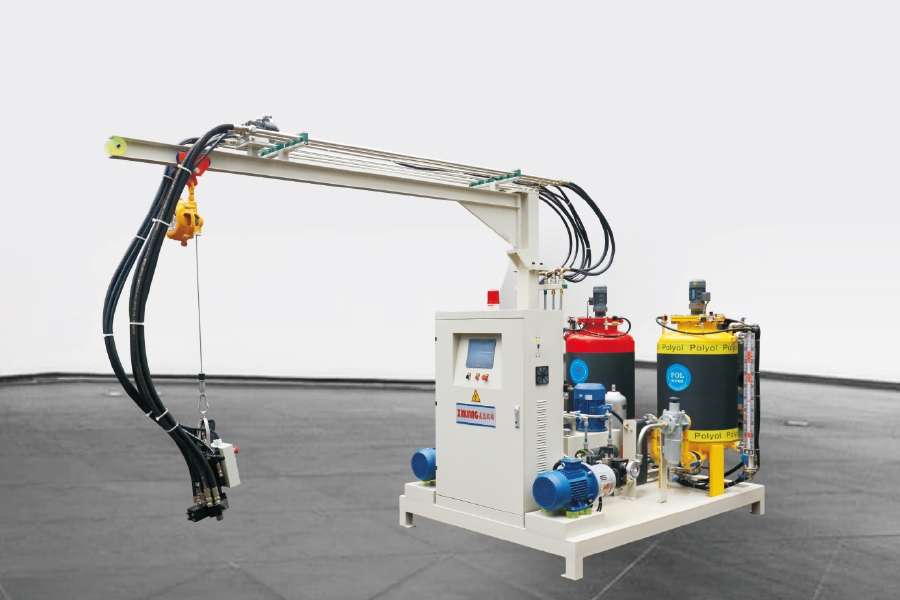
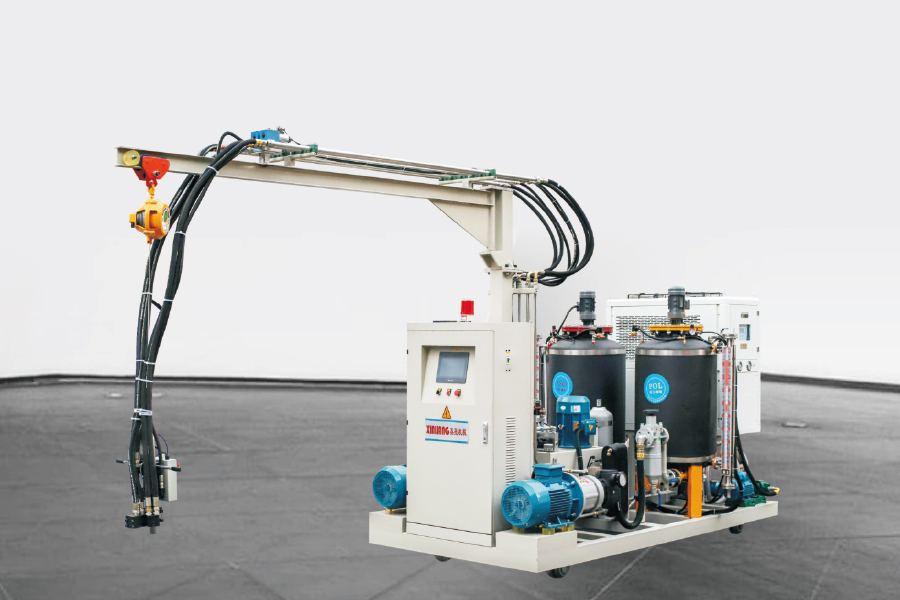
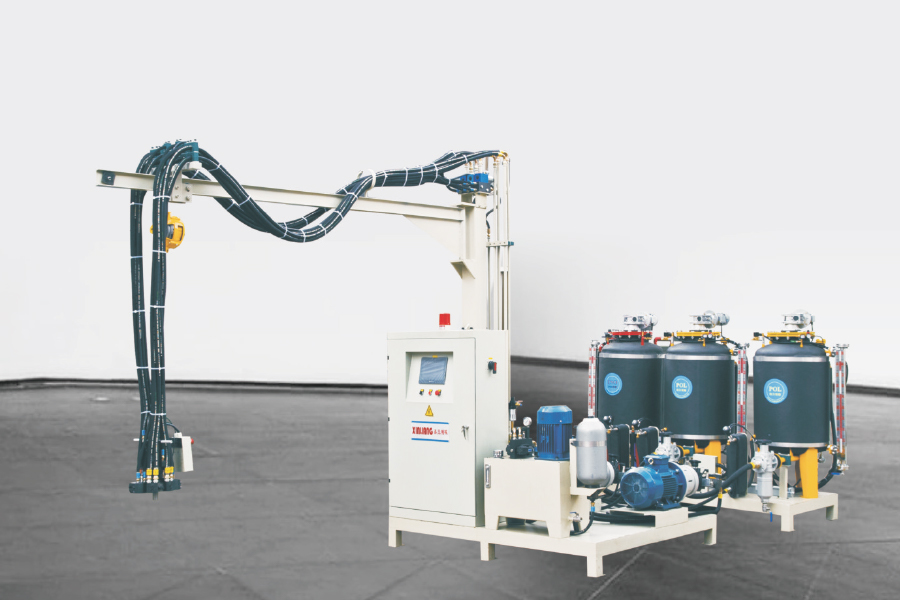
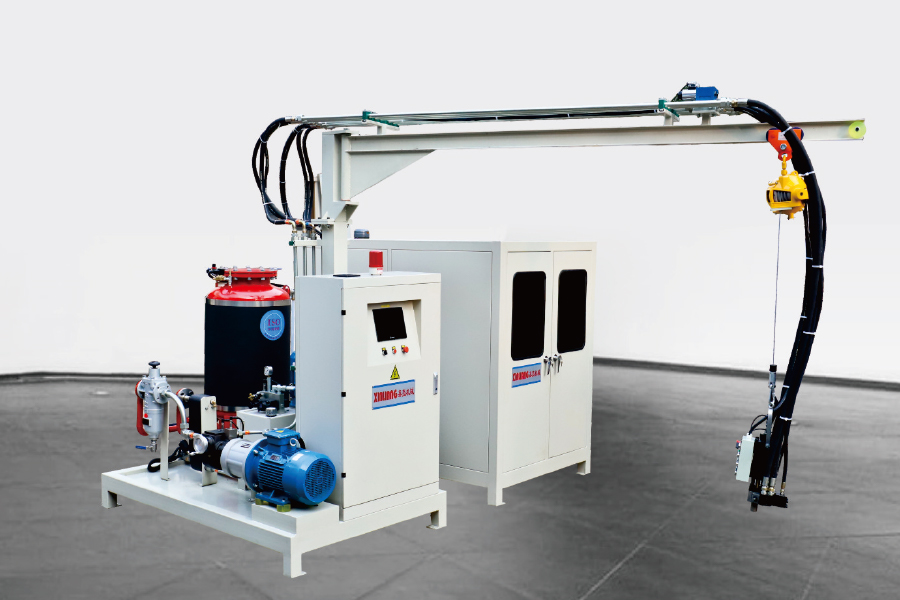
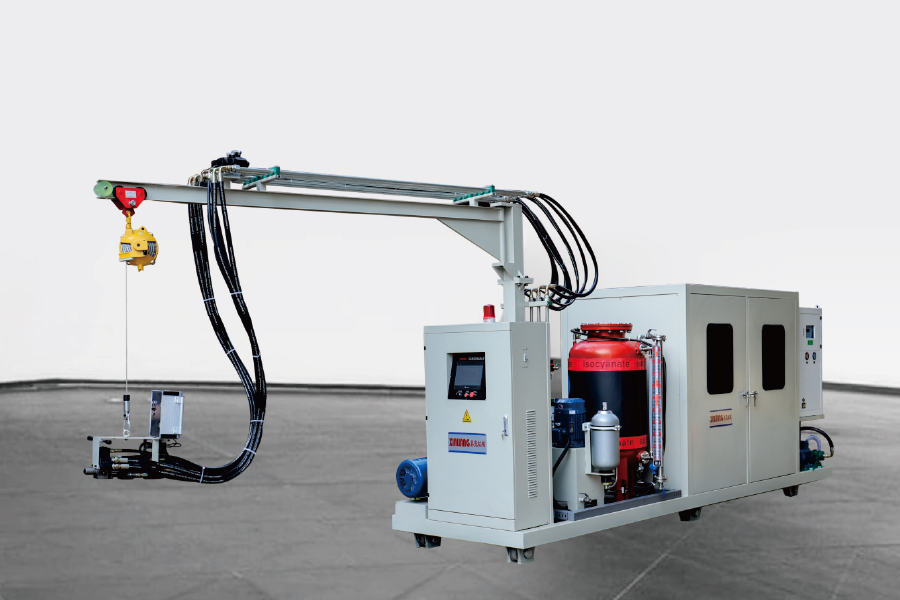
A polyurethane high pressure foaming injection machine moves isocyanate and combined polyether from separate tanks through metering pumps. Both streams are pressurized, sent to the mixing head, and impinged against each other. The blended liquid is injected into a mold or onto a cavity, where it expands and cures. Because the head cleans itself with a push bar, no solvent is needed between shots, a point described in published patent literature on high pressure PU foaming machines.
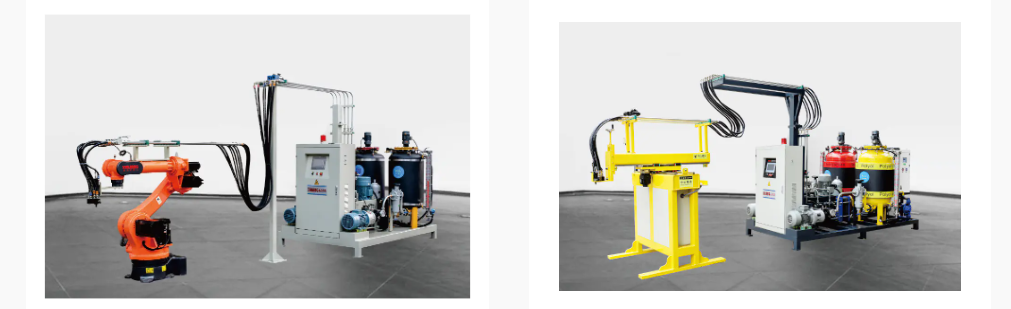
The Flow in Five Steps
- Raw materials are held in temperature controlled tanks.
- Metering pumps deliver each component at the set ratio.
- High pressure hoses carry both streams to the mixing head.
- The streams collide in the mixing chamber and blend.
- The mixture is injected, then the head cleans itself for the next shot.
High Pressure vs Low Pressure PU Foaming Machines
Both types are used in polyurethane foaming equipment lines, but they solve different problems. High pressure impingement mixing gives a consistent blend for repeat parts, while low pressure machines use a mechanical stirrer and need flushing after use.
| Aspect | High pressure | Low pressure |
|---|---|---|
| Mixing method | Impingement | Mechanical stirring |
| Head cleaning | Self-cleaning | Solvent or air flush |
| Best for | Repeat production | Small or manual pours |
| Cycle consistency | High | Moderate |
Key Criteria When You Choose a High Pressure PU Foaming Machine
These factors decide how a high pressure polyurethane injection machine performs in daily use. The chart shows a suggested order of attention for a first review.
Output Range and Shot Size
Pick a high pressure PU foaming machine whose output range covers your smallest and largest shot. A machine run at the very edge of its range often shows more ratio drift, so leave some margin on both ends.
Metering and Ratio Control
Metering pumps set the ratio between isocyanate and polyether. Ask how the ratio is monitored and how quickly it recovers after a pressure change. For PU high pressure metering and mixing machine work, stable ratio control is the base of repeat quality.
Mixing Head Design
The mixing head blends both streams and injects them. A self-cleaning head with a push bar reduces flushing waste and idle time. Check the injection angle and nozzle options against the geometry of your mold.
Control System and Recipe Storage
A clear control program lets operators store pour times, temperatures and pressures for each product. This shortens changeovers on mixed production lines and reduces the chance of entering a wrong setting.
Match the Machine to Your PU Products
A polyurethane high pressure foaming injection machine can work with 141B, F11, water foaming and other foaming methods, using conventional isocyanate and combined polyether. That range covers many product families, each with its own priorities.
| Application | Main focus |
|---|---|
| Automotive interiors and seats | Surface finish, density control |
| Steering wheels and headrests | Small shot accuracy |
| Mattresses | Larger output, even flow |
| Fitness equipment, children's wheels | Repeatable shots, flexible recipes |
| Decorative strips | Steady flow, clean head |
Why Mixing Ratio Stability Shapes Foam Quality
Polyurethane forms when isocyanate reacts with polyol. If the ratio moves off target, the foam can show uneven density, soft spots, shrinkage or a surface that stays tacky. Machines with consistent pump control and temperature control keep the ratio closer to the recipe across a shift.
Polyurethane Foaming Equipment from Ningbo Xinliang Machinery
Ningbo Xinliang Machinery Co., Ltd. combines industry and trade and focuses on polyurethane foaming equipment, polyurethane foaming production lines and cyclopentane polyurethane foaming complete equipment. The R&D team has more than ten years of design experience, and the control program has been refined over ten years of continuous updates. As a custom polyurethane high pressure foaming injection machine supplier and OEM partner, the company builds around the needs of each user.
-
Polyurethane High Pressure Foaming Injection Machine
Precise flow and pressure control with uniform mixing for seats, steering wheels and mattresses.
View product details -
PU High Pressure Metering and Mixing Machine
Stable ratio control for 141B, F11 and water foaming systems.
View product details -
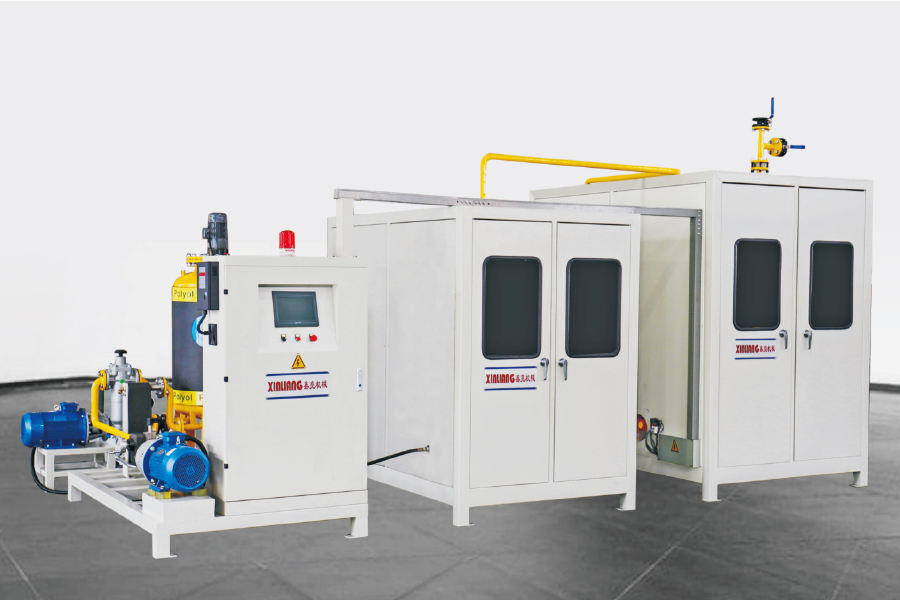
Custom High Pressure PU Foam Injection Equipment
Configured with production lines and OEM options to suit your product and layout.
View product details
A Practical Checklist Before You Decide
- List each product, its shot weight and the target cycle time.
- Confirm the raw material system and foaming method.
- Ask for a trial pour with your own mold and material.
- Review mixing head cleaning steps and spare part availability.
- Check recipe storage and operator training support.
- Plan floor space, utilities and material handling around the unit.
Frequently Asked Questions
-
Q1. What is a high pressure polyurethane foaming machine?
It meters isocyanate and polyether at high pressure and mixes them by impingement in a mixing head before injection.
-
Q2. How does a polyurethane high pressure foaming injection machine work?
Pumps deliver both components to the head, they collide and blend, and the mixture is injected into the mold.
-
Q3. What is the difference between high and low pressure PU foaming machines?
High pressure uses impingement mixing and a self-cleaning head. Low pressure uses a stirrer and needs flushing.
-
Q4. What does a PU foaming machine mixing head do?
It blends the two components, injects the mixture and clears the chamber for the next shot.
-
Q5. How do I choose the right PU foaming injection machine?
Define the product, shot size, material system and daily volume, then compare output, metering and controls.
-
Q6. What output capacity should a high pressure PU foaming machine have?
Choose a range that covers your smallest and largest shots with some margin at both ends.
-
Q7. How does mixing ratio affect polyurethane foam quality?
Drift from the recipe can change density, hardness and surface condition of the finished foam.
-
Q8. Can one machine handle different PU products?
Yes, when the output range, recipes and mixing head options match each product on the line.