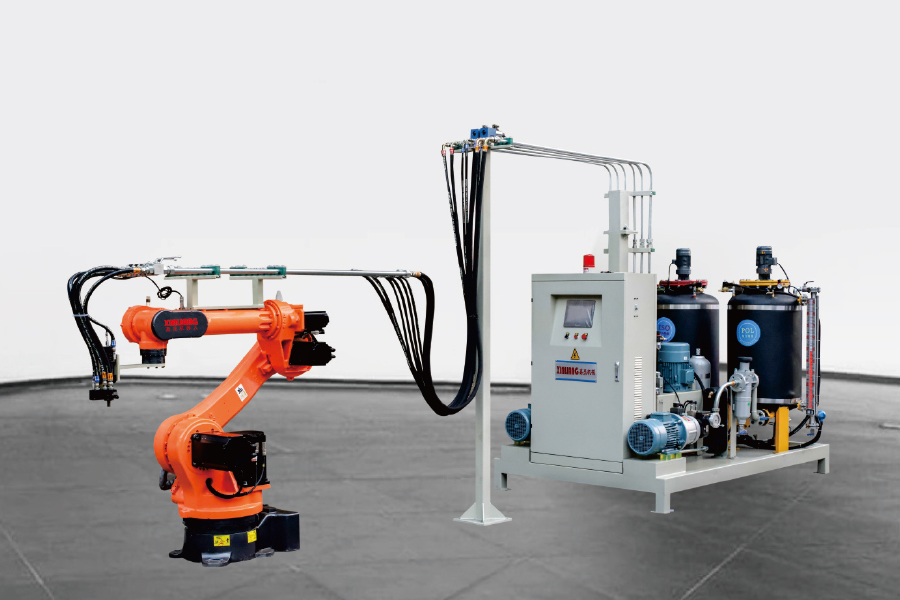
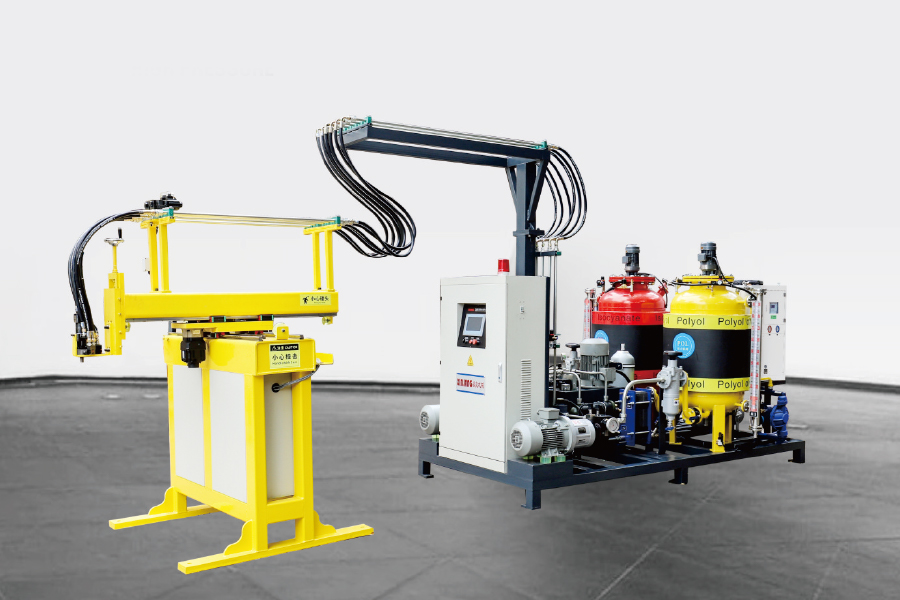
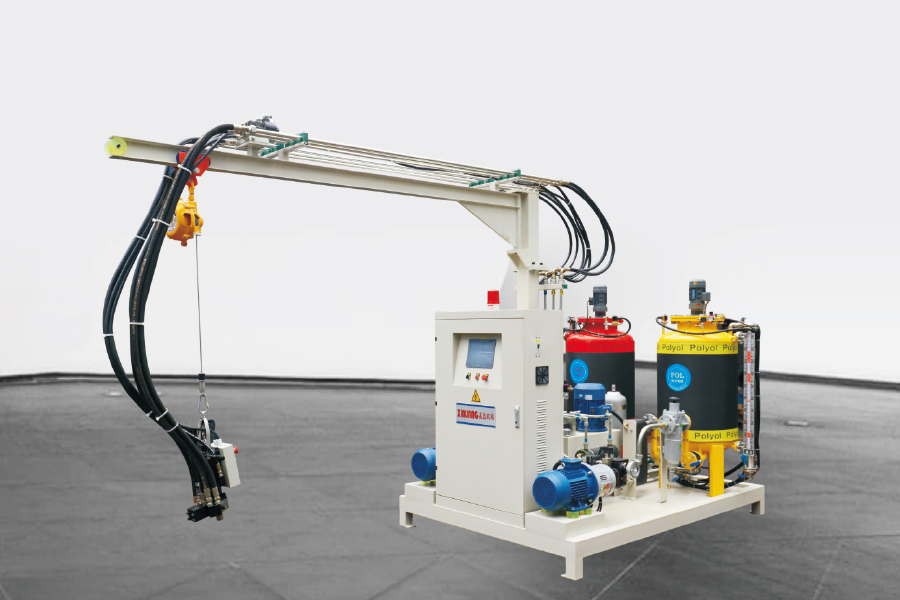
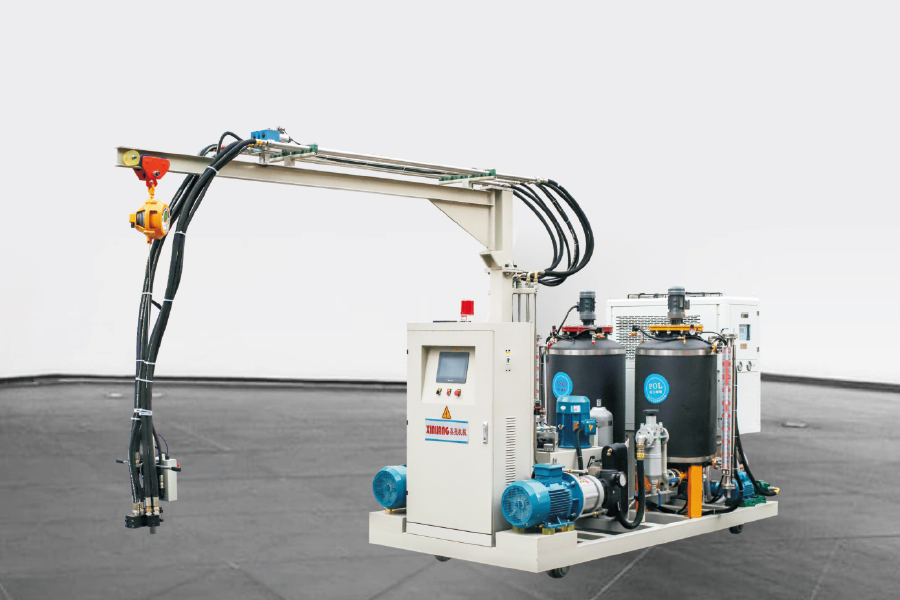
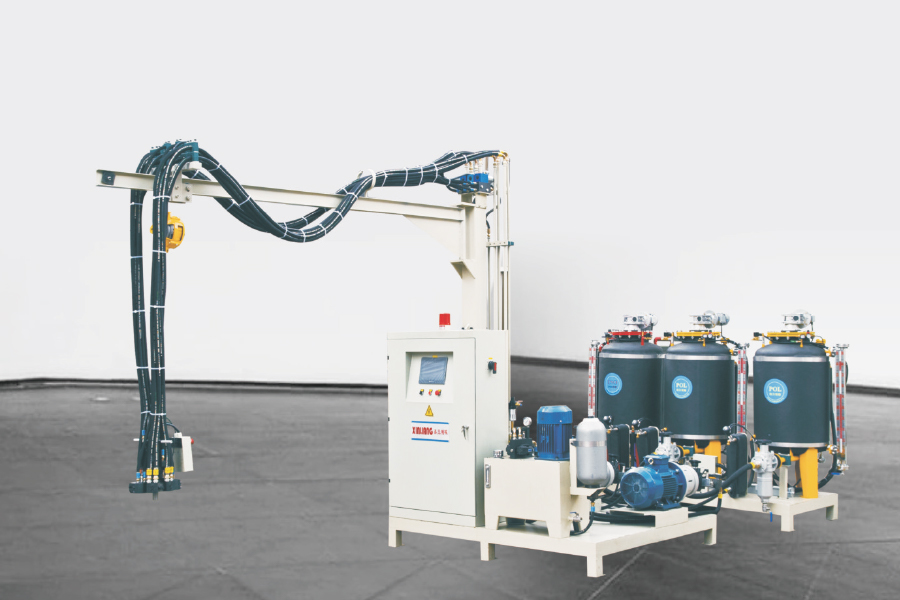
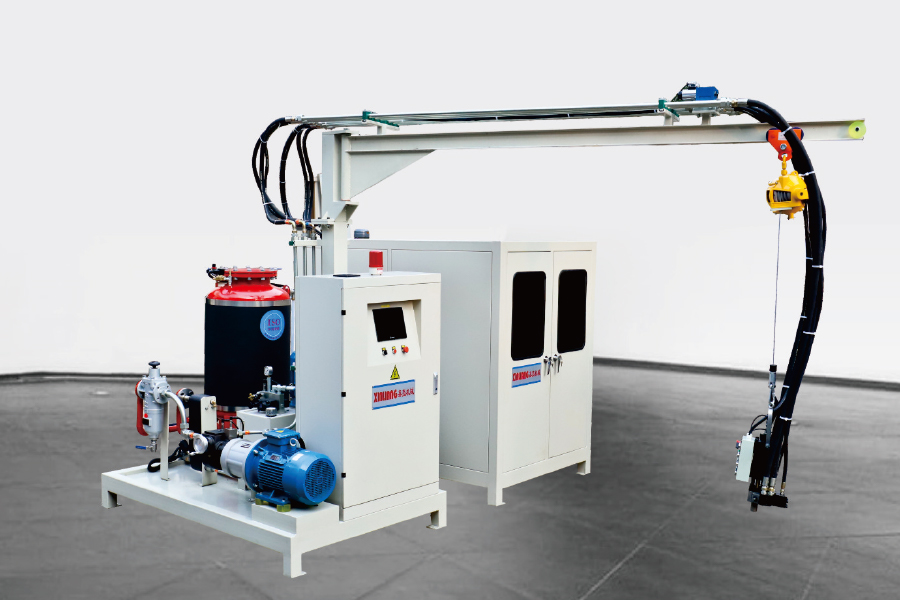
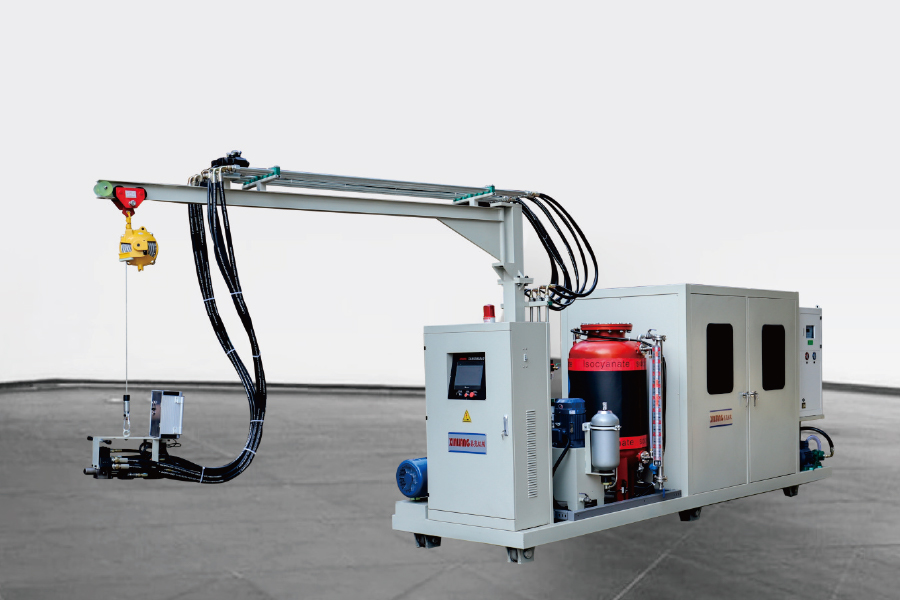
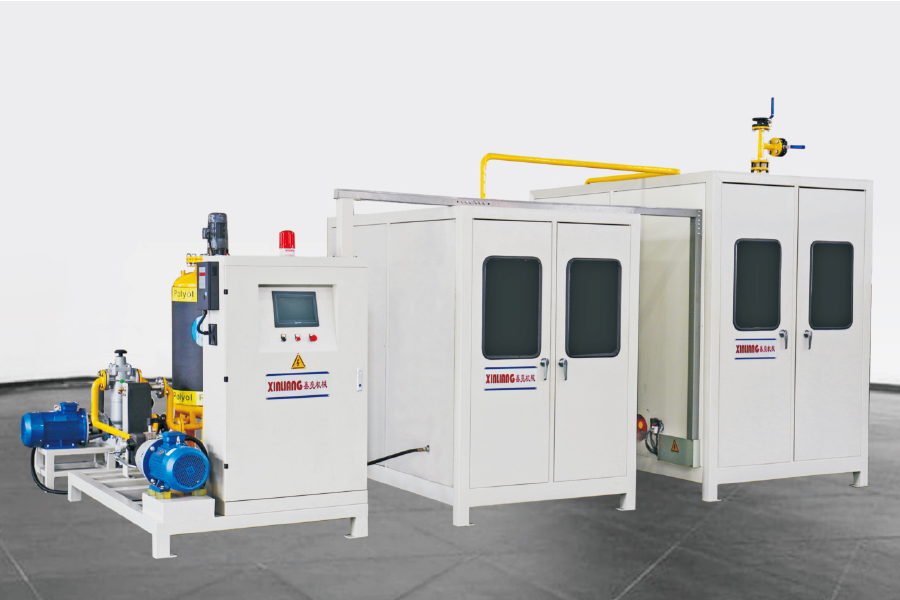
A polyurethane foaming injection machine is industrial equipment that mixes liquid isocyanate and polyol components under controlled pressure and precisely injects the reactive mixture into a mold, where it expands and cures into finished PU foam products. The direct answer for manufacturers evaluating this equipment is that high pressure systems generally deliver more consistent mixing and less material waste than low pressure alternatives, which is why high pressure machines dominate mid-to-large scale production lines.
This type of polyurethane foam machine supports a wide range of foaming methods, including 141B, F11, and water foaming processes, and works with conventional isocyanates and combined polyethers to produce foam across a broad range of densities and firmness levels depending on product requirements.
Working Principle: How the High Pressure System Operates
A high pressure PU foaming machine relies on precise metering, high-pressure mixing, and rapid injection to produce consistent foam quality shot after shot. Understanding this sequence helps buyers evaluate machine specifications more effectively.
Raw materials, typically isocyanate and combined polyether, are stored in separate temperature-controlled tanks.
High pressure pumps deliver each component to the mixing head at precisely controlled flow rates.
The two components meet in the mixing chamber under high pressure, creating turbulent, thorough mixing without mechanical agitators.
The mixed reactive liquid is injected rapidly into the mold cavity through the injection nozzle.
The foam expands and cures inside the mold according to the specific formulation's reaction time.
The self-cleaning mixing head purges residual material between shots, reducing downtime and material waste.
Because mixing occurs through pressure-driven impingement rather than mechanical stirring, high pressure systems avoid the buildup of cured material inside the mixing head that commonly affects low pressure designs, which is one reason precise flow and pressure control has become a defining feature of modern polyurethane high pressure foaming injection machines.
Types of Foaming Machines
Foaming equipment is generally categorized by pressure system, output capacity, and intended product line, allowing manufacturers to match machine configuration to their specific molding requirements.
Overview of common polyurethane foaming machine types and typical applications
Machine Type
Best Suited For
High Pressure Injection Machine
Automotive interiors, mattresses, and precision molded parts
Low Pressure Foaming Machine
Smaller batch runs and simpler mold geometries
Automatic Production Line Equipment
Continuous, high-volume manufacturing with minimal manual handling
Precision Mixing and Injection Machine
Applications requiring tight density and flow tolerance control
Insulation Panel Foaming Equipment
Rigid foam panel and construction insulation production
An automatic polyurethane foaming production line equipment setup is generally selected by manufacturers running continuous shifts, since automation reduces manual handling steps and helps maintain consistent shot timing across long production runs. A PU foam machine for insulation panel production, by contrast, is typically configured with wider mold platens and adjusted flow rates suited to rigid foam formulations used in construction applications.
Applications Across Product Categories
Polyurethane foaming injection machines support an unusually broad product range because foam formulation, density, and mold design can be adjusted independently of the core machine platform.
Automotive interiors, including car seats, steering wheels, headrests, and decorative interior strips.
Mattresses and bedding foam requiring consistent density across large mold surfaces.
Fitness equipment components such as grips, padding, and support cushioning.
Children's wheels and toy components requiring durable, molded foam parts.
Rigid insulation panels used in construction and cold chain packaging.
This horizontal bar chart reflects a general distribution of PU foaming machine deployment across common end-use categories. Automotive interior and furniture foam applications together account for more than half of typical production allocation, reflecting steady demand for seating, cushioning, and structural foam components across both industries. Mattress production follows closely, as this category requires large, consistent mold surfaces and precise density control across every unit produced. Insulation panels represent a smaller but stable segment, tied closely to construction and cold chain packaging demand cycles.
Advantages: Efficiency, Quality, and Cost Control
The main advantages of a modern polyurethane foaming injection machine come down to three measurable outcomes: reduced material waste, more consistent product quality, and improved production throughput per shift.
This line chart illustrates a general production efficiency progression as manufacturers move from manual foaming lines toward fully automated production configurations. The steepest efficiency gain typically occurs between semi-automatic and automatic mixing stages, since removing manual metering steps directly reduces both cycle time and formulation inconsistency between shots. Full automatic lines represent the highest efficiency tier, largely because integrated program control maintains consistent flow, pressure, and timing without requiring operator intervention between cycles. Precise flow and pressure control, refined through years of program optimization, is a key factor separating consistent full-automatic output from more variable manual processes.
Quality Benefits of Precise Mixing Control
Consistent foam density directly affects product performance, whether the application is seating comfort in automotive interiors or structural support in insulation panels. Machines with precise flow and pressure control reduce shot-to-shot variation, which in turn reduces the rate of rejected parts and rework, supporting more predictable production planning across a manufacturing shift.
High Pressure vs Low Pressure: Which Is Better
When comparing high pressure or low pressure PU machine options, the short answer is that high pressure systems generally outperform low pressure alternatives in mixing consistency, material efficiency, and suitability for precision molded parts, while low pressure systems remain a practical option for smaller batch operations with lower capital requirements.
The darker shape represents a high pressure foaming system, while the lighter shape represents a low pressure alternative. High pressure systems score notably higher on mixing consistency, material efficiency, and output speed, largely because impingement mixing under high pressure eliminates the need for mechanical stirring and reduces residual material buildup between shots. Low pressure systems hold an advantage in setup simplicity, since their lower operating pressures require less complex sealing and pump specifications, making them a reasonable entry point for smaller operations. Cleaning frequency favors high pressure systems as well, since self-cleaning mixing heads reduce the manual maintenance required compared to low pressure mixing chambers that accumulate cured residue more readily.
How to Choose the Right Foaming Machine
Choosing the correct polyurethane foaming injection machine starts with identifying production volume, product complexity, and the specific foaming method required by the target formulation.
Key selection factors to evaluate before purchasing a PU foaming machine
Factor
Why It Matters
Production Volume
Determines whether semi-auto or full-auto configuration is appropriate
Foaming Method
141B, F11, or water foaming affects material handling requirements
Product Complexity
Precision parts benefit from tighter flow and pressure control
Mold Size and Shape
Affects injection pressure and machine platen sizing
Maintenance Requirements
Impacts long-term uptime and operating labor needs
Manufacturers producing high-precision parts such as automotive interior components generally benefit most from a precision PU mixing and injection machine manufacturer offering tight tolerance control, while operations producing simpler, high-volume items may find a standard high pressure configuration sufficient. Reviewing formulation compatibility with the target foaming method, whether 141B, F11, or water-based, before finalizing machine specifications helps avoid costly reconfiguration after installation.
Frequently Asked Questions
Q1: How does a polyurethane foaming machine work?
It mixes isocyanate and polyether components under pressure, then injects the reactive liquid into a mold where it expands and cures into foam.
Q2: What is high pressure foam injection?
It is a mixing method that uses high-pressure impingement to combine foam components without mechanical stirring, improving consistency and reducing waste.
Q3: Which is better, high pressure or low pressure PU machine?
High pressure systems generally offer better mixing consistency and material efficiency, while low pressure systems suit smaller batch operations.
Q4: How do I choose a polyurethane foaming machine?
Consider production volume, foaming method, product complexity, and mold size before selecting a semi-automatic or fully automatic configuration.
Q5: Is polyurethane production expensive to operate?
Operating cost depends on automation level, formulation efficiency, and production volume, though precise mixing control generally reduces material waste.
Q6: How often does a foaming machine need maintenance?
Self-cleaning high pressure heads reduce maintenance frequency, though routine inspection of pumps, seals, and tanks is still recommended on a regular schedule.
Ningbo Xinliang Machinery Co., Ltd. is a professional high-tech enterprise specializing in polyurethane foaming equipment research, development, manufacturing, and technical services, with more than ten years of design experience across polyurethane foaming production lines and cyclopentane complete equipment systems. The company's high pressure foaming injection machines support 141B, F11, and water foaming methods, serving product categories from automotive interiors and mattresses to fitness equipment and children's wheels.
For buyers evaluating an industrial polyurethane foam molding machine OEM partner, a polyurethane foaming machine factory China supplier, or a wholesale PU foaming production line program, the company's advanced high-pressure mixing and injection technology has been continuously optimized over ten years to deliver stable, precise flow and pressure control. Whether the requirement is a high pressure polyurethane foam injection system for furniture production or a precision PU mixing and injection machine manufacturer relationship for custom molded components, sharing target product specifications, foaming method, and production volume early in the process supports a more accurate equipment recommendation.


 English
 русский
 عربى
عربى