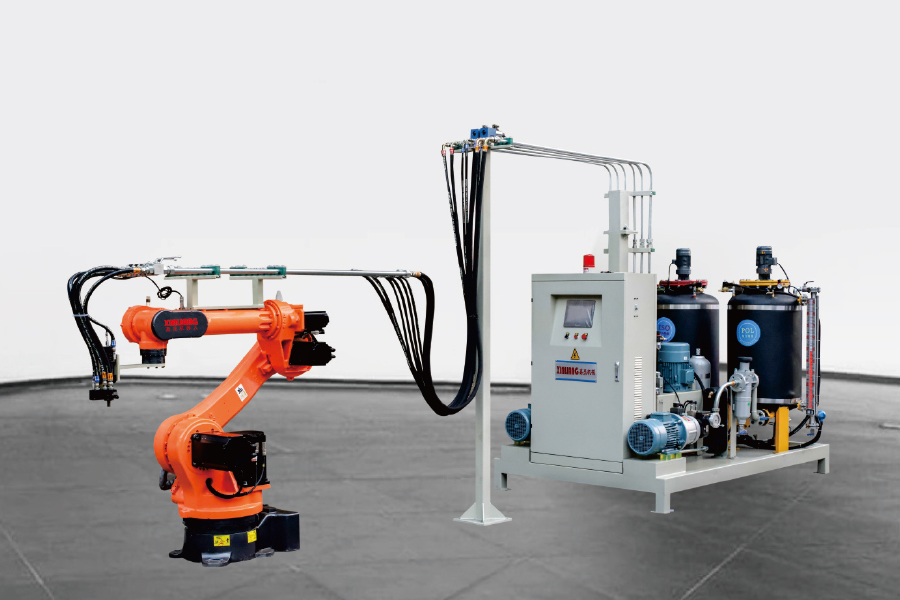
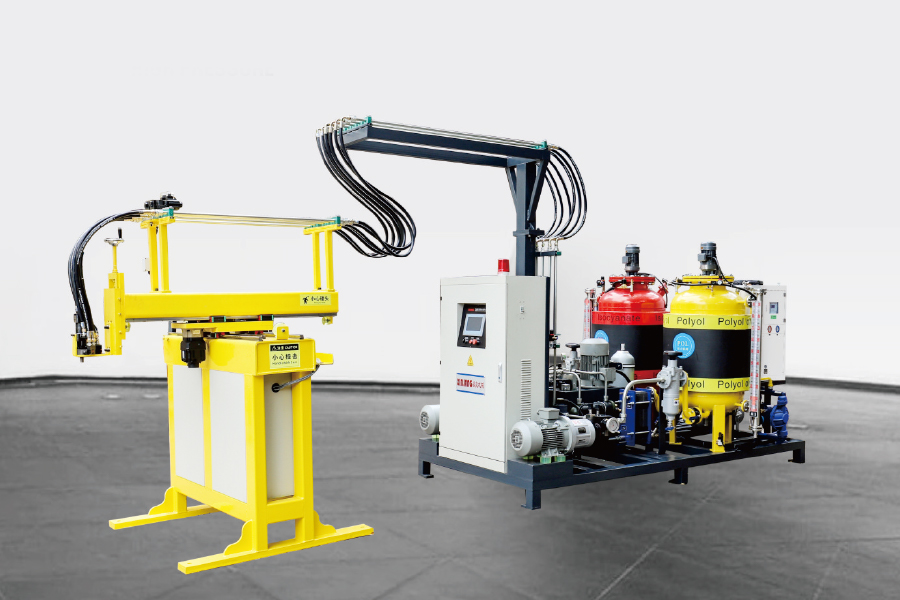
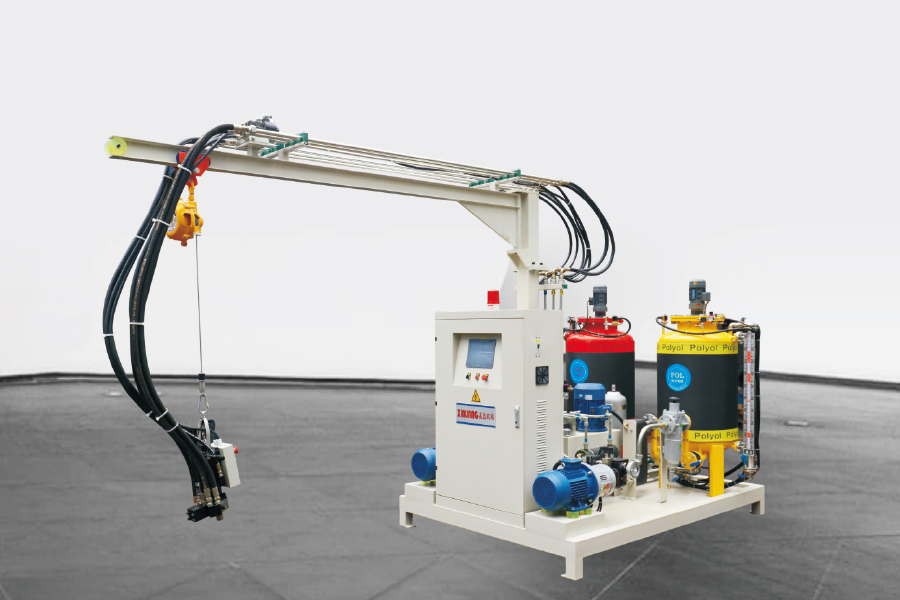
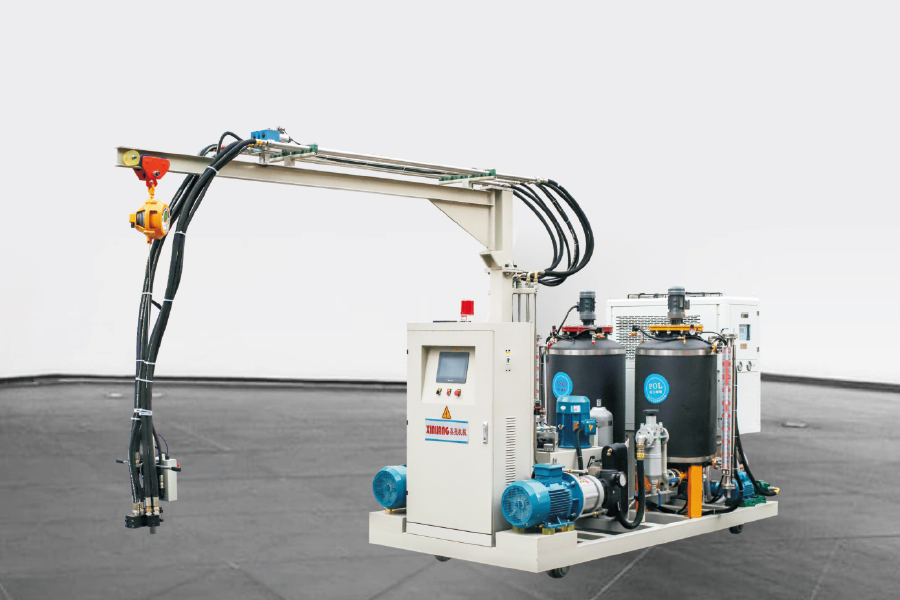
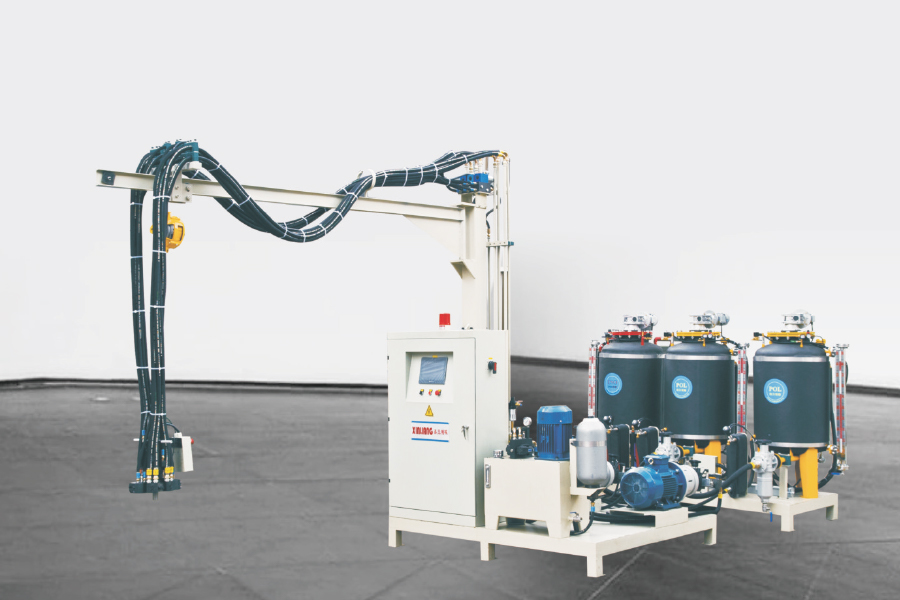
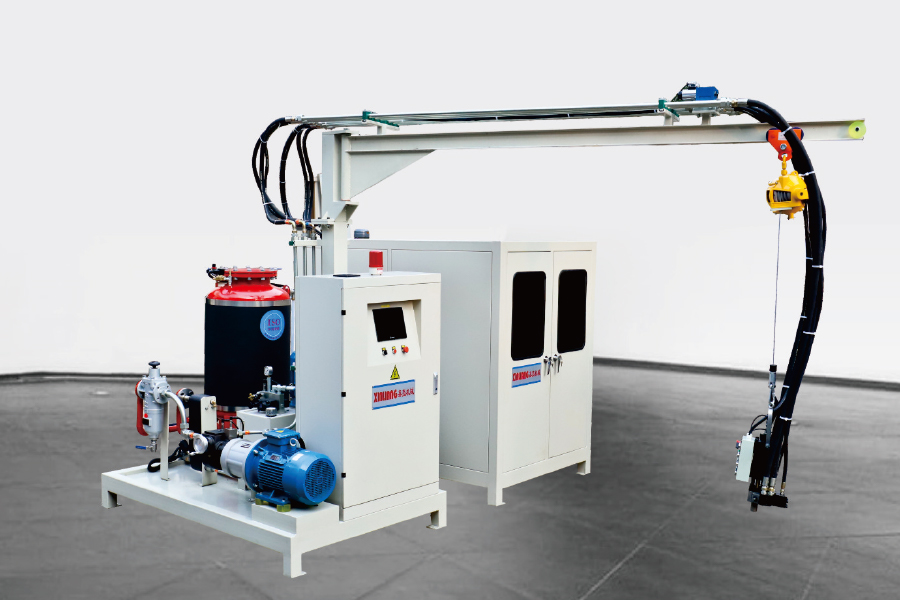
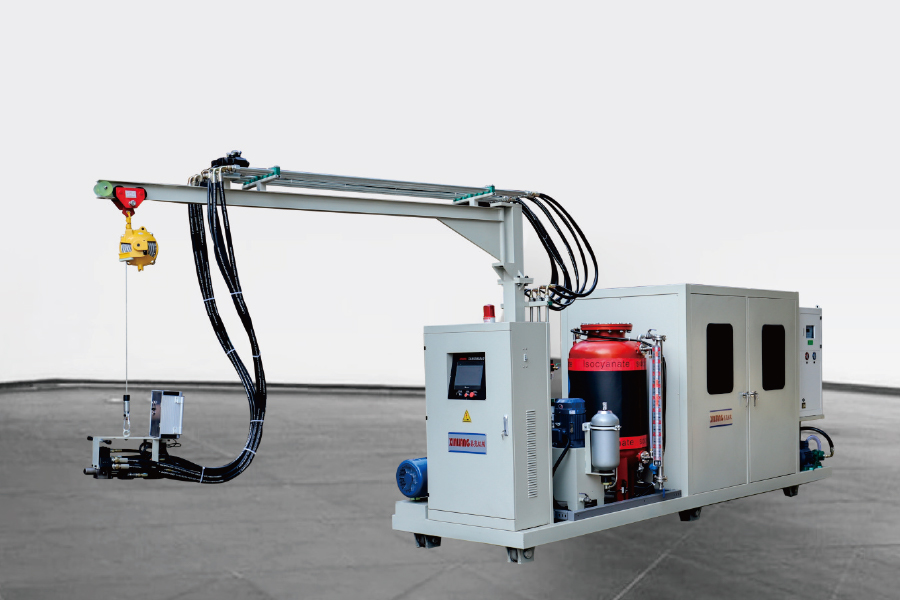
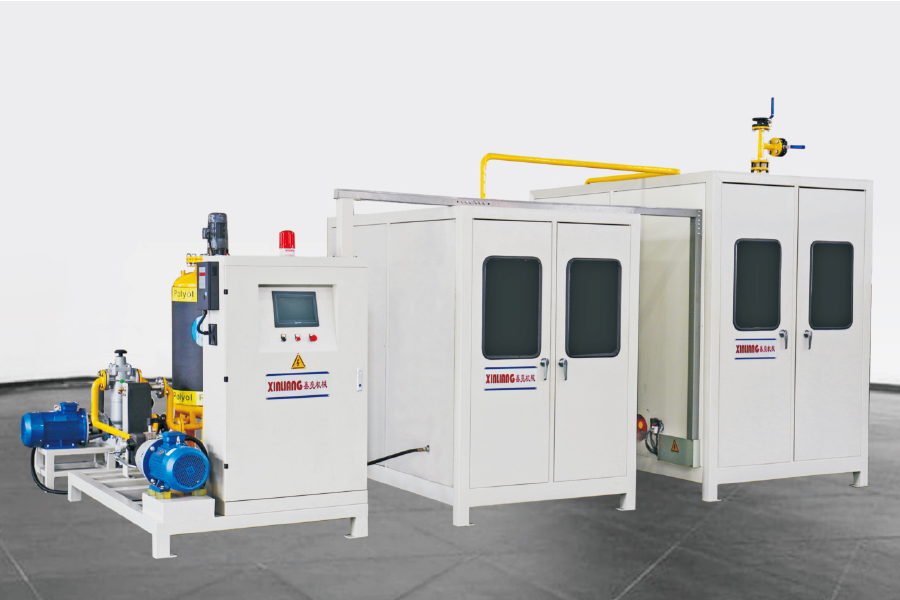
The short answer is straightforward. A dependable purchase decision for a Polyurethane High Pressure Foaming Injection Machine comes down to ten practical checkpoints: the mixing technology used to combine the two reactive components, compatibility with the raw material system in use, whether high pressure or low pressure operation fits the application, output capacity and shot size range, control system precision for flow and ratio accuracy, mold and product compatibility, foam quality consistency, ease of routine maintenance, availability of OEM and custom support, and overall fit with the production line already in place. Each of these checkpoints is explored below in detail, together with reference charts, comparison tables, and a closing checklist that brings every factor together in one place.
A well configured Polyurethane High Pressure Foaming Injection Machine combines precise metering, high velocity mixing, and repeatable process control, which together determine how consistent the finished foam turns out shot after shot.
Mixing technology and how thoroughly the reactive components combine
Compatibility with the specific raw material and blowing agent system
Whether high pressure or low pressure operation suits the application
Output capacity and shot size range for the intended product line
Precision of the control system for flow, pressure, and ratio accuracy
Mold and product compatibility across different foam parts
Consistency of foam quality and resistance to common defects
Ease of routine maintenance and access to spare components
Availability of OEM and custom equipment support
Overall fit with the existing production line and workflow
Understanding How a Polyurethane High Pressure Foaming Injection Machine Works
A Polyurethane High Pressure Foaming Injection Machine combines two reactive liquid components, typically an isocyanate and a combined polyether, at high velocity inside a small mixing chamber. This process, known as impingement mixing, forces the two streams together under high pressure so they collide and blend thoroughly within a fraction of a second, without relying on a mechanical stirrer inside the mixing head.
Why Impingement Mixing Matters for Foam Quality
Because the two components meet at high velocity, mixing happens evenly across the entire stream rather than only near a rotating element. This produces a more uniform cell structure in the finished foam and reduces the amount of unreacted material that can otherwise show up as soft spots or uneven density. The mixing chamber also tends to self clean at the end of each shot, since no material is left clinging to a stirring rod or paddle.
Comparing High Pressure and Low Pressure Mixing Approaches
Low pressure mixing, by contrast, generally relies on a mechanical agitator running inside the mixing head at lower injection pressure. It can suit smaller production runs or simpler parts, but it usually requires more frequent flushing and cleaning between shots, and the output rate tends to be lower than a comparable high pressure system.
Illustrative reference comparison across five general operating dimensions, based on typical design differences rather than a single measured test.
Matching Raw Material Systems: Isocyanates, Polyether, and Blowing Agents
A Polyurethane High Pressure Foaming Injection Machine needs to be configured around the raw material system it will actually run. Most systems pair a conventional isocyanate with a combined polyether, along with a chosen blowing agent method such as 141b, F11, or water foaming, each of which affects cell structure, density, and processing temperature slightly differently.
Product Applications Suited to This Process
Because the raw material combination and process control can be adjusted within a fairly wide range, this type of machine handles a broad span of finished parts with strong compatibility and flexibility, from flexible foam parts to semi-rigid components.
Common product categories produced with polyurethane high pressure foaming injection machines.
Product Category
Typical Examples
Automotive Interior Parts
Car seats, steering wheels, headrests, decorative strips
Consumer and Leisure Products
Children's wheels, fitness equipment components
Bedding and Furnishing
Mattresses, cushioning inserts
Because the machine handles this range of parts, it is often described as a flexible Polyurethane Foam Equipment platform rather than a single purpose tool, since a change of mold and a minor process adjustment is often enough to move between product families.
Comparing High Pressure and Low Pressure Foaming Technology
The distinction between high pressure and low pressure operation is one of the first things a buyer should confirm, since it shapes cleaning routine, output rate, and the level of process control available. A PU High Pressure Foaming Machine injects the components at significantly higher pressure than a low pressure system, which is what allows impingement mixing to work without a mechanical agitator.
Illustrative pressure reference by foaming method, intended for general comparison rather than a fixed specification.
General comparison between high pressure and low pressure polyurethane foaming technology.
Characteristic
Low Pressure
High Pressure
Mixing Method
Mechanical agitator
Impingement mixing
Cleaning Frequency
More frequent flushing
Largely self cleaning
Typical Output Rate
Lower
Higher
Suited Production Scale
Small to moderate runs
Moderate to large runs
Evaluating Output Capacity and Shot Size Range
Output capacity should be matched to the expected part size and production volume rather than chosen purely on a general specification. An Industrial PU Foaming Machine intended for large automotive parts needs a different shot size range than a compact unit built for small consumer components.
Reading Shot Size and Cycle Time Together
Shot size and cycle time need to be considered together, since a machine capable of a large single shot may still fall short of daily output targets if the cycle time between shots is longer than the production schedule allows.
Illustrative output capacity reference by machine tier, shown in general units for comparison purposes only.
Reviewing Control System Precision: Flow, Pressure, and Ratio Accuracy
The control system is what turns raw mechanical capability into repeatable, predictable foam output. An Automatic PU Foaming Machine with a well tuned control program manages flow rate, injection pressure, and the ratio between the two reactive components shot after shot, with minimal drift over a production run.
Why Ratio Accuracy Affects the Finished Part
Even a small deviation in the ratio between isocyanate and polyether can shift the foam density, firmness, or cure time of the finished part. A control program refined over many years of operation, with metering pumps calibrated against the actual material viscosity, tends to hold that ratio steady even as tank levels and ambient temperature change through a shift.
Temperature Zone Management
Consistent material temperature at the mixing head also plays a direct role in reaction timing. Multiple temperature control zones across the tanks, hoses, and mixing head keep the material within its intended processing window regardless of ambient workshop conditions.
Assessing Mold Compatibility and Application Range
A PU Injection Machine is only as useful as the range of molds and product shapes it can support without extensive rework of the mixing head or delivery lines. Confirming mold clamping method, shot pattern, and mold change time before purchase avoids surprises once the machine reaches the shop floor.
Balancing Flexibility With Production Speed
A machine designed for frequent mold changes, with a straightforward mixing head swap and accessible purge routine, suits operations running several different parts through the week. A line dedicated to a single high volume part, by contrast, can often prioritize raw output speed over mold change flexibility.
Mold clamping method and how quickly it can be adjusted
Mixing head reach and shot pattern coverage across the mold
Purge and cleaning routine required between different molds
Compatibility with existing mold sets already in use
Improving Polyurethane Foam Quality and Reducing Common Defects
Foam quality issues typically trace back to one of a small number of root causes: inaccurate component ratio, inconsistent material temperature, incomplete mixing, or a mold that does not vent trapped air properly. Identifying which of these applies is usually more productive than adjusting settings at random.
Common Defects and Their Usual Causes
Uneven density often points to a ratio or temperature inconsistency, while surface voids frequently trace back to trapped air or a mold venting issue. Shrinkage after demolding can indicate the part was removed before the cure reaction had sufficiently progressed.
Illustrative defect rate trend for educational comparison, not measured data from a specific production line.
Planning Routine Maintenance for Long Term Reliability
A consistent maintenance routine keeps metering accuracy, mixing performance, and output quality stable across months of continuous operation, rather than allowing small deviations to accumulate unnoticed.
Check metering pump calibration against actual material flow on a regular schedule.
Inspect and clean the mixing head and delivery lines according to the material supplier's guidance.
Verify tank and hose temperatures against the target processing window before each shift.
Review recent parts for early signs of density variation, surface voids, or shrinkage.
Confirm filter and seal condition on the metering and delivery system.
Keep a maintenance log so recurring issues can be traced back to a specific component or routine.
Working With a Polyurethane Foaming Machine Manufacturer for OEM and Custom Equipment
Many buyers, particularly those building a new production line or expanding an existing one, look beyond a single machine purchase toward a longer manufacturing partnership. Ningbo Xinliang Machinery Co., Ltd. is an enterprise combining industry and trade, dedicated to producing polyurethane foaming equipment, polyurethane foaming production lines, and cyclopentane polyurethane foaming complete equipment, working as a professional Polyurethane Foaming Machine Manufacturer with more than ten years of design experience among its research and development personnel.
As a China PU Foaming Machine Factory based in Zhejiang, the company follows a development path built around scientific and technological innovation and a focus on specialization, working as a Custom Polyurethane Equipment supplier and OEM Polyurethane Foaming Machine partner for users across the polyurethane industry. The Polyurethane High Pressure Foaming Injection Machine platform itself has been refined through roughly ten years of continuous optimization to its control program, resulting in operation that stays straightforward for production staff while supporting precise flow and pressure control behind the scenes.
What to Ask a PU Foaming Machine Supplier Before Committing
Buyers evaluating a PU Foaming Machine Supplier for an OEM or custom project generally benefit from asking about typical lead time for sample equipment, the scope of technical support offered during commissioning, and how the supplier handles adjustments once a machine reaches the buyer's facility. A manufacturer with dedicated design, production, and testing capability is usually better positioned to support these adjustments without disrupting the wider project timeline.
Ningbo Xinliang Machinery Co., Ltd. is committed to providing customers with comprehensive technical support and solutions, welcoming inquiries from companies across the polyurethane industry who want to discuss a custom project or a wholesale supply arrangement directly with the engineering team.
Quick Reference Checklist Before You Finalize Your Purchase
The table below brings together the full set of considerations covered in this guide, arranged as a quick reference for a final review before placing an order for a polyurethane foaming machine.
Quick reference checklist summarizing the main considerations for a PU foaming machine purchase.
Consideration
What to Verify
Why It Matters
Mixing Technology
Impingement versus mechanical agitation
Drives foam uniformity and cleaning routine
Material Compatibility
Isocyanate, polyether, and blowing agent fit
Confirms suitability for the intended product
Pressure Range
High pressure versus low pressure operation
Affects output rate and cleaning frequency
Output Capacity
Shot size and cycle time together
Matches machine to production volume
Control Precision
Ratio accuracy and temperature zones
Keeps foam density and firmness consistent
Mold Compatibility
Clamping method and mold change time
Determines flexibility across product lines
Quality Consistency
Common defect history and root causes
Reduces rework and material waste
Maintenance Ease
Access to calibration points and spares
Supports long term reliability
OEM and Custom Support
Manufacturer design and testing capability
Enables tailored equipment development
Production Line Fit
Compatibility with existing workflow
Avoids rework of the wider production setup
Frequently Asked Questions About PU Foaming Machines
Q1: How does a polyurethane foaming machine work?
It meters two reactive liquid components, then combines them through a mixing head before the reacting mixture is delivered into a mold, where it expands and cures into the finished foam part.
Q2: What is impingement mixing?
Impingement mixing forces the two components together at high velocity inside a small chamber so they collide and blend thoroughly, without needing a mechanical stirrer inside the mixing head.
Q3: How to maintain a PU foaming machine?
Routine maintenance covers metering pump calibration, mixing head and line cleaning, temperature verification, and a maintenance log so recurring issues can be traced to their source.
Q4: How to improve polyurethane foam quality?
Start by confirming ratio accuracy, material temperature, and mold venting, since most foam quality issues trace back to one of these three factors rather than a random cause.
Q5: How to choose a polyurethane foaming machine?
Match the mixing technology, pressure range, and output capacity to the intended product and production volume, then confirm mold compatibility and available technical support.
Q6: What is the difference between high pressure and low pressure foaming?
High pressure systems use impingement mixing and are largely self cleaning, while low pressure systems rely on a mechanical agitator and generally need more frequent flushing between shots.
Q7: What causes defects in polyurethane foam?
Uneven density often points to a ratio or temperature inconsistency, surface voids frequently relate to trapped air or mold venting, and early demolding can lead to shrinkage.
Q8: How much does a polyurethane foaming machine cost?
Overall cost depends on output capacity, mixing technology, automation level, and the extent of any custom configuration, so it is best discussed directly with a manufacturer based on the specific production requirement.


 English
 русский
 عربى
عربى