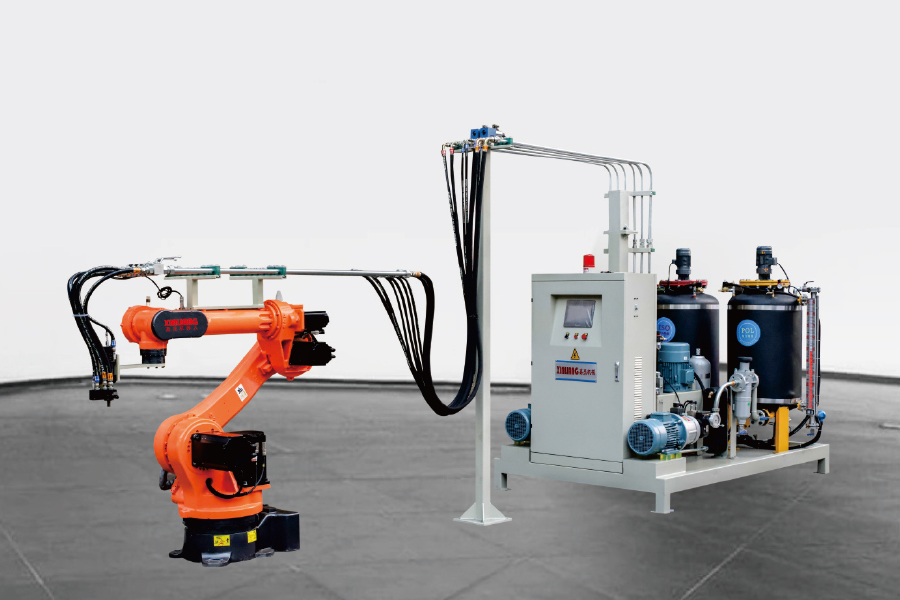
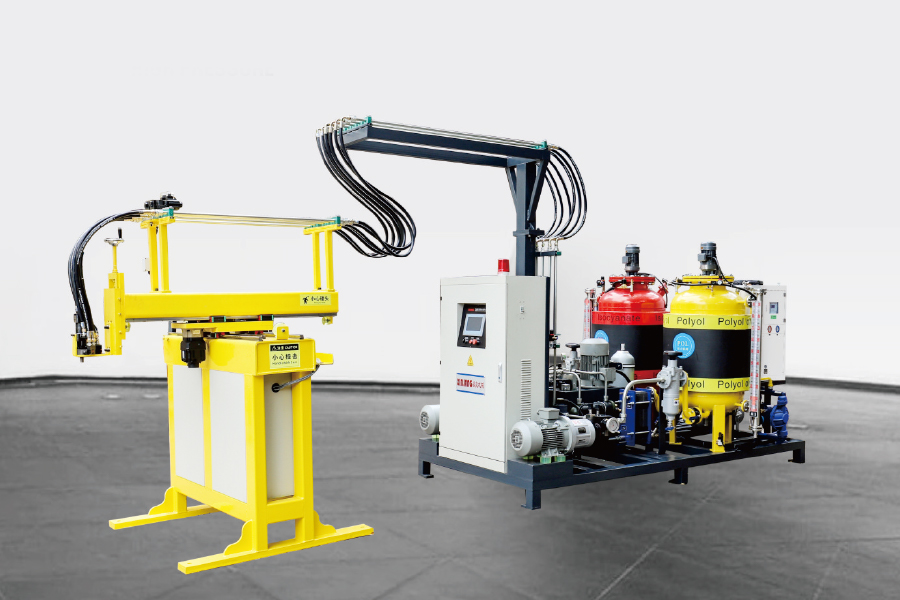
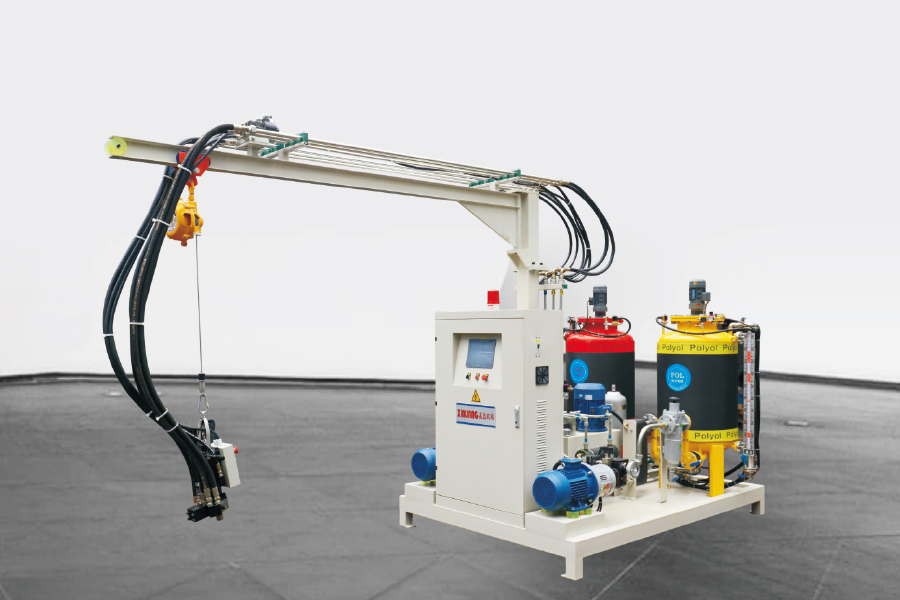
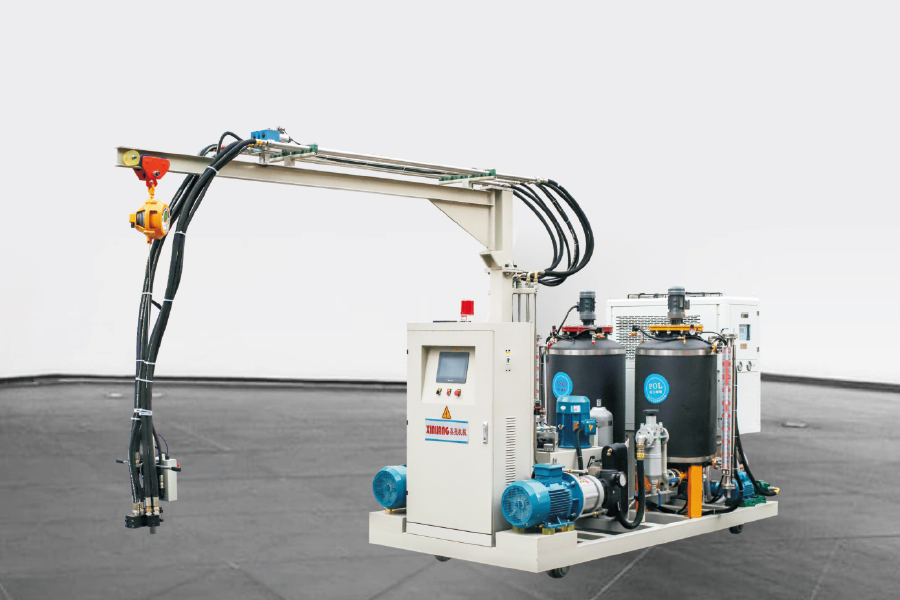
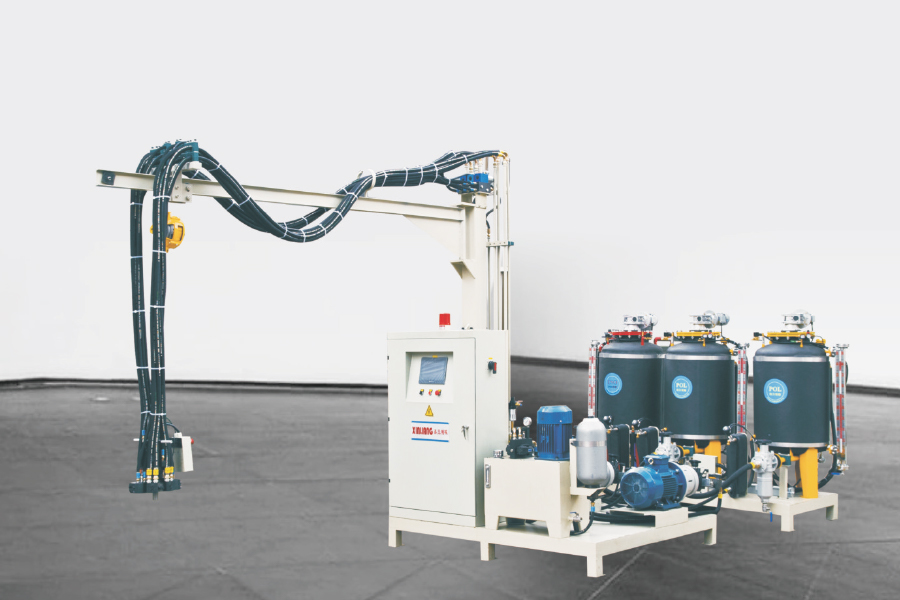
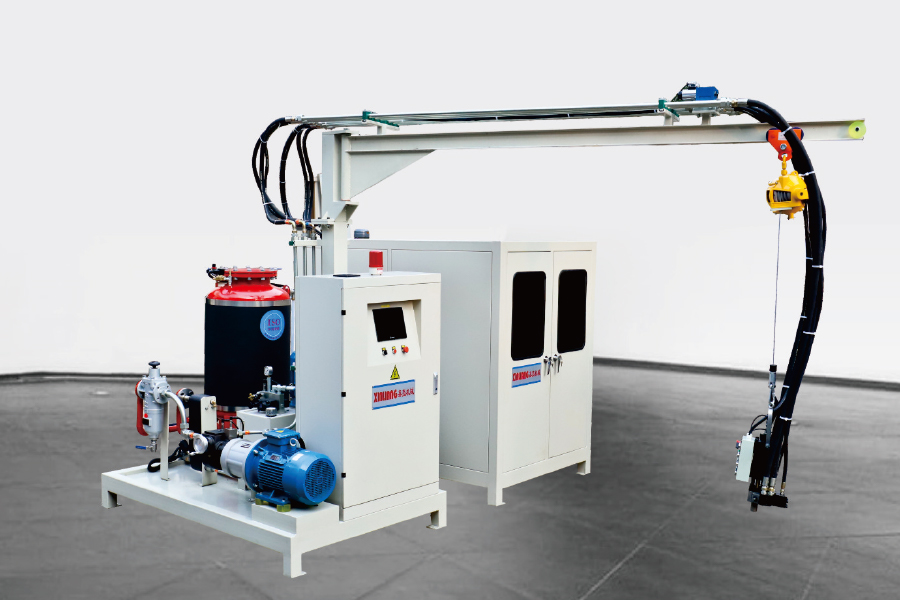
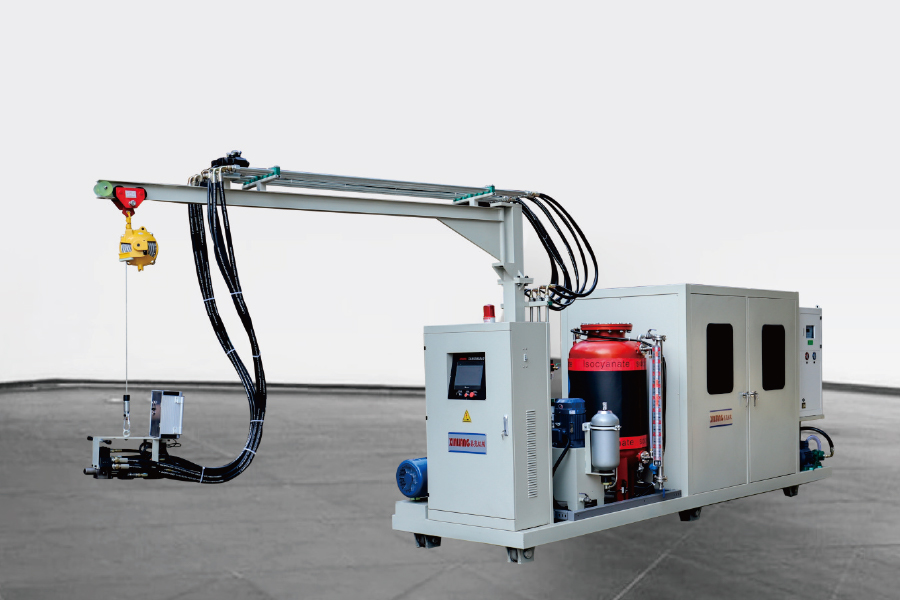
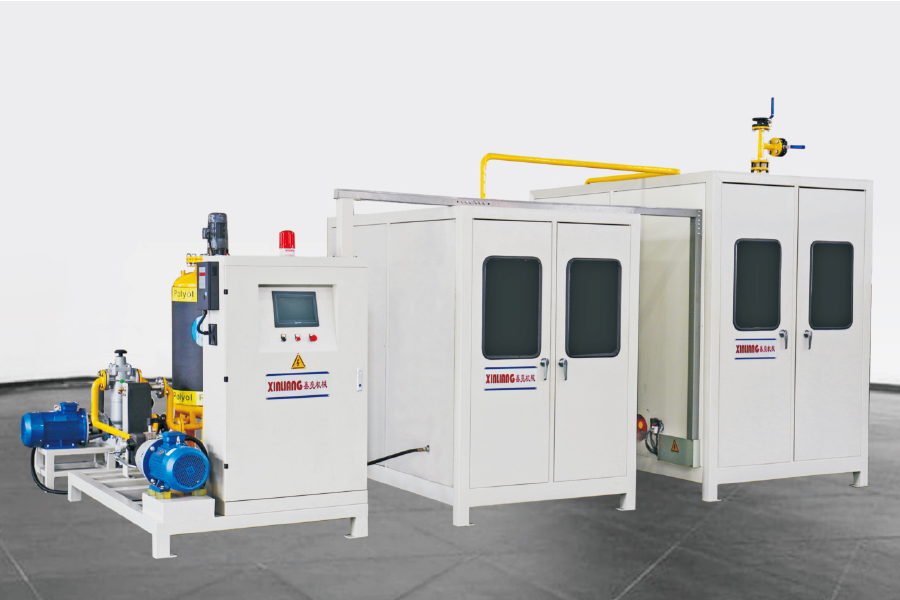
A polyurethane high-pressure foaming injection machine is a highly efficient and precise piece of equipment widely used in various industries, including construction, home appliances, and automotive, especially in the production of insulation and thermal insulation materials. It injects polyurethane raw materials into a mold under high pressure for foaming, creating lightweight materials with excellent thermal insulation properties.
Although polyurethane high-pressure foaming injection machines perform excellently in many fields, they also have their advantages and disadvantages. This article will help you understand the pros and cons of polyurethane high-pressure foaming injection machines, helping businesses and manufacturers better understand their role and potential challenges in the production process.
1. Advantages of Polyurethane High-Pressure Foaming Injection Machines
(1) High Efficiency and High Productivity
Polyurethane high-pressure foaming injection machines can inject liquid polyurethane materials into molds under high pressure and complete foaming in a short time. Compared to traditional low-pressure injection equipment, it significantly improves foaming speed and efficiency, enabling rapid production, which is particularly important for large-scale production. For example, in the home appliance industry, using a high-pressure foaming injection machine can accelerate the product production cycle and improve the overall efficiency of the production line.
(2) Precise Control of the Foaming Process
Polyurethane high-pressure foaming injection machines are equipped with advanced control systems that can precisely control the foaming temperature, pressure, and raw material ratio. This precise control results in more uniform foaming, reducing product quality fluctuations and improving the consistency and stability of the finished product. Especially in applications requiring high thermal insulation performance, such as building exterior wall insulation panels and refrigeration equipment, a precise foaming process is crucial to ensuring product quality.
(3) Saving Raw Materials and Energy
Polyurethane high-pressure foaming injection machines can precisely proportion raw materials, avoiding material waste. Due to its efficient working principle, it can complete foaming in the shortest possible time, reducing energy consumption. In addition, many high-pressure foaming machines are equipped with automated control systems, which can further optimize the production process, reduce manual operation while improving energy utilization efficiency, and lowering production costs.
(4) Good Product Quality and Diversity
High-pressure foaming injection machines can produce polyurethane foam materials with good density, uniformity, and structure. Due to its ability to achieve more precise control, the resulting foam materials exhibit superior performance in terms of strength, thermal insulation, and sound absorption. By adjusting the formula and equipment parameters, the polyurethane high-pressure foaming injection machine can also produce foam materials of various specifications, densities, and functions to meet the needs of different customers.
(5) High degree of automation, reducing manual intervention
Most modern polyurethane high-pressure foaming injection machines are equipped with automated control systems, which can automatically complete the entire process from raw material mixing and injection to foaming. This not only improves production efficiency but also reduces errors and quality fluctuations caused by human operation. The automated process also reduces the reliance on manual labor, lowers labor costs, and improves production safety.

2. Disadvantages of Polyurethane High-Pressure Foaming Injection Machines
(1) High equipment investment
Although polyurethane high-pressure foaming injection machines offer high efficiency and productivity, their initial investment is relatively high. Equipment price, installation costs, and subsequent maintenance costs can be a significant burden for small businesses or startups. Furthermore, regular maintenance and calibration are required to ensure the long-term stable operation of the equipment, which further increases operating costs.
(2) High operating requirements
Although some polyurethane high-pressure foaming injection machines are equipped with automated control systems, the operation and maintenance of the equipment still require professional technicians. Operators must be familiar with the working principles and control systems of the equipment and be able to troubleshoot and resolve problems promptly. In addition, equipment maintenance requires regular inspection of the operating status of various components and necessary cleaning and replacement, increasing the complexity of management.
(3) Raw material limitations
Polyurethane high-pressure foaming injection machines have high requirements for raw materials; only polyurethane raw materials that meet specific standards can be used. These raw materials are usually expensive, and the supply chain may be affected by market fluctuations. Furthermore, certain special-purpose polyurethane raw materials may be difficult to procure, limiting the production process. Therefore, companies need to maintain close contact with suppliers when purchasing raw materials to ensure a stable supply.
(4) Large equipment size
Polyurethane high-pressure foaming injection machines are usually large and occupy a significant amount of production space. This can be a problem for factories or production lines with limited space. Although modern equipment designs are becoming increasingly compact, they still require sufficient space for installation and operation, especially when multiple foaming stations or automated systems are needed, which can further increase the factory space requirements.
(5) High Environmental Requirements
Polyurethane high-pressure foaming injection machines have relatively high operating environment requirements, requiring a certain temperature and humidity range. This means that in some extreme environments, the equipment's operation may be affected. If the factory environment's temperature and humidity control are poor, it may lead to unsatisfactory foaming results and affect product quality. Therefore, when purchasing and installing equipment, special attention should be paid to the equipment's environmental adaptability to ensure that it can operate under optimal conditions.
3. How to Optimize the Use of Polyurethane High-Pressure Foaming Injection Machines
To maximize the advantages of polyurethane high-pressure foaming injection machines and minimize their disadvantages, companies can take the following measures:
Regular maintenance and upkeep of the equipment: Ensure that the equipment remains in optimal working condition. Regularly inspect the injection system, mixing system, and control system to avoid production efficiency being affected by equipment malfunctions.
Optimize raw material ratios: Adjust the ratio of polyurethane raw materials according to different production needs, ensuring the quality and stability of the raw materials, and improving production stability and product quality.
Employee training: Provide regular training for operators to ensure they are familiar with equipment operating procedures and maintenance techniques, and can promptly resolve various problems that arise during the production process.
Improve the production environment: Control the temperature and humidity in the production environment to ensure that the equipment operates in the best environment, thereby improving foaming results and product consistency.


 English
 русский
 عربى
عربى