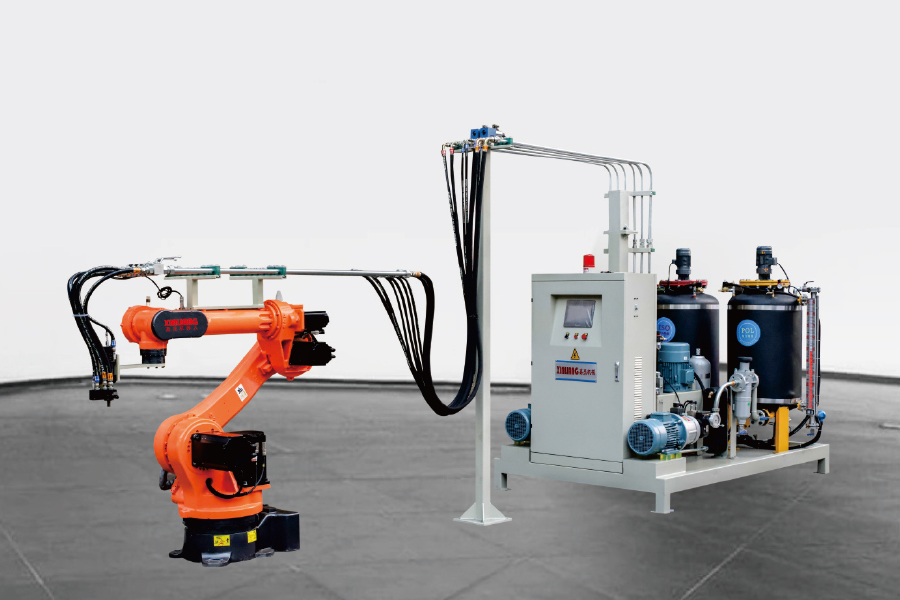
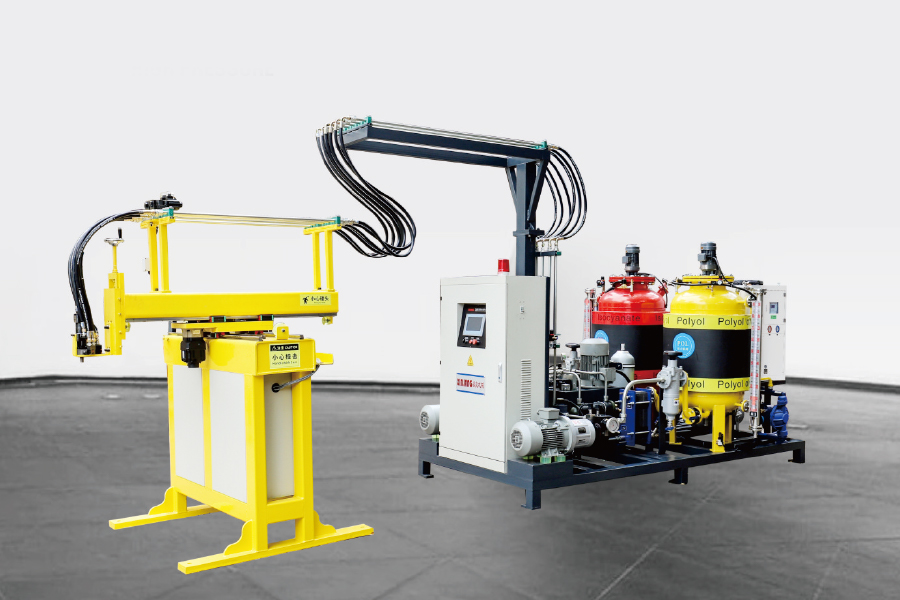
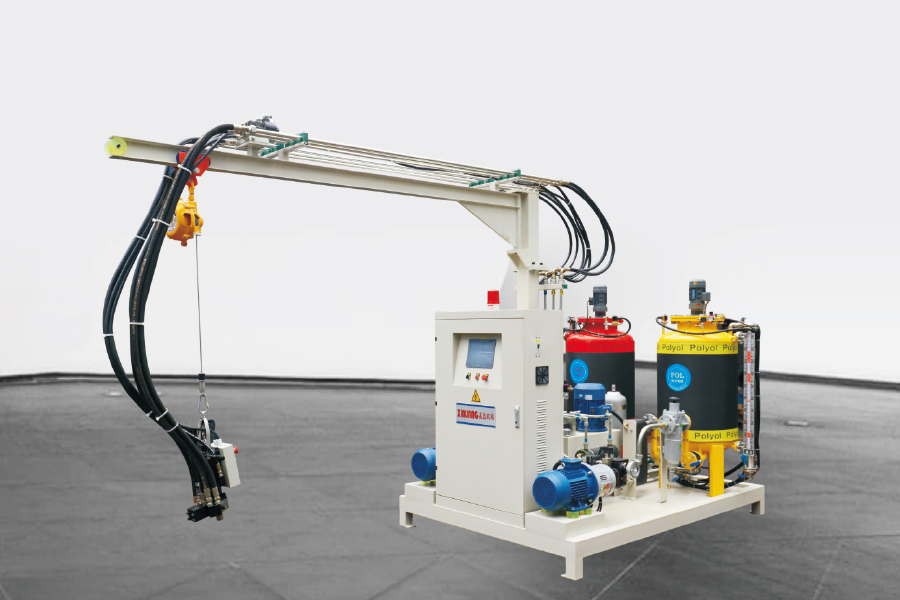
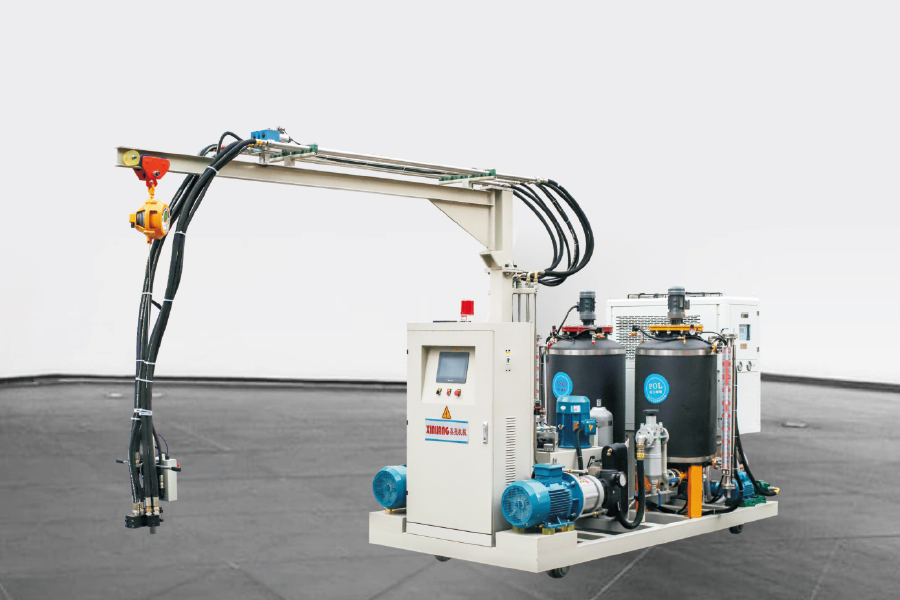
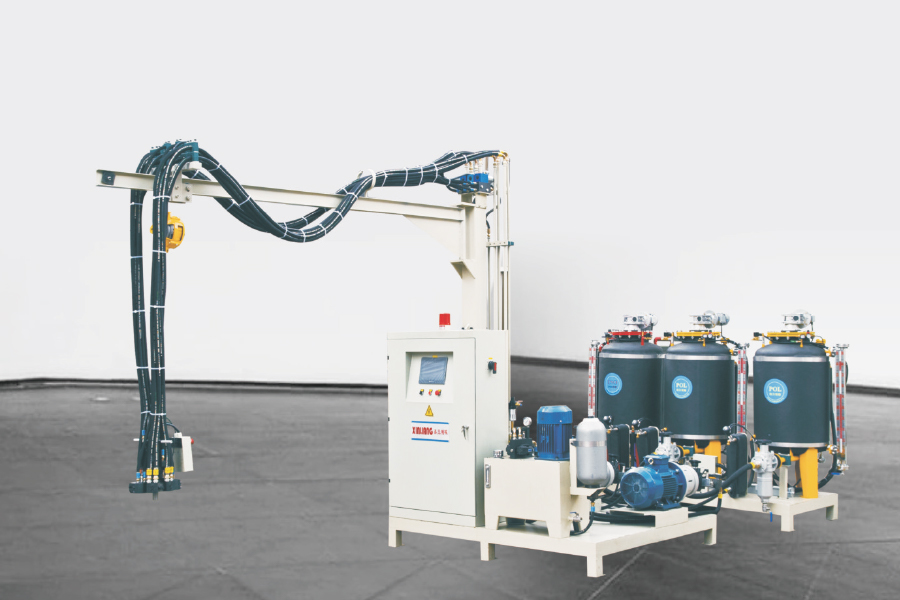
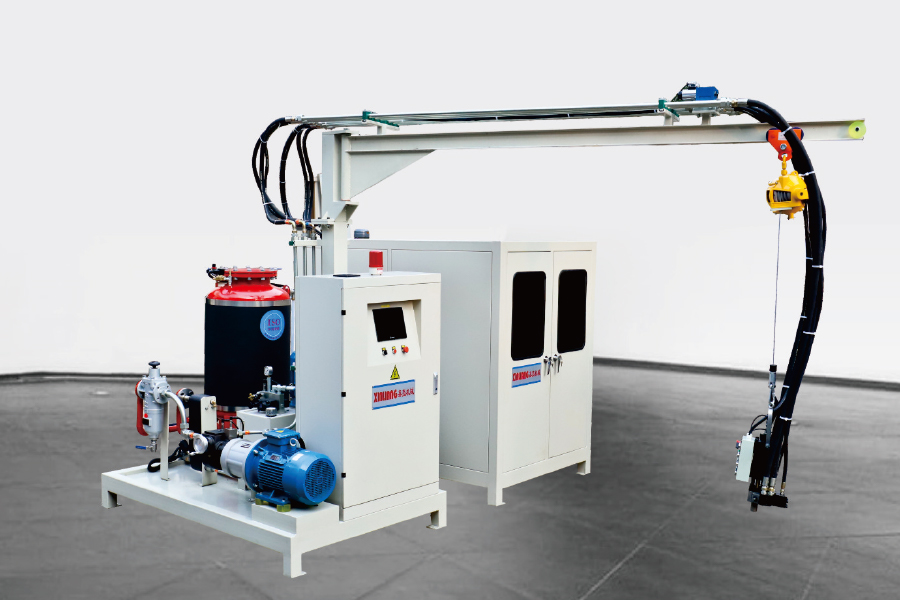
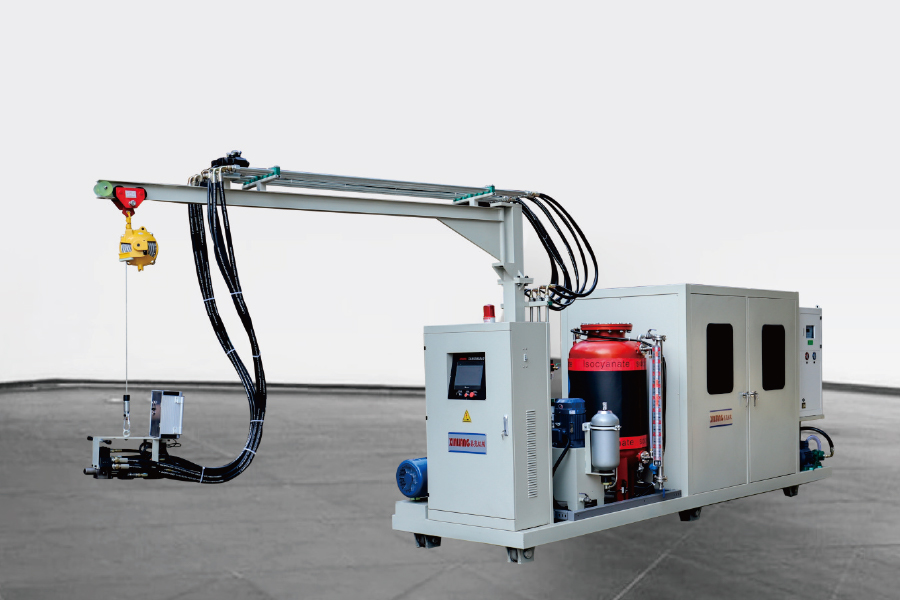
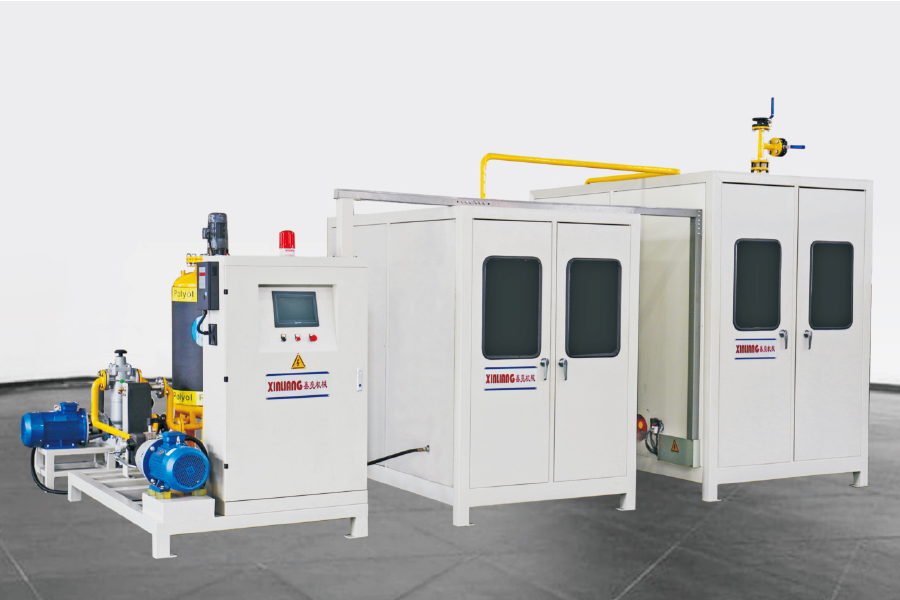
The direct answer: Yes. A polyurethane high pressure foaming injection machine delivers more than 95% mixing uniformity, improves material utilization by up to 20%, and can increase production efficiency by 30%–50% compared to low-pressure systems. It is the preferred solution for manufacturers seeking stable foam quality, precise dosing, and scalable mass production.
A polyurethane high pressure foaming injection machine is an industrial system designed to accurately meter, mix, and inject polyol and isocyanate components under high pressure (typically 120–200 bar). The high-speed impingement mixing process ensures uniform chemical reactions and consistent foam cell structure.
Core Working Principle
- Independent high-precision pumps for raw material dosing
- High-pressure impingement mixing in the mixing head
- Automated injection into molds or cavities
This process produces foam with stable density, strong adhesion, and minimal air entrapment.
Why Choose High Pressure Foaming Instead of Low Pressure Systems?
Compared with traditional low-pressure equipment, high pressure foaming machines provide superior mixing performance and production consistency.
Performance Advantages
- Up to 30% faster cycle time for continuous production
- Reduced raw material waste by 10%–20%
- Higher foam density accuracy within ±1% tolerance
For high-volume manufacturing, these advantages translate into lower operating costs and improved product quality.
How Does High Pressure Injection Improve Foam Quality?
Foam performance depends heavily on mixing uniformity and injection stability. High pressure systems generate intense turbulence inside the mixing chamber, ensuring complete chemical reaction.
Quality Improvements
- More uniform cell structure for better insulation performance
- Improved mechanical strength and compression resistance
- Reduced surface defects and air bubbles
In insulation panel production, optimized foam quality can improve thermal conductivity performance by up to 15% compared to unevenly mixed foam.
What Are the Main Applications of Polyurethane High Pressure Foaming Machines?
These machines are widely used in industries that require precise foam molding and structural insulation.
- Refrigerator and freezer insulation panels
- Automotive seat and interior component production
- Building insulation boards and sandwich panels
- Pipeline insulation and cold storage systems
Their flexibility allows manufacturers to adapt to different mold sizes and foam formulations.
How Do High Pressure Foaming Machines Compare With Other PU Equipment?
The following table highlights the main differences between high pressure and low pressure foaming systems.
Comparison of Polyurethane Foaming Machine Types
| Feature |
High Pressure Machine |
Low Pressure Machine |
| Mixing Quality |
Excellent |
Medium |
| Production Speed |
High |
Moderate |
| Material Waste |
Low |
Higher |
| Initial Investment |
Higher |
Lower |
For mass production and high-quality foam output, high pressure systems offer superior long-term value.
What Should You Consider When Choosing a High Pressure Foaming Injection Machine?
Selecting the right equipment depends on production scale, product type, and automation requirements.
- Maximum output capacity (kg/min)
- Mixing head design and self-cleaning function
- PLC control system and automation level
- After-sales technical support and spare parts availability
A properly selected machine can improve production stability and reduce downtime by 25% or more.
FAQ: Polyurethane High Pressure Foaming Injection Machine
What pressure range is considered high pressure for PU foaming?
High pressure PU foaming machines typically operate between 120 and 200 bar, depending on material formulation and application.
Are high pressure foaming machines suitable for small factories?
Yes, compact models are available for medium and small-scale production, offering automation and quality advantages without excessive floor space requirements.
How often does the mixing head require maintenance?
With proper cleaning and scheduled servicing, mixing heads typically require major maintenance after 1,000–2,000 operating hours.
Can one machine handle multiple foam formulations?
Yes. Modern systems support programmable recipes, allowing quick switching between rigid foam, flexible foam, and structural foam formulations.


 English
 русский
 عربى
عربى