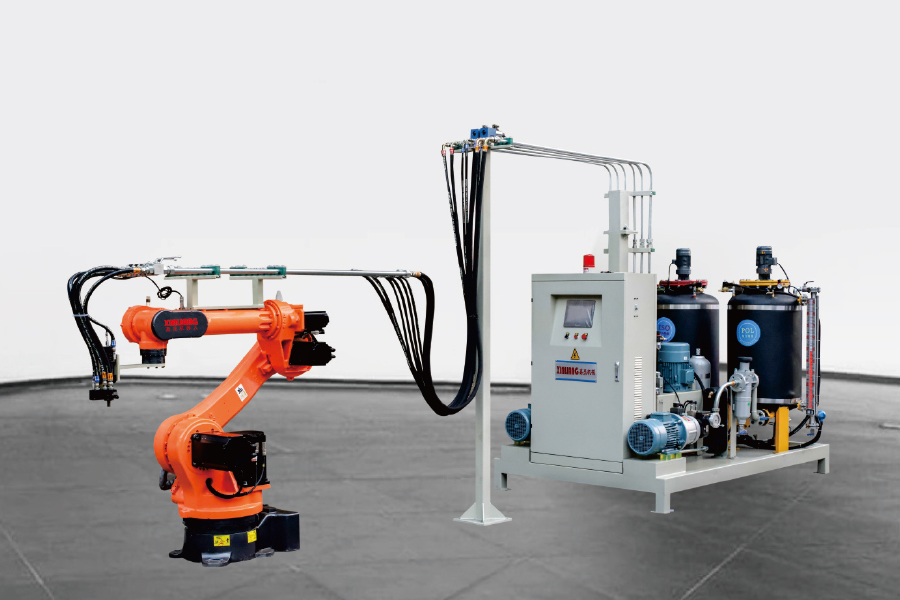
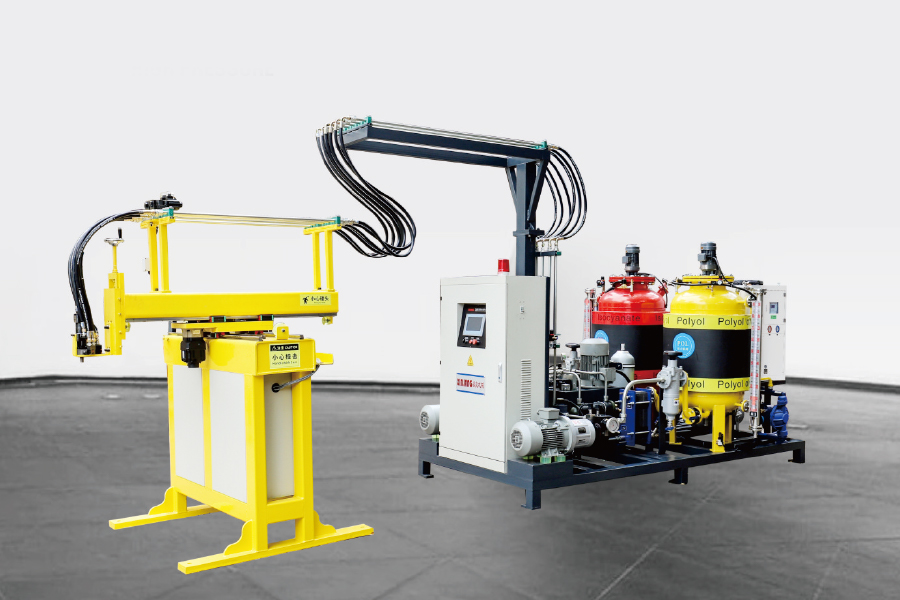
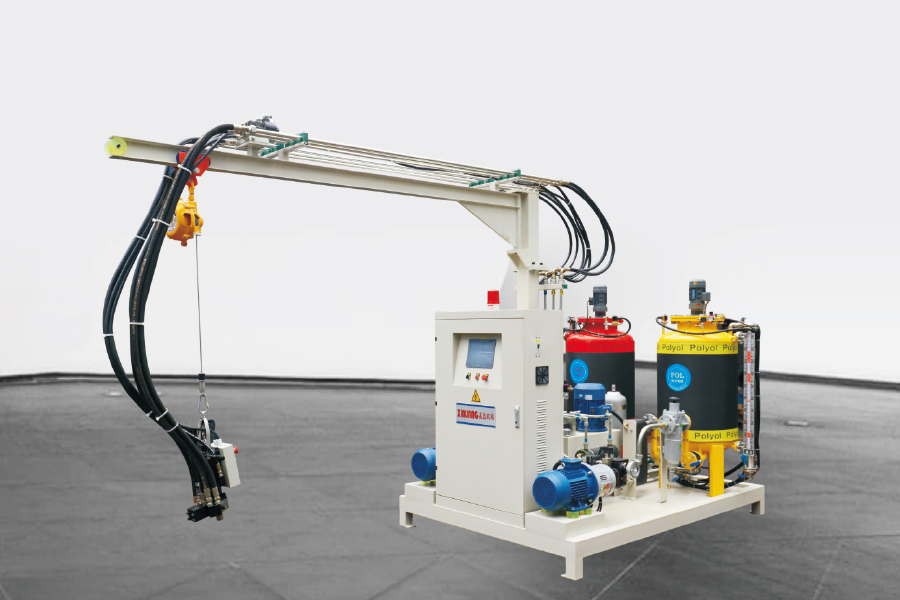
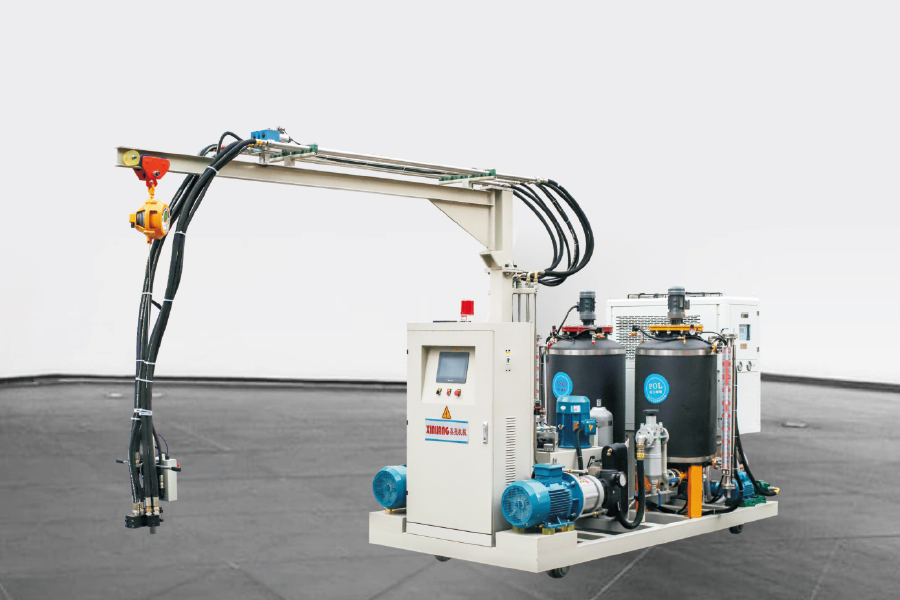
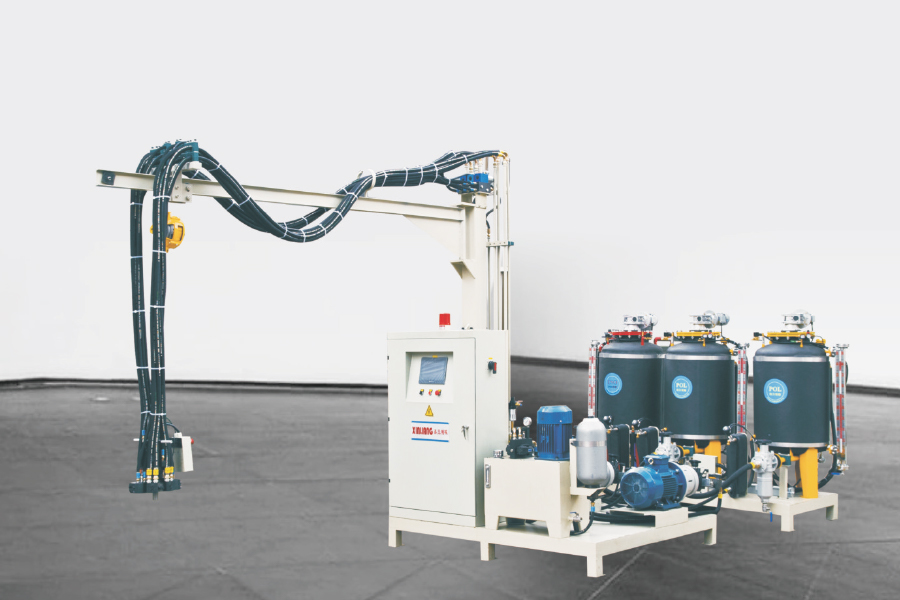
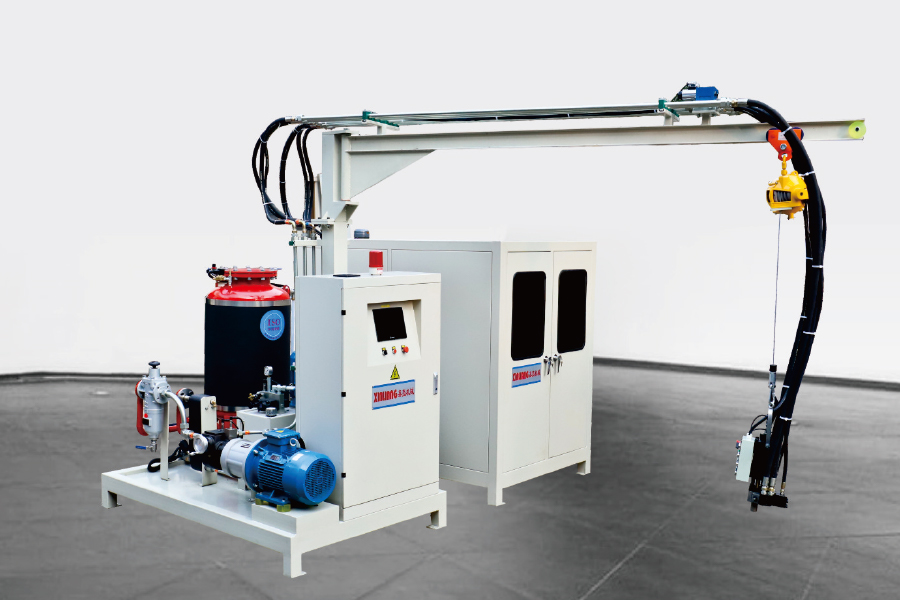
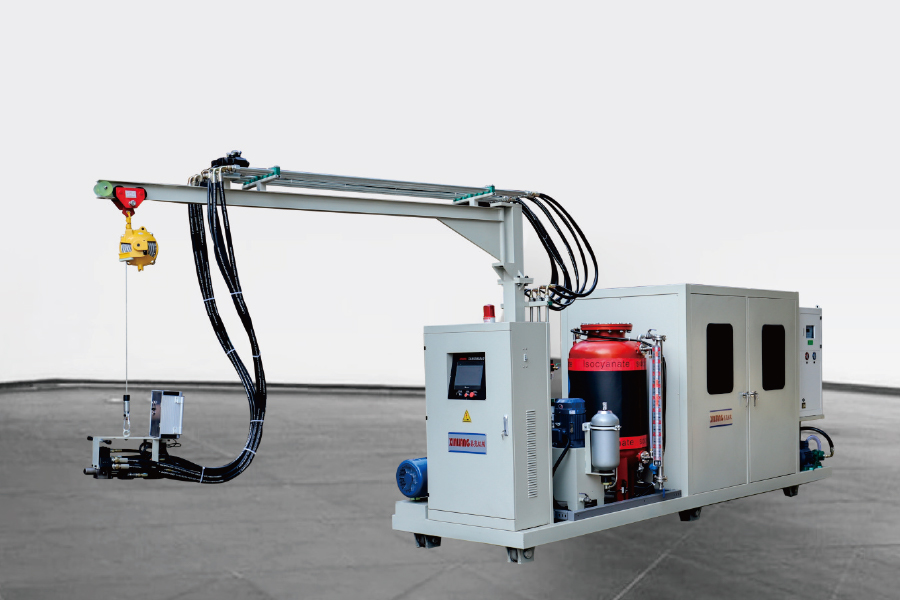
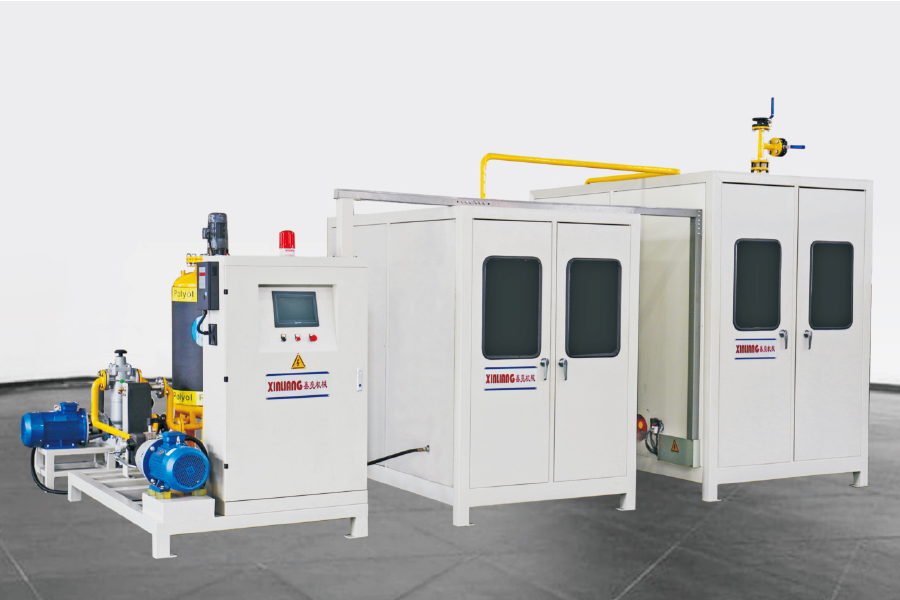
Polyurethane high-pressure foaming injection machines are widely used in various industries, including construction, automotive, cold chain logistics, and home appliances. They can efficiently produce polyurethane foam to meet the needs of different industrial applications. However, to maintain the long-term stability and efficiency of the equipment, several measures must be taken to optimize its working efficiency.
1. Regular Maintenance and Upkeep
The long-term efficient operation of the equipment depends on good maintenance and upkeep. Polyurethane high-pressure foaming injection machines operate at high temperatures and pressures, and if not cleaned and inspected regularly, this can lead to damage to machine parts and decreased performance, thus affecting production efficiency.
Maintenance Suggestions:
Regularly inspect mechanical components: Check the wear and tear of key components such as pumps, valves, and spray guns, and replace aging parts promptly to prevent leaks and other problems.
Clean and replace filters: Polyurethane raw materials may contain impurities that can clog nozzles and pipes. Therefore, regularly clean the filters to ensure a smooth system.
Check seals: The seals used in high-pressure foaming injection machines are susceptible to pressure and temperature changes. Regularly check the condition of the seals to ensure airtightness and liquid tightness, preventing raw material leakage.
Lubrication maintenance: Check the equipment's lubrication system to ensure that all moving parts are adequately lubricated, reducing friction and wear, and extending the equipment's lifespan.
2. Optimizing Operating Procedures
The operating procedures of the polyurethane high-pressure foaming injection machine directly affect its working efficiency. The technical level of the operators, their operating habits, and the optimization of the work process will all affect the machine's operating efficiency to some extent.

Optimization Suggestions:
Precisely control raw material ratio: The performance of polyurethane foaming is closely related to the ratio of raw materials. Operators should precisely control the mixing ratio of raw materials according to production needs to avoid unnecessary waste.
Automated control system: Modern polyurethane high-pressure foaming injection machines are usually equipped with automated control systems, which can achieve more precise production control. By adjusting parameters such as injection pressure, temperature, and mixing speed, the foaming quality and production efficiency can be optimized.
Regular training for operators: Through regular training and skill improvement, the professional level of operators can be enhanced, ensuring the best working condition of the equipment and reducing losses caused by human errors and improper operation.
3. Rational Selection and Management of Raw Materials
The quality and utilization efficiency of raw materials directly affect the foaming effect of polyurethane. Polyurethane high-pressure foaming injection machines require high-quality raw materials and need to be injected at appropriate temperatures and pressures to ensure the uniformity and strength of the foam.
Optimization Suggestions:
Select high-quality raw materials: The quality of raw materials directly determines the foaming effect. Choosing high-quality polyurethane raw materials can improve foaming efficiency, reduce scrap rate, and lower production costs.
Maintain a stable raw material storage environment: Polyurethane raw materials are sensitive to ambient temperature and humidity. Ensure a stable storage environment to prevent unstable raw material performance due to environmental changes, which could affect production efficiency.
Regularly check raw material suppliers: Choose reliable raw material suppliers to ensure a stable supply of high-quality raw materials. If the supplier's raw material quality fluctuates significantly, it may lead to reduced production efficiency or even production stoppages.
4. Use Advanced Technology and Equipment
With continuous technological advancements, the technology of polyurethane high-pressure foaming injection machines is constantly evolving. Adopting the latest equipment and technology can improve production efficiency, reduce energy consumption, and improve the quality of the final product.
Technology Upgrade Suggestions:
Upgrade the spraying system: An efficient spraying system can ensure uniform spraying of polyurethane materials, reduce waste, and improve the overall quality of the foam. Automated spraying systems can improve work efficiency and reduce human error.
Introduce intelligent control systems: Modern polyurethane foaming injection machines are equipped with intelligent control systems that can monitor equipment operation status in real time, optimize operating parameters, and reduce unnecessary downtime.
High-efficiency pumps and compressors: Upgrade the pumps and compressors in the equipment to improve the stability of flow and pressure, reduce energy consumption, and improve production efficiency.
5. Improve Energy Efficiency
Energy efficiency directly affects production costs and the overall efficiency of the equipment. Controlling energy consumption rationally can not only improve production efficiency but also reduce operating costs and minimize environmental impact.
Optimization Suggestions:
Use variable frequency drive systems: Control the speed and power of the motor through variable frequency drives to adapt to different production load requirements and reduce energy waste.
Optimize the thermal management system: Maintaining a certain temperature is necessary during the polyurethane foaming process. A well-designed thermal management system can improve the utilization rate of thermal energy and reduce energy consumption.
Regularly check energy consumption: Regularly monitor and analyze the energy consumption of the equipment to identify areas with low energy efficiency and make improvements.


 English
 русский
 عربى
عربى